
"And then I wanted to be such a great painter, Titian or Rembrandt, nothing less."
18.000€
Mary Cassatt (1844.1926)
Autographed letter signed to the art critic Achille Segard.
Six octavo pages on mourning paper.
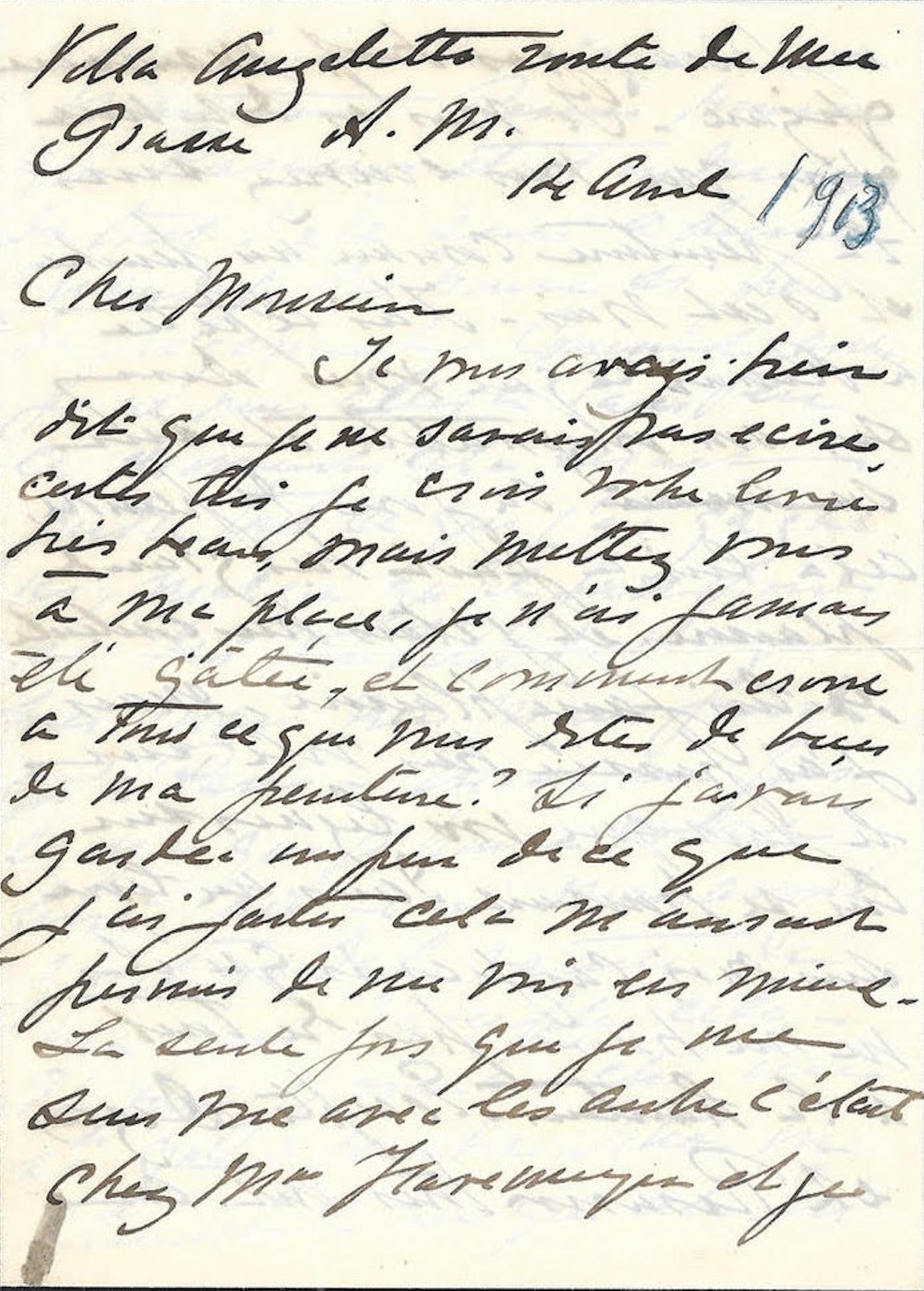
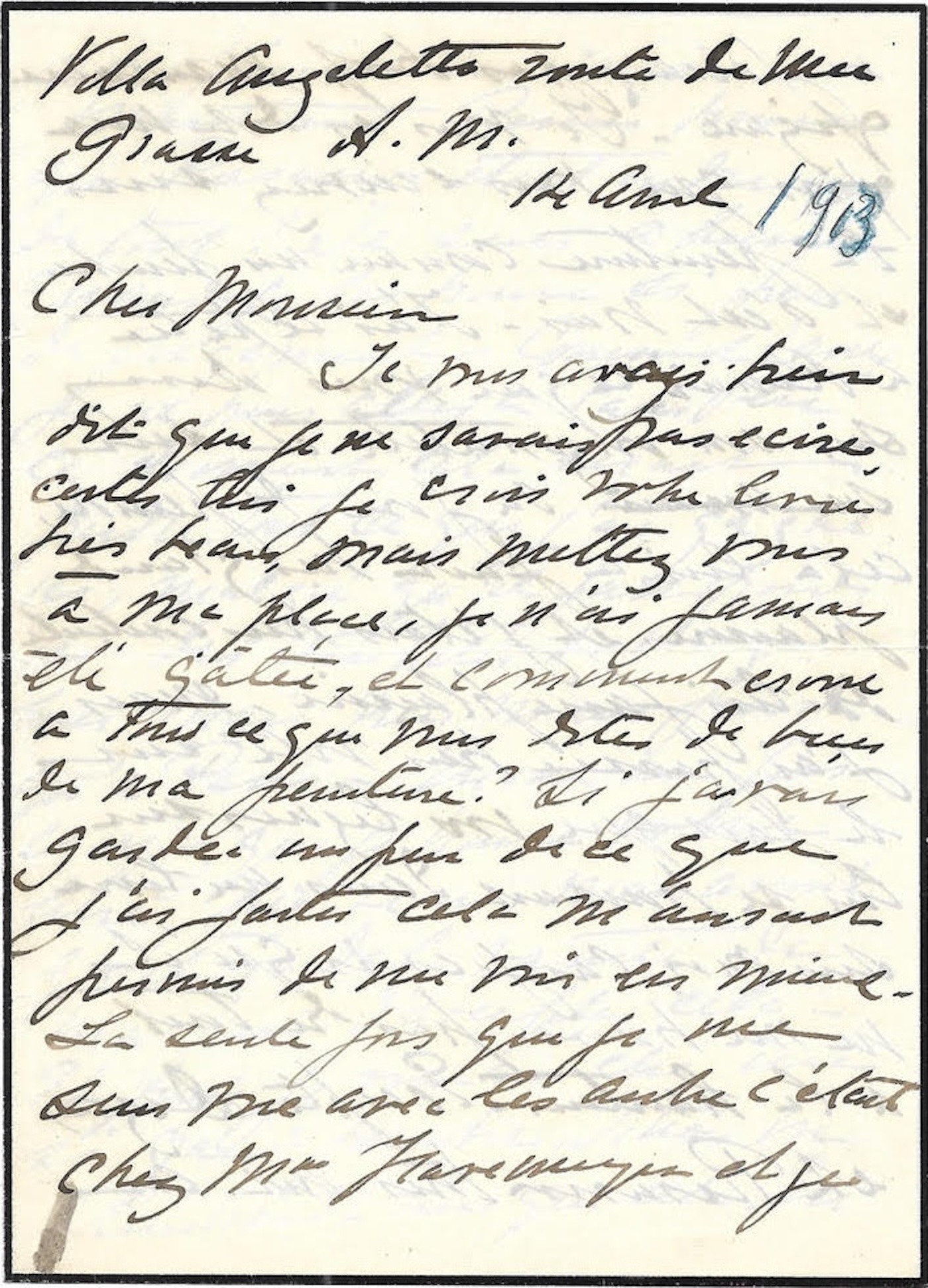
Villa Angeletto – Grasse “April 14” [1913, according to an inscription in another hand].
"And then I wanted to be such a great painter, Titian or Rembrandt, nothing less."
A moving and precious letter from the American artist looking back on her entire career, her successes and her regrets, in light of the book dedicated to her – her first biography – which art critic Achille Segard is about to publish.
Invoking the memory of her friends Renoir, Degas, Pissarro, Mary Cassatt returns in these lines, with an open heart, to her painting, her work as a creator, to the Impressionists and to this emerging art that she does not understand: Cubism.
Discovered by Degas at the Salon of 1874, Cassatt—a rare female figure of Impressionism—was considered during her lifetime to be the greatest American artist. The letter presented here, with its testamentary overtones, bears witness to the artist's creative twilight. Indeed, at the dawn of 1914, struck by cataracts, Cassatt had to definitively renounce painting.
Upon reading the book Segard dedicated to her, Cassatt appears honored and humble: " How can I believe all the good things you say about my painting?" and disdainfully mentions the emergence of the Cubist movement led by Picasso: "... letters are arriving asking for explanations about the Cubists and other jokers." and her incomprehension of the cultural art world: "We live in a period of anarchy in art; and it seems to me, in literature as well."
Like a survey of a life, the final inventory of an existence devoted to Beauty, the American artist testifies with emotion to her place in the history of art: " And then I wanted to be such a great painter, Titian or Rembrandt, nothing less."
Mary Cassatt is one of the Three Great Ladies of Impressionism (according to Gustave Geoffroy's formula) alongside Berthe Morisot and Marie Bracquemond.
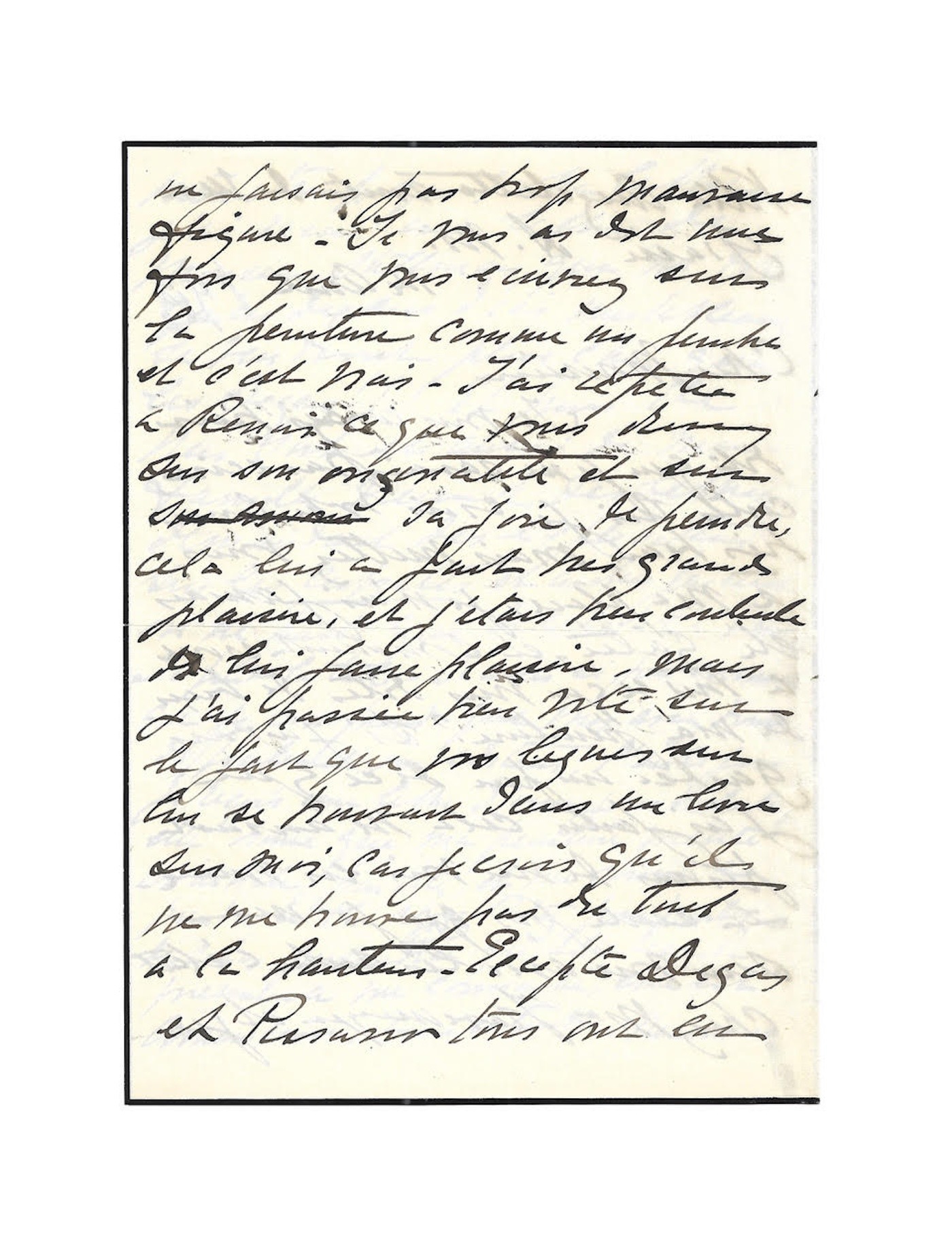
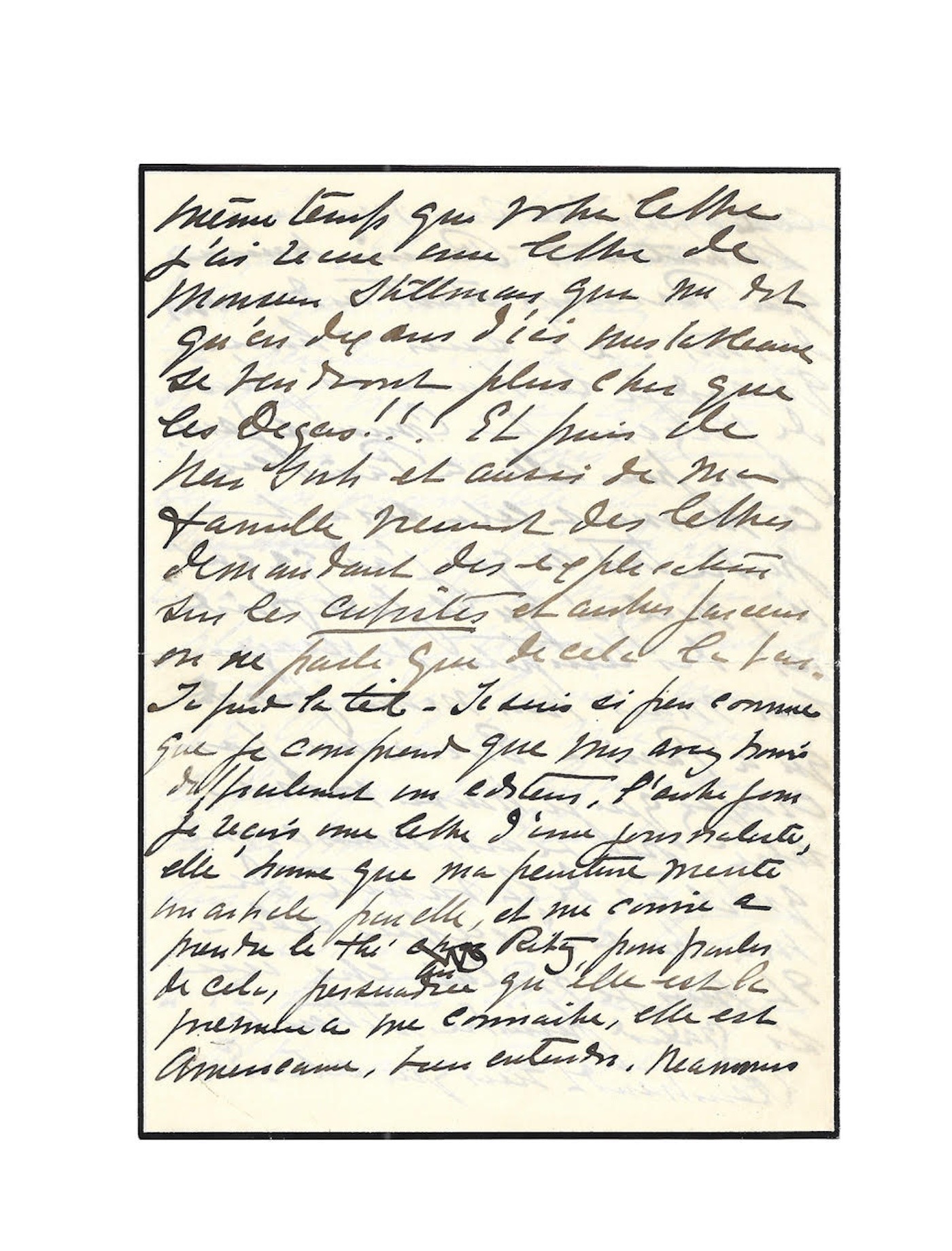
“Dear Sir, I told you I couldn’t write. Certainly, yes, I think your book is very beautiful, but put yourself in my shoes. I’ve never been spoiled, and how can I believe all the good things you say about my painting? If I had kept a little of what I’ve done, it would have allowed me to see myself in a better light. The only time I saw myself with others was at Mrs. Havemeyer ’s , and I didn’t look too bad. I told you once that you write about painting like a painter, and it’s true. I repeated to Renoir what you said about his originality and his joy in painting ; it pleased him greatly, and I was very happy to please him , but I glossed over the fact that your lines about him appeared in a book about me, because I think he doesn’t find me up to par at all.”
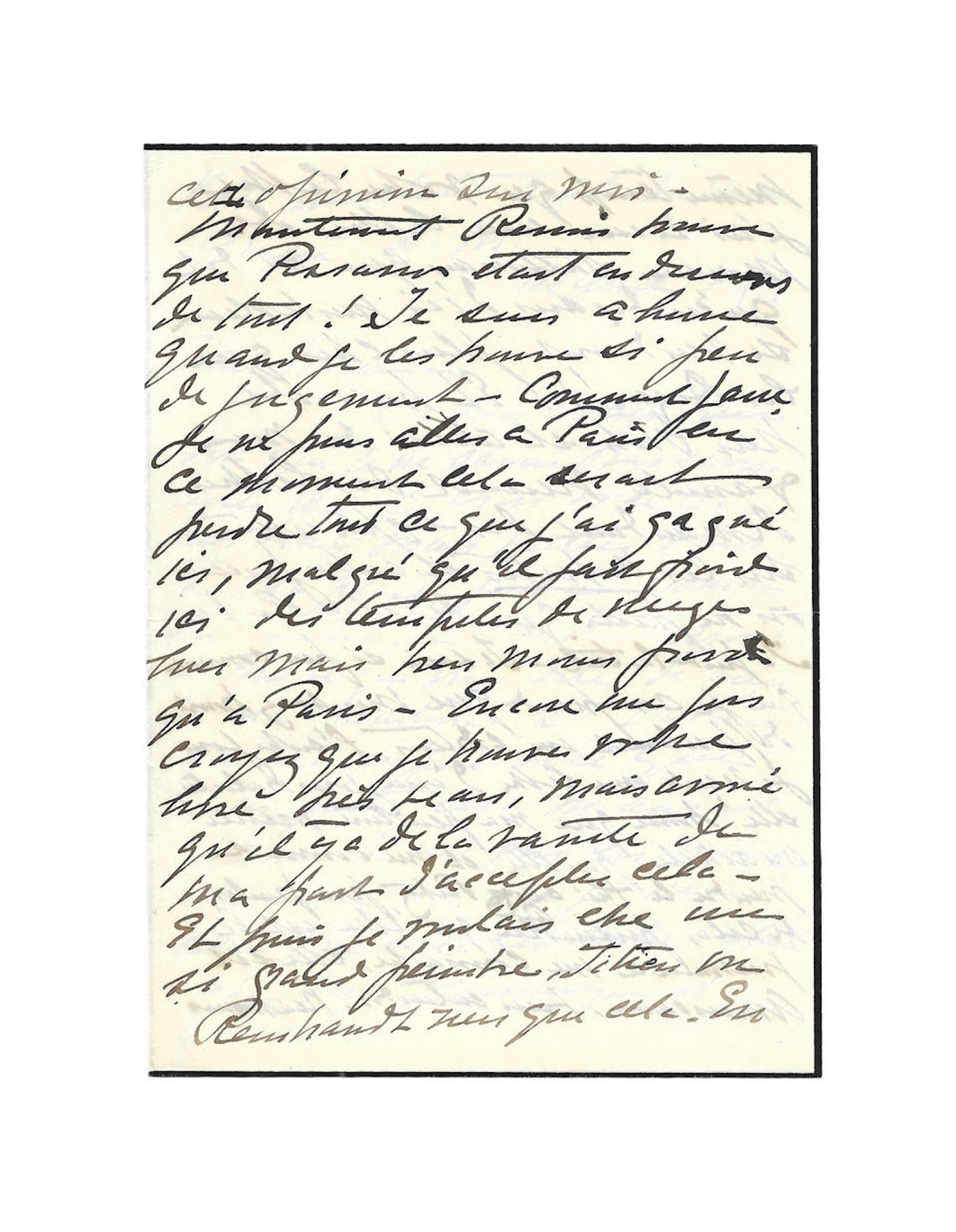
Except for Degas and Pissarro, everyone had that opinion of me . Now Renoir thinks Pissarro was beneath contempt! I'm astounded when I find them lacking in judgment—what can I do? I can't go to Paris right now; it would be to lose everything I've gained here, even though it's cold here—we had snowstorms yesterday—but much less cold than in Paris. Again, believe me, I find your book very beautiful, but admit it — it's vain of me to accept that. And besides, I wanted to be such a great painter, Titian or Rembrandt, nothing less.
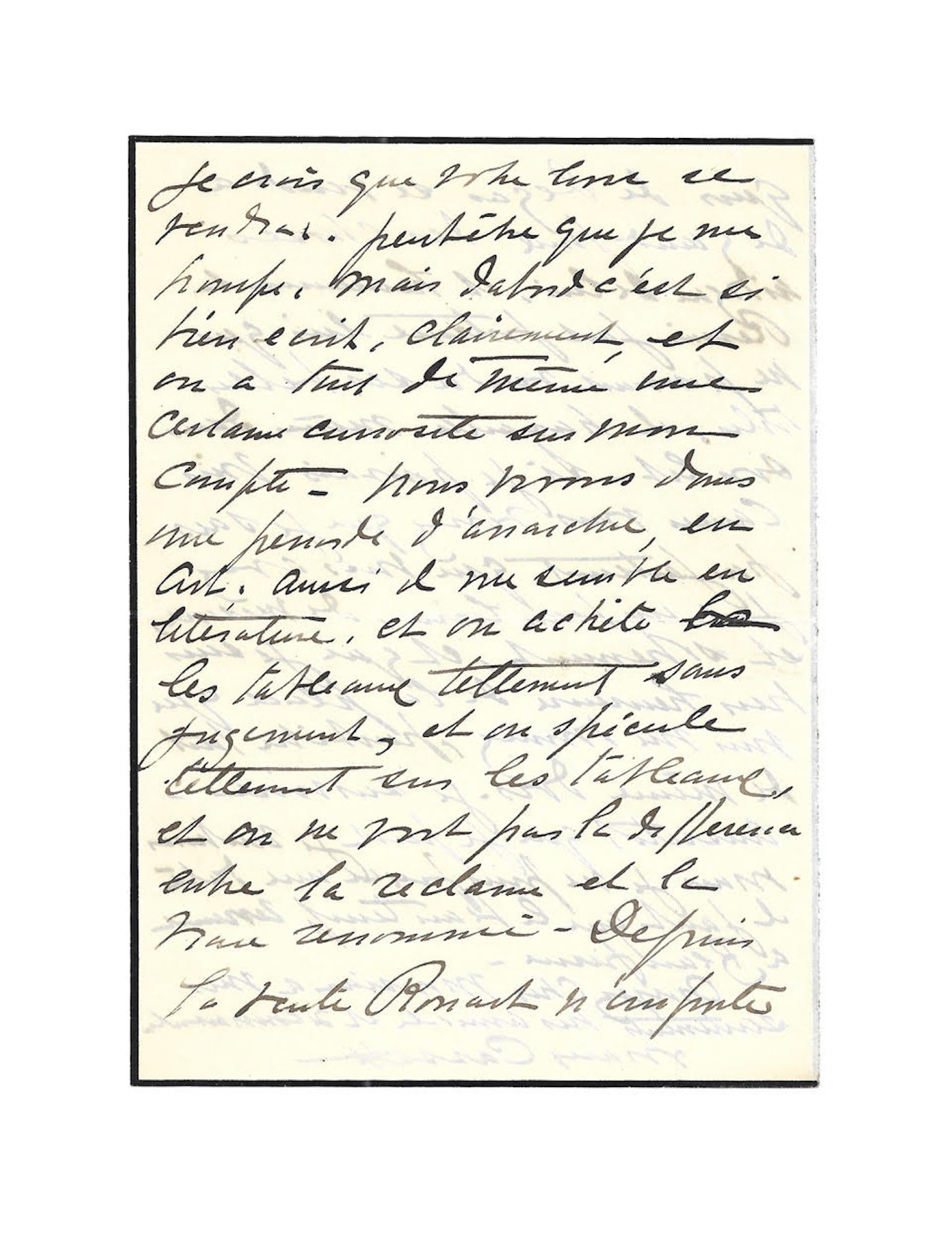
the same time as your letter, I received a letter from Mr. Stillman *** who tells me that in ten years my paintings will sell for more than Degas's!!! letters from New York and also from my family Cubists and other jokers ; that's all anyone talks about there. I'm sulking— I'm so little known that I understand why you had such a hard time finding a publisher . The other day, I received a letter from a journalist; she thinks my painting deserves an article for her and invites me to tea at the Ritz to discuss it, convinced that she's the first person to know me. She's American, of course.
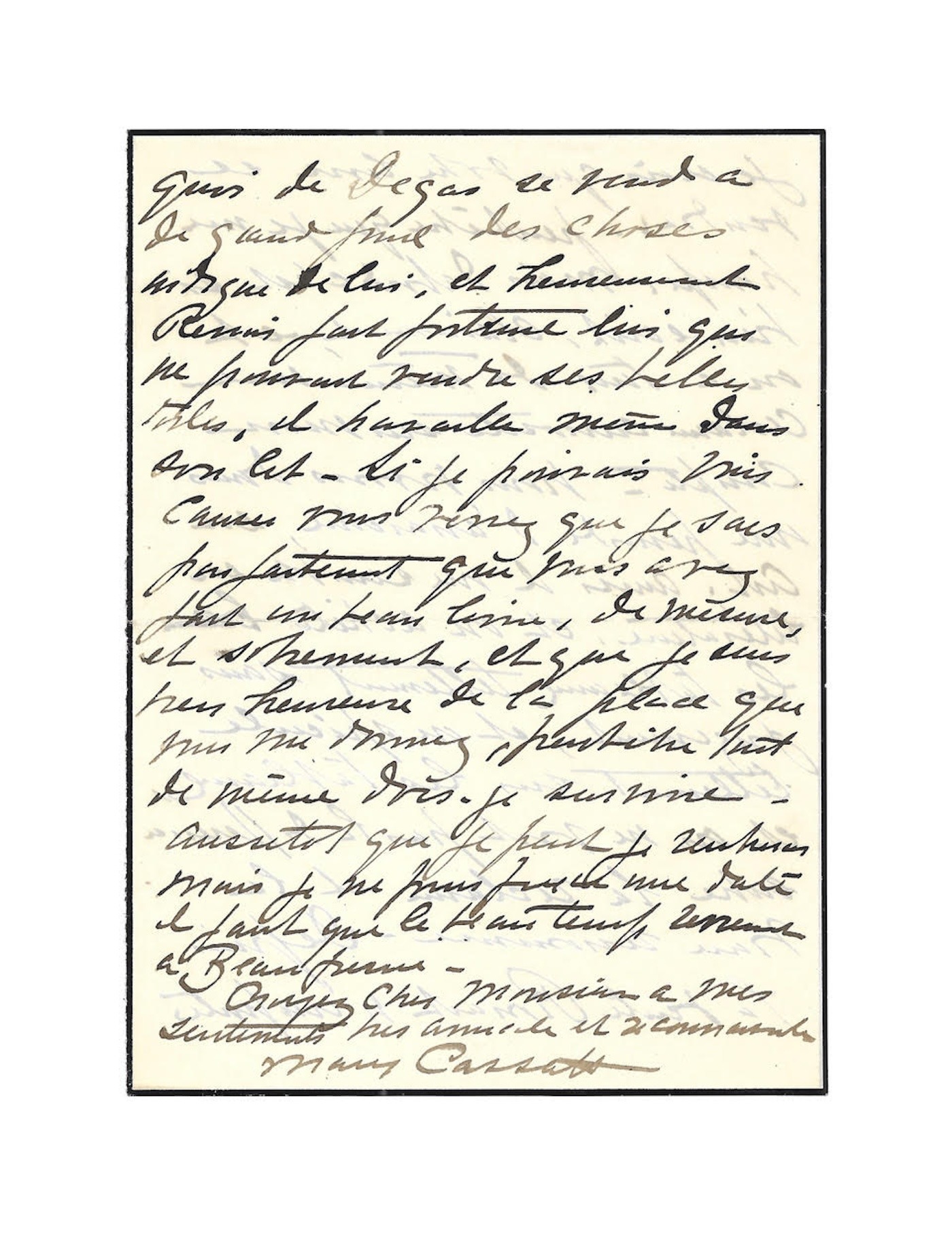
Nevertheless, I believe your book will sell. Perhaps I'm mistaken, but firstly, it's so well written, so clearly, and there's still a certain curiosity about me. We live in a period of anarchy in art ; and it seems to me in literature as well, and paintings are bought so without judgment, and there's so much speculation about them, and people don't see the difference between hype and true renown. Since the Rouart sale, anything by Degas sells for high prices, things unworthy of him, and fortunately, Renoir is making a fortune, he who couldn't sell his beautiful canvases; he even works in his bed.
If I could speak with you, you would see that I know perfectly well that you have written a beautiful book, measured and understated, and that I am very happy with the place you have given me, though perhaps I must still survive —I would return as soon as I can, but I cannot set a date; the good weather must return to Beaufresnes ***** friendly sentiments . Mary Cassatt.
* A Painter of Children and Mothers. Mary Cassatt. A. Segard. Ollendorff. May 1913
** Louisine Waldron, wife of the American industrialist Henry Havemeyer, who had started with him one of the most important art collections in the world, and who from about 1889 used the advice of Mary Cassatt.
*** The American banker James A. Stillman, who, having retired to Paris in 1909, asked Mary Cassatt to advise him on enriching his art collection.
**** Henri Rouart's collection of paintings and drawings was dispersed in two sales, on December 16-18, 1912 and April 21-22, 1913.
***** The Château de Beaufresnes, located in the commune of Mesnil-Théribus, was acquired by Mary Cassatt in March 1894.