Marcel Proust (1871.1922)
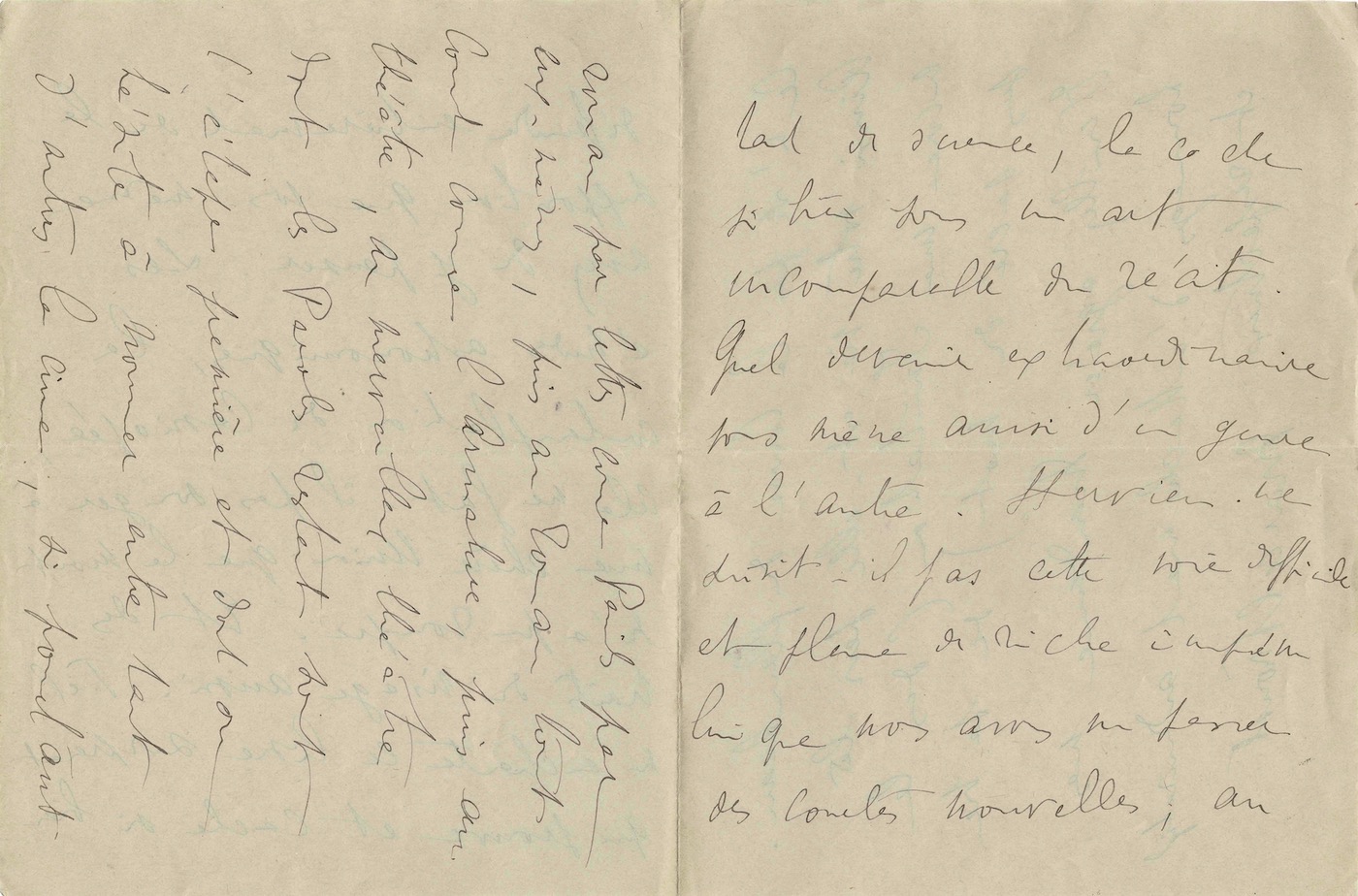
Autograph letter signed to Baroness Aimery Harty of Pierrebourg.
Eight pages in-8°. No place or date. [early June 1922]
Kolb, Volume XXI, pages 243 to 245.
"Unable to read, write, or speak […] I was unable to proofread my book, or even open it once it was published."
A few weeks before his death, Proust, exhausted, could no longer write.
____________________________________________________________
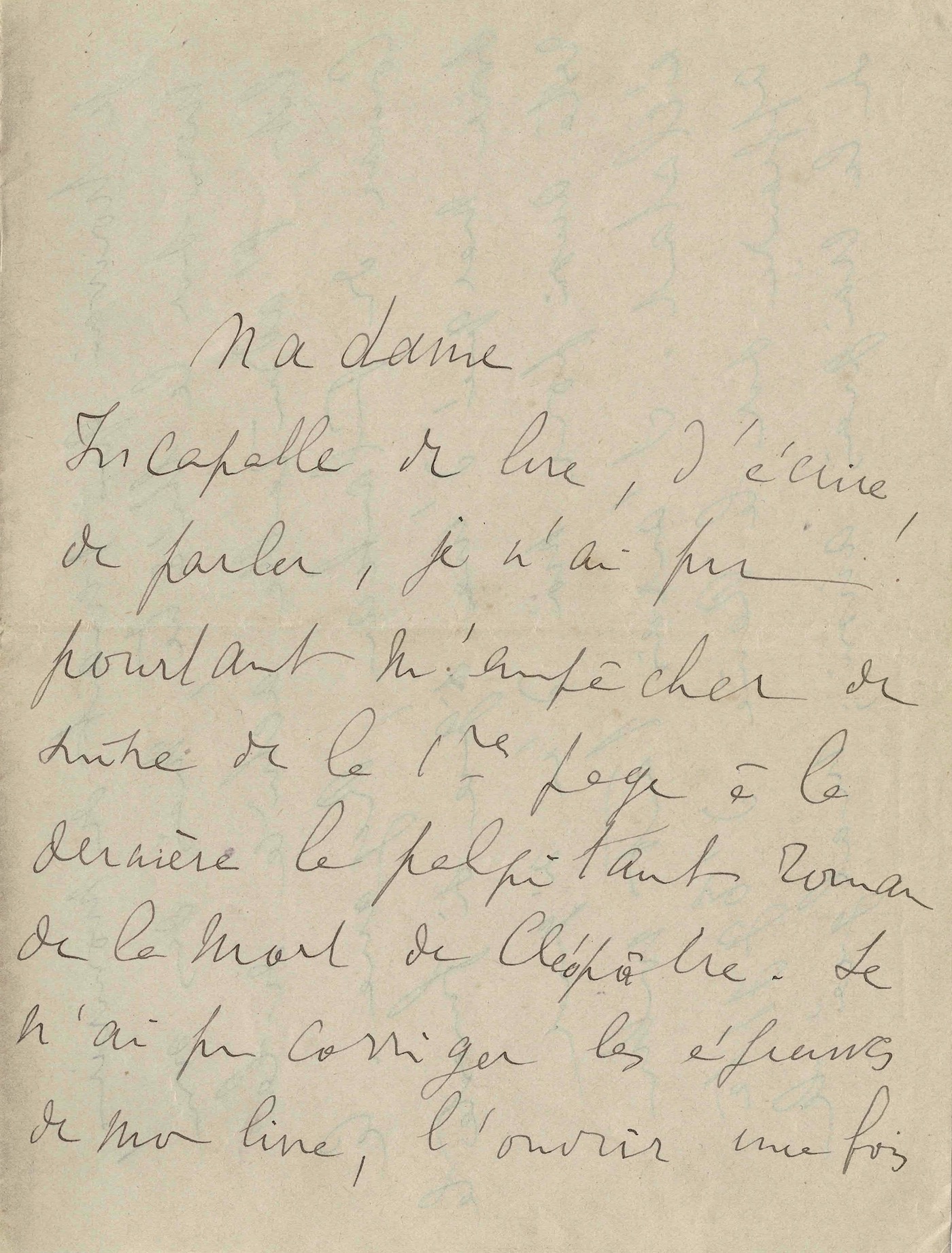
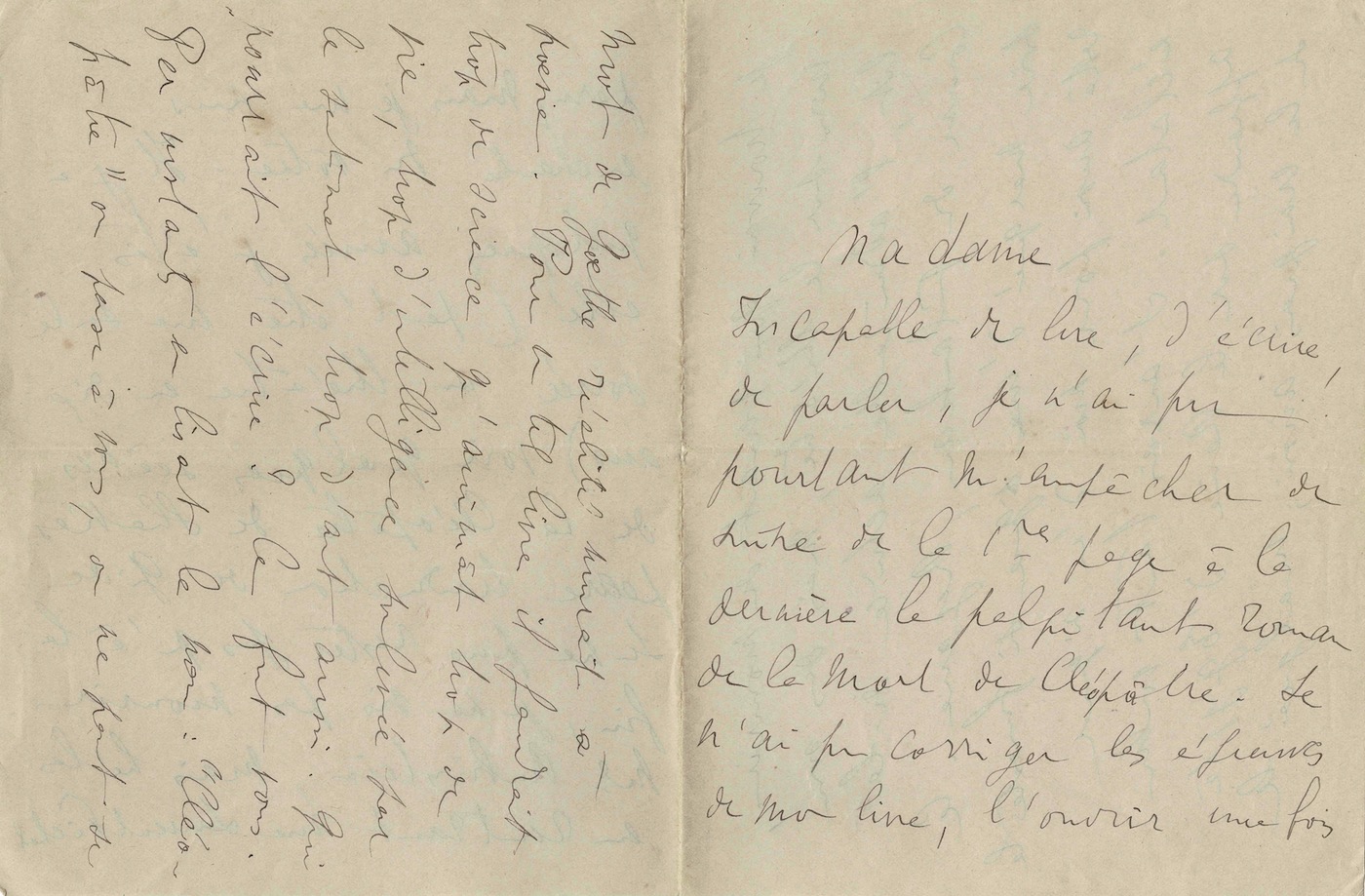
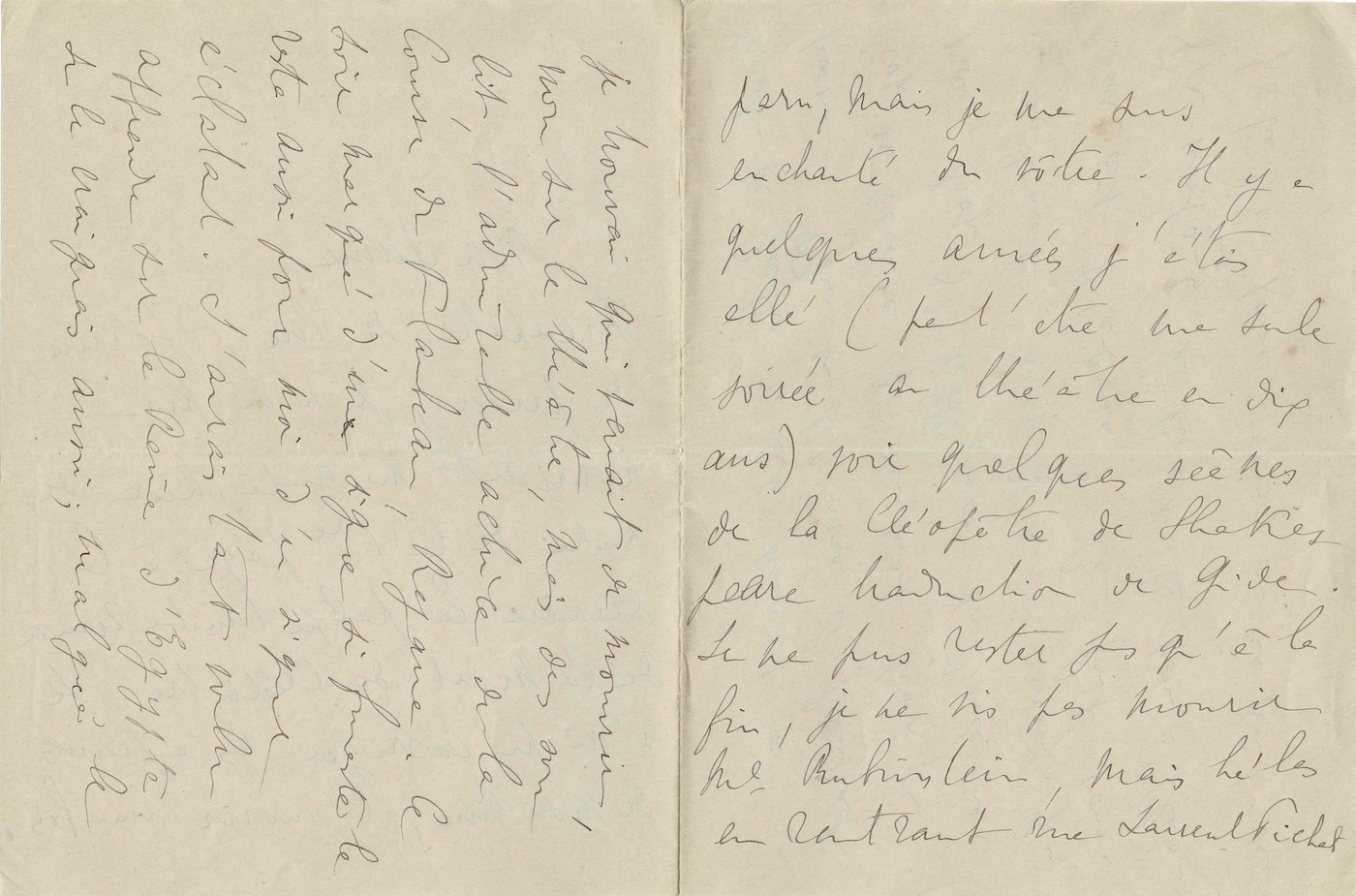
“Madam, Incapable of reading, writing, or speaking, I nevertheless could not help but follow the gripping novel The Death of Cleopatra from the first page to the last. I was unable to correct the proofs of my own book, or even open it once it was published [ Sodom and Gomorrah II , published April 29, 1922], but I am delighted with yours. A few years ago, I went (perhaps only once in ten years to the theater) to see some scenes from Shakespeare’s Cleopatra, translated by Gide. I could not stay until the end; I did not see Madame Rubinstein die , Race of the Torch , had just died, not on the stage, but in her bed .”
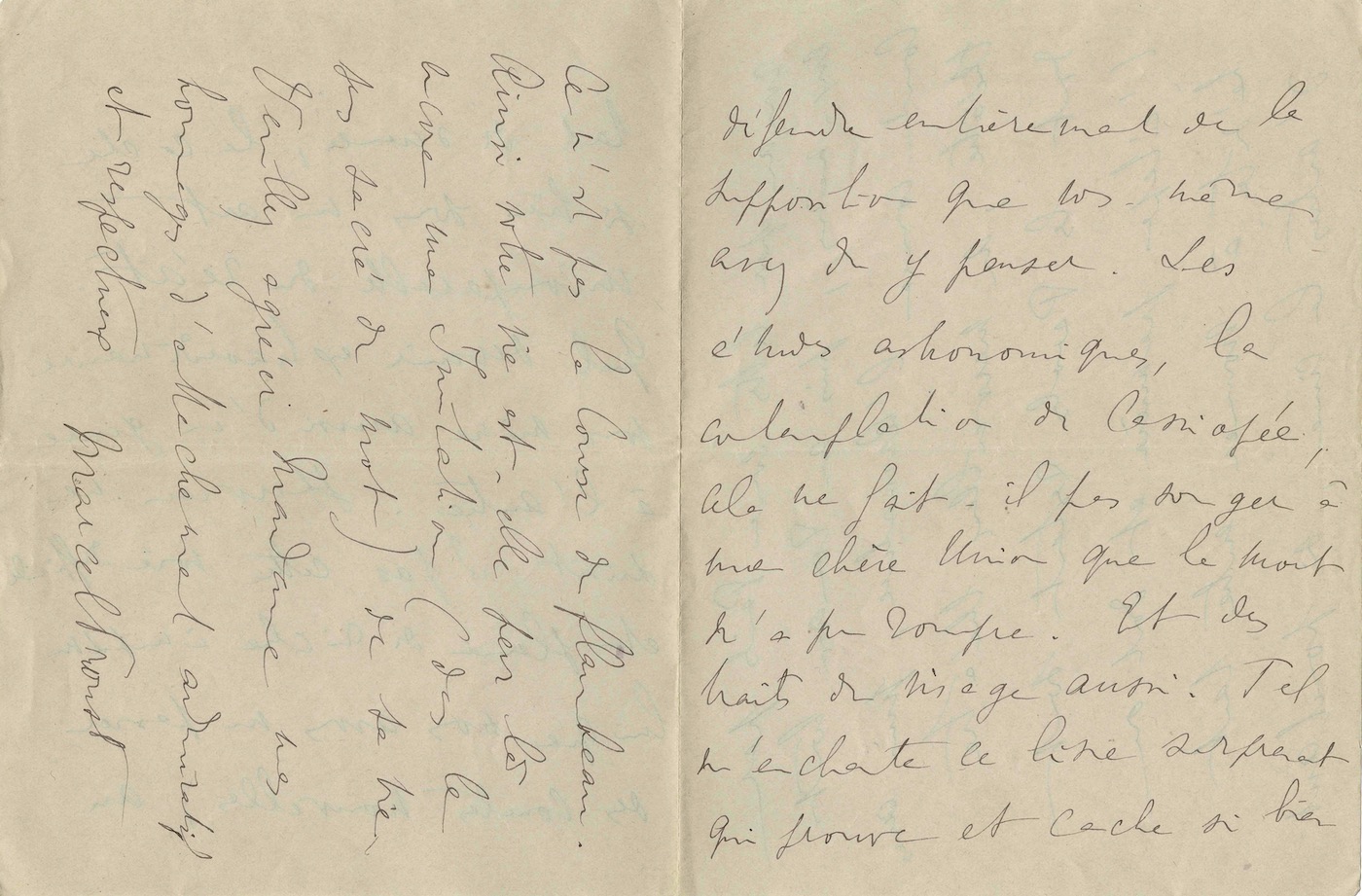
This evening, marked by such a fateful omen, remained for me a shining sign as well. I so longed to learn about the Queen of Egypt. I feared it too; despite Goethe's words, reality would detract from poetry. Such a book would require too much knowledge animated by too much life, too much intelligence stirred by feeling, too much artistry as well. Who could write it? It was you. At times, reading the name "Cleopatra," one thinks of you; one cannot entirely shake the supposition that you yourself must have thought of it. The astronomical studies, the contemplation of Cassiopeia—doesn't this evoke a cherished union that death could not break? And the features of her face, too. This astonishing book delights me, a book that both reveals and conceals so much knowledge, hiding it so well beneath an incomparable art of storytelling.
What an extraordinary journey leads you thus from one genre to another! Did not Hervieu follow this difficult path, full of rich unforeseen events, he whom we saw move from short stories to the epistolary novel, such as <i>Peintres par eux-mêmes</i>, then to the novel proper, such as <i>L'Armature</i>, and then to the theater, to the marvelous theater of which <i> Les Paroles restent</i> is the first stage and whose summit one hesitates to name among so many others, if indeed it is not <i>La Course du torche</i>? Thus, your life is, in this way, yet another Imitation (in the sacred sense of the word) of his life. Please accept, Madam, my compliments of admiring and respectful attachment. Marcel Proust.