NAPOLEON (1769.1821)
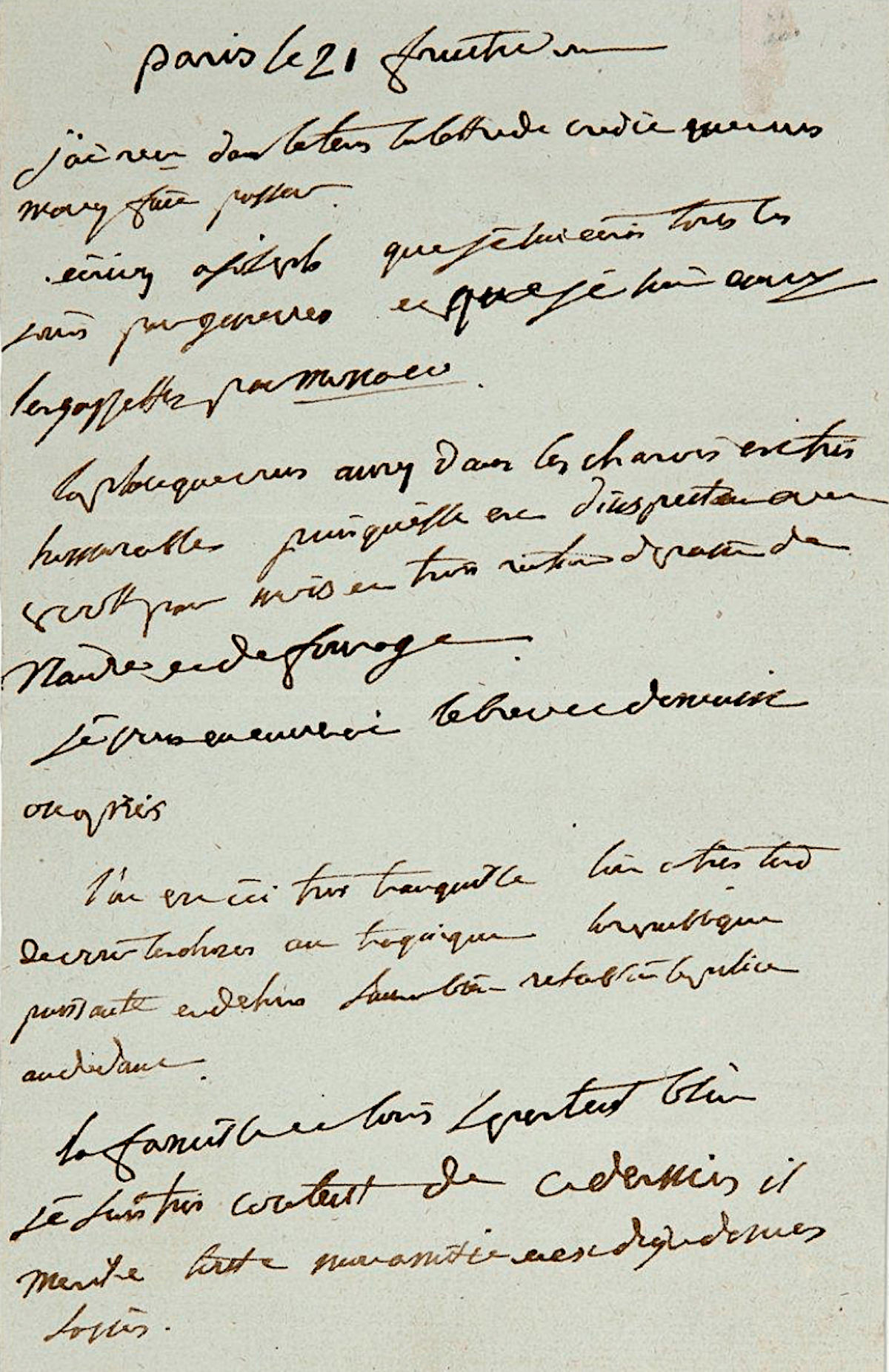
Autographed letter signed to André Ramolino, cousin of Letizia Bonaparte.
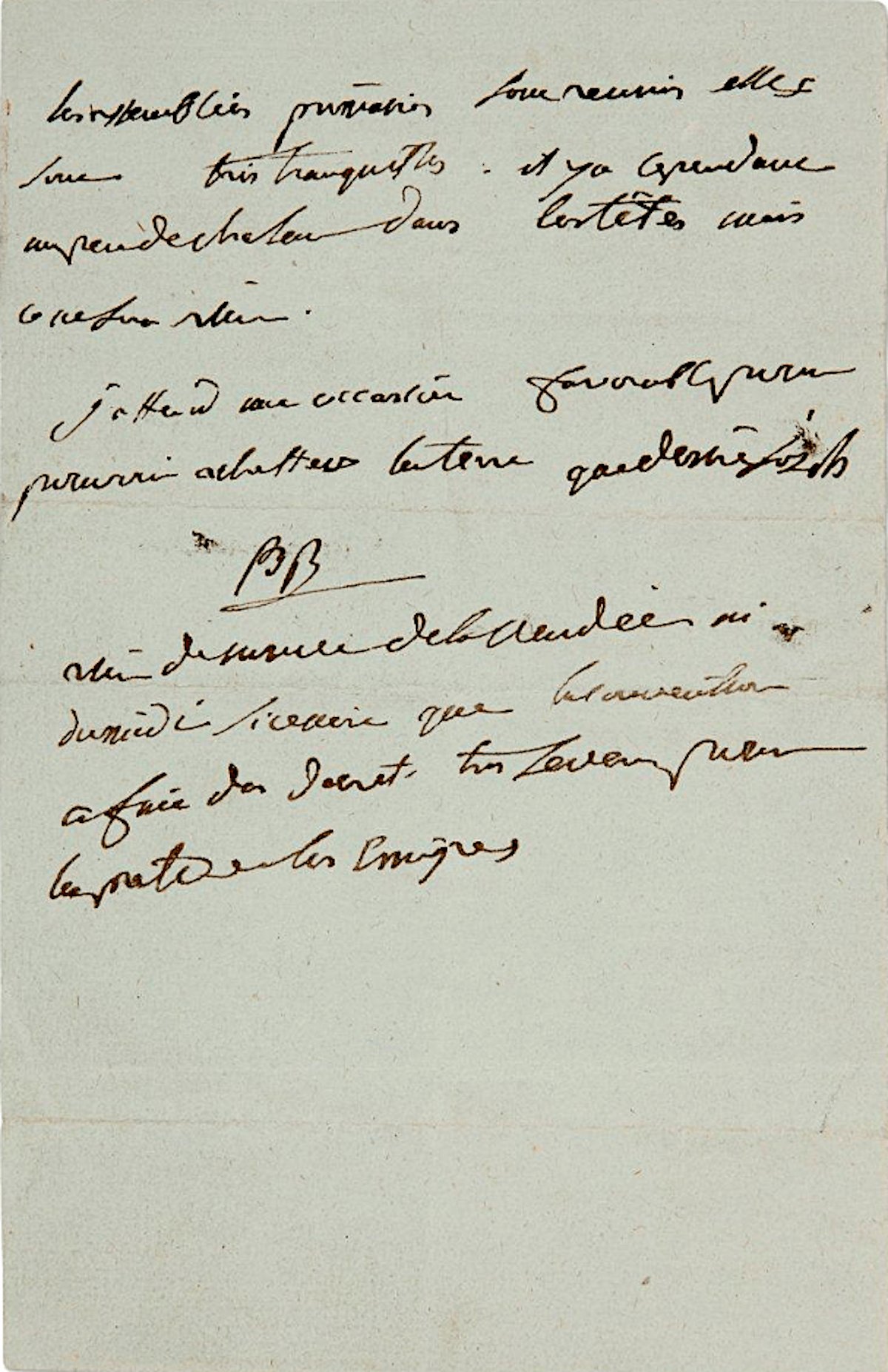
Two octavo pages
Paris. 21 Fructidor (September 7, 1795)
A precious and rare letter in Bonaparte's own hand concerning his brothers Joseph and Louis, as well as the political situation in France after the Convention adopted the Constitution of Year III.
"I received the letter of credit you sent me in due course. Write to Joseph; I write to him daily from Geneva and send him the newspapers from Monaco. The position you will have in the transport corps is very honorable, as it is that of inspector with 800 livres per month and three rations of bread, meat, and fodder. I will send you the official certificate tomorrow or the day after. Things are very calm here; it is quite wrong to see things tragically. The powerful Republic abroad will certainly restore order at home. The family and Louis are doing well. I am very pleased with him; he deserves all my friendship and is worthy of my care. The primary assemblies have met and are very peaceful. There is, however, a little tension, but it will amount to nothing. I am waiting for a favorable opportunity to buy the land Joseph desires. BP." Nothing new from the Vendée or the south, except that the Convention has issued very severe decrees against priests and émigrés.
This letter is addressed to the first cousin of the future emperor's mother: André Ramolino. A Corsican politician born and died in Ajaccio, Ramolino was a loyal supporter of Napoleon. The two men were already doing business together as early as 1792, as evidenced by a letter from Cardinal Fesch dated September 10th. This loyalty from Napoleon would culminate in a final favor: a few hours before leaving his fallen empire in June 1815, he made his correspondent the last Count of the Empire.
In this letter, Bonaparte promised Ramolino the commission of Inspector of Transport. The gift was substantial: this now-forgotten term referred to the transport of provisions, military equipment, artillery supplies, and other supplies, which took the form of highly lucrative companies. Joseph Bonaparte himself also held this position. Bonaparte's promise, expressed in this letter, was kept. Another letter, addressed to his brother Joseph, dated October 9, 1795, is explicit: " Ramolino is appointed Inspector of Transport ."
Written in the aftermath of the first republican constitution (Constitution of Year III), these lines are a powerful testimony to the Parisian atmosphere during these pivotal hours in French history.
Napoleon's character, ambition, brotherly love, republican fervor, and lucidity appear in turn upon reading this page.
Napoleon, in fact, would tirelessly strive to provide for his brothers and raise them, along with him, to the highest office in the land. This concern for their well-being is very clear in this letter. And his daily correspondence with his brother Joseph during this same period echoes it. The day before our letter, another letter addressed to Joseph proclaims this same affection: “ I am very pleased with Louis; he lives up to my hopes and expectations. He is a fine fellow; but also, he is like me: warmth, wit, health, talent, tactful communication, kindness—he has it all. You know, my friend, I live only for the pleasure I bring to my family. If my hopes are supported by the good fortune that never abandons me in my endeavors, I will be able to make you happy and fulfill your desires. ”
Above all, his determination and initial faith in the Republic seem unshakeable. Our letter precedes by only a few weeks the bloody repression of the royalist uprising. Indeed, on October 5th, Bonaparte, having just been appointed commander-in-chief of the Army of the Interior, ordered the crowd in front of Saint-Roch to be machine-gunned, killing 300 Frenchmen. This complete commitment to the revolutionary cause is very clear and, in his writing, takes on the force of a historical formula: "The powerful republic abroad will surely restore order at home ." This, in just a few words, summarizes Napoleon's policy for the next twenty years!
Paradoxically, Napoleon Bonaparte's reservations about the fate of the Vendée, the priests, and the émigrés are frankly expressed. Once again, our letter precedes by only a few days Bonaparte's refusal to join the Army of the West, the army tasked with brutally suppressing the Vendée uprising. This refusal, dictated by his conscience, would lead to his exclusion from the list of generals by the Committee of Public Safety, until his coup at Vendémiaire. The Nota Bene in this letter is crucial. It reveals Bonaparte's complete reassessment of the Convention's errors and prophetically foreshadows his unwavering determination to later reunite the France of Clovis with that of the Committee.