
"I can only explain what happened by the mixing of poisons ."
Sold
Amedeo Modigliani (1884.1920)
Autographed letter signed to Paulette Philippi, known as "Manon".
Two and a half pages in-8° on graph paper.
Paris. (1906-1910). Slight consolidations at the folds.
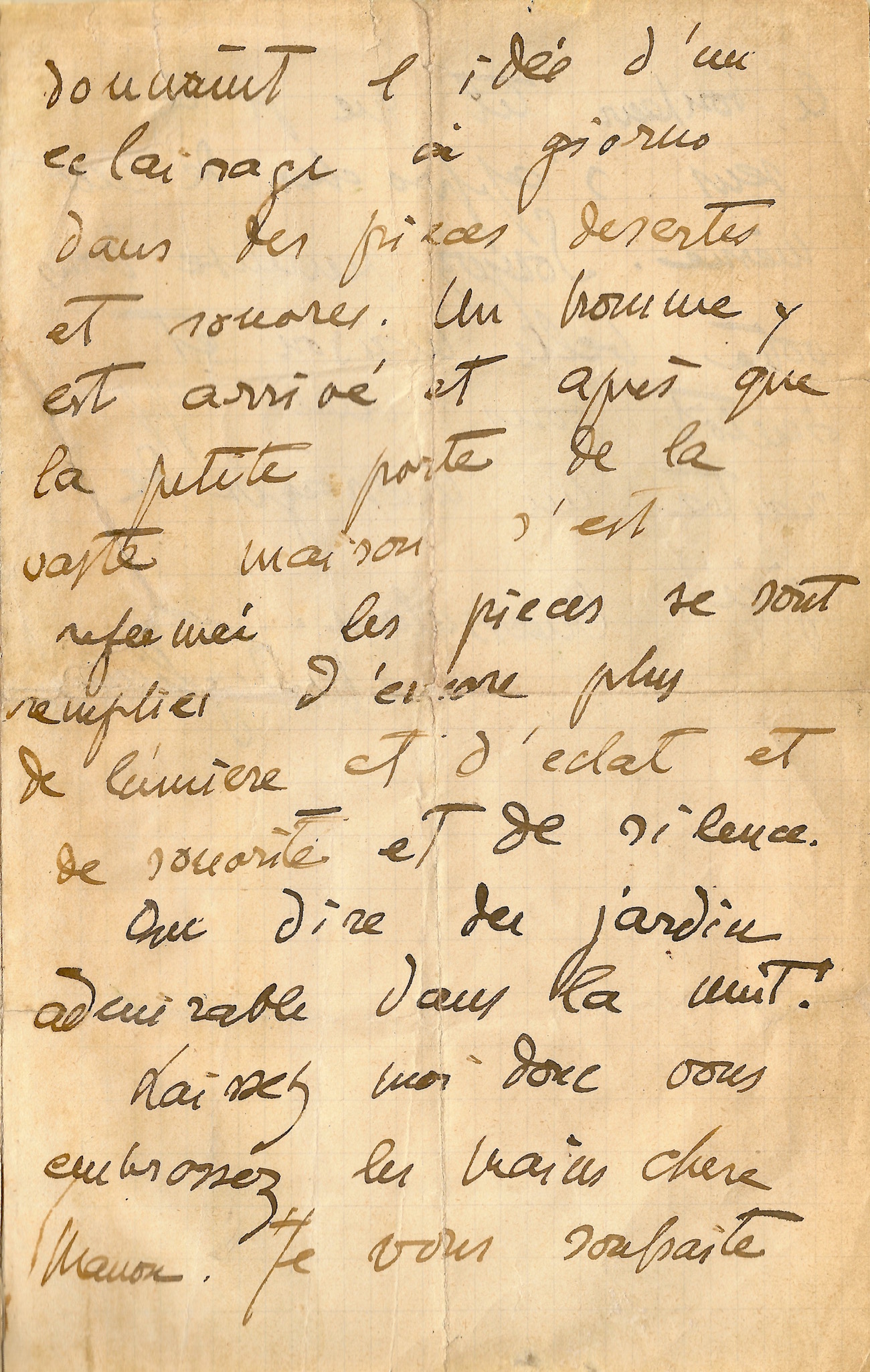
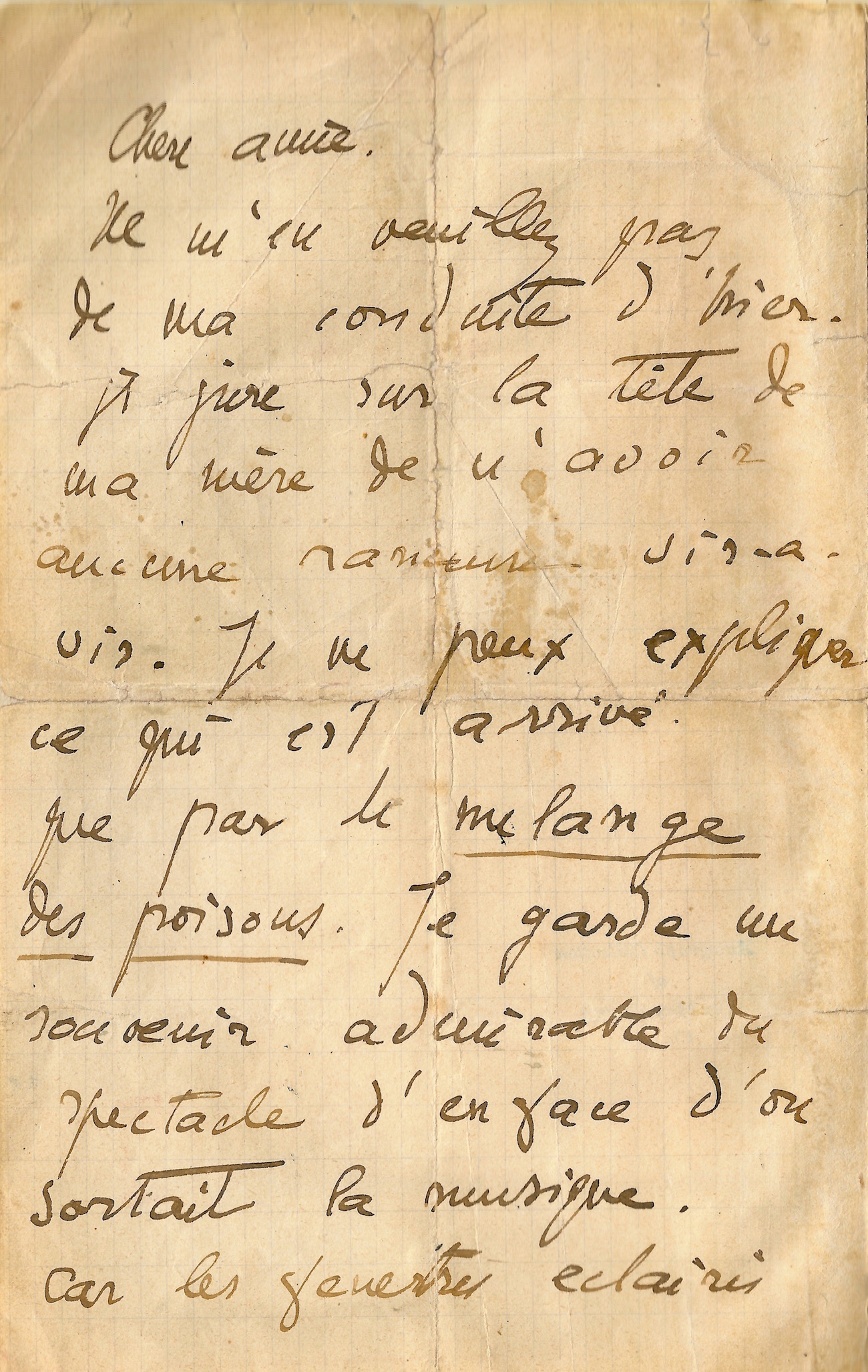
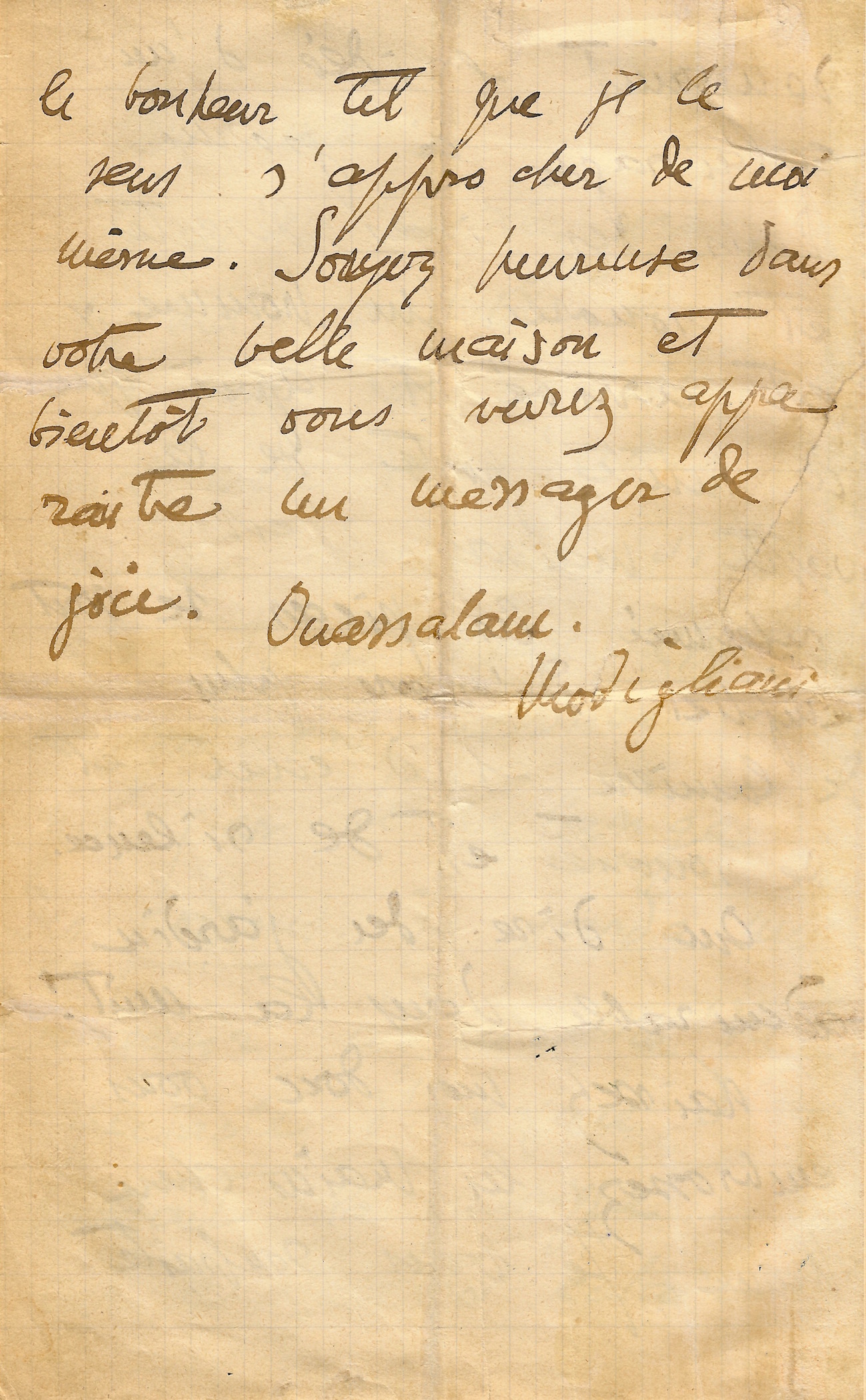
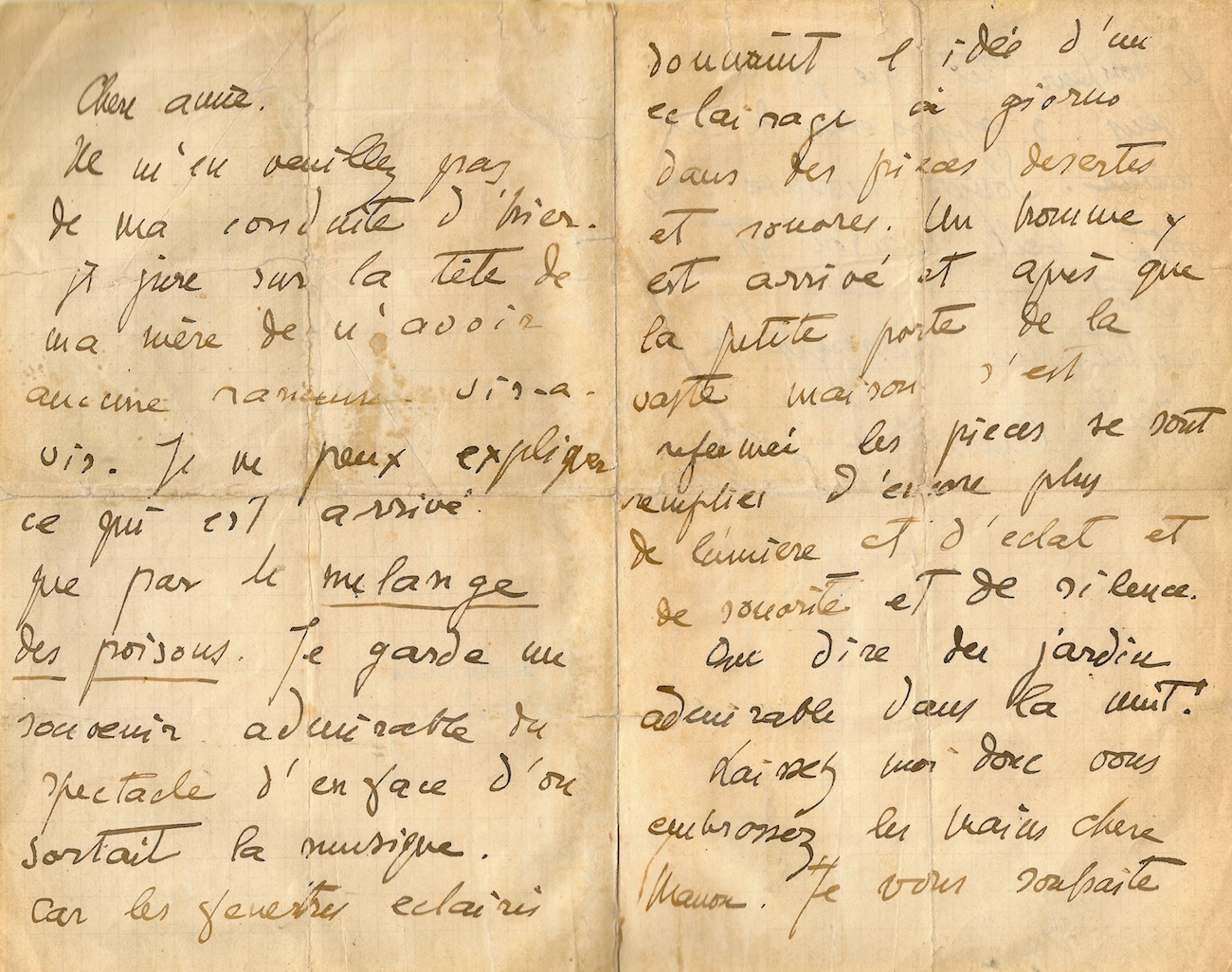
"I can only explain what happened by the mixing of poisons ."
A very rare letter from Modigliani, addressed to Manon, muse of the painters of Montparnasse, supplier of drugs and pleasures for the artists of La Bohème.
The painter apologizes for his unacceptable behavior, which he attributes to the Mixture of Poisons , describes a hallucinatory night scene, and presents himself as a "messenger of joy."
__________________________________
“Dear friend, please don’t hold my behavior yesterday against me. I swear on my mother’s life that I bear no grudge . I can only explain what happened by the mixing of poisons . I have a wonderful memory of the scene across the street from which the music was coming. The lit windows gave the impression of daylight in deserted, noisy rooms. A man arrived, and after the small door of the vast house closed, the rooms filled with even more light, brilliance, sound, and silence . What can I say about the magnificent garden at night! Let me kiss your hands, dear Manon. I wish you the happiness that I feel approaching me. Be happy in your beautiful home, and soon you will see a messenger of joy appear. Peace be upon you. Modigliani.”
Like most of Amedeo's letters, this one is neither dated nor written from a specified location. Parke Bernet's catalogue mistakenly identified the painter's famous mistress, Béatrice Hastings, as this enigmatic "Manon." But Manon undoubtedly refers to an earlier period in the painter's life. Born Paulette Philippi, Manon held a sort of Chinese salon on the rue de Douai in Montparnasse where, in the early years of the 19th century, young painters indulged in the pleasures of narcotics. It was through Manon and some of her "colleagues" that drug use spread throughout the Parisian bohemian scene of the time. Manon abused the most beautiful men and fell in love with some. She appears under the name Opia in the remarkable diary of Henri-Pierre Roché. Paul Fort would later make her the muse of one of his Ballades françaises (Paris sentimental). And René Dalize, Apollinaire's friend, would describe this Manon as " the Malherbe of prostitution ", according to a phrase noted by André Salmon.
“ I smoked at Manon’s. Apollinaire smoked. Picasso tried it but didn’t persevere. For a moment, in the Bateau-Lavoir studio, you could see the beginnings of a smoking room (…) Manon, who sometimes went up to the Place du Tertre, had noticed Modigliani there, finding him handsome. She urged me to bring him back to her on Rue de Douai: It wouldn’t be so much for the act itself (…) but don’t you think a handsome guy like him (…) would look good on my braid? I think he’d take to it, and I’d also enjoy, after a few well-packed pipes, running my fingers through his oriental hair ” (A. Salmon, The Passionate Life of Modigliani, 1957, pp. 85-87).