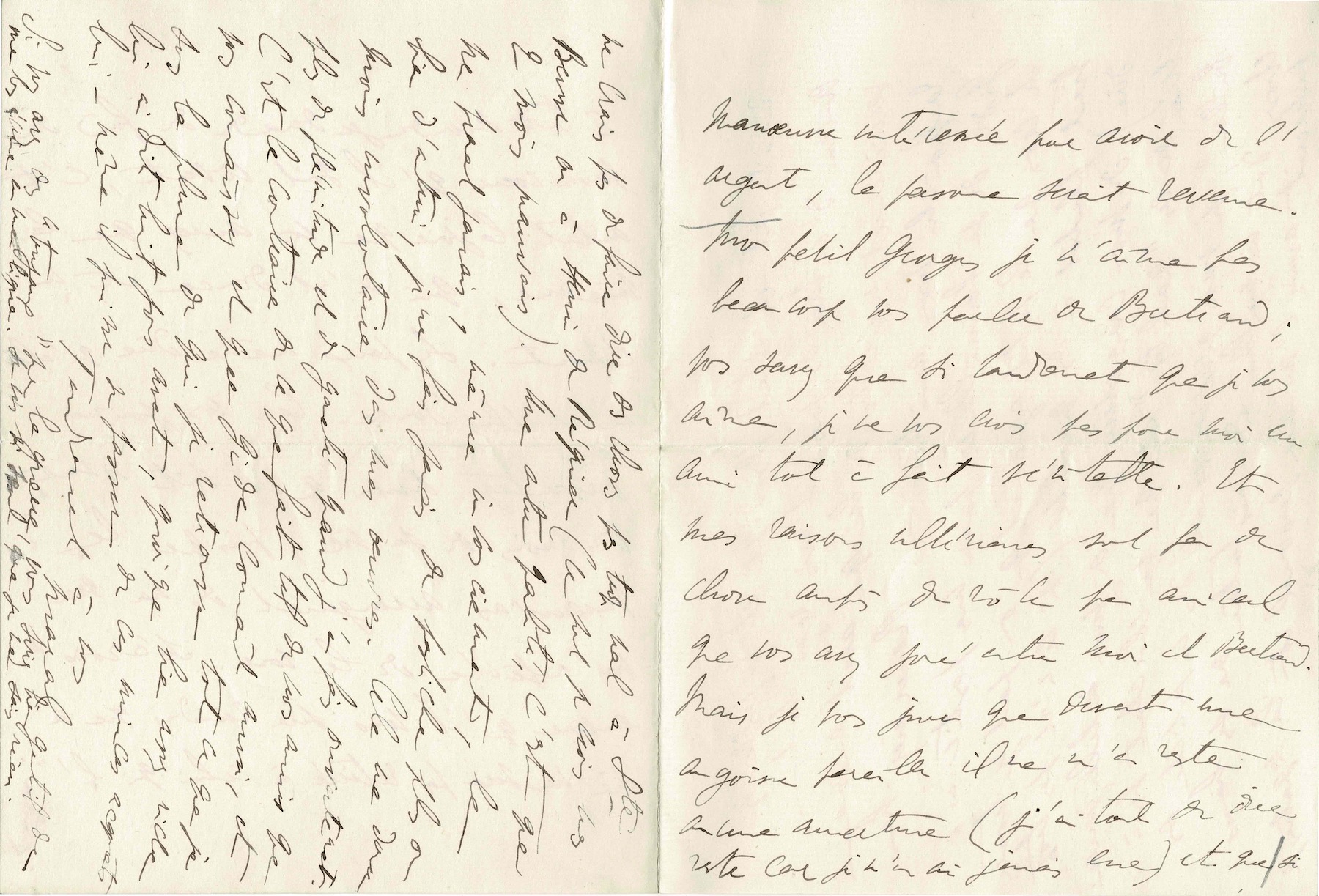

"You know that however tenderly I love you, I don't consider you a completely true friend to me."
Sold
Marcel Proust (1871.1922)
Autographed letter signed to Georges de Lauris
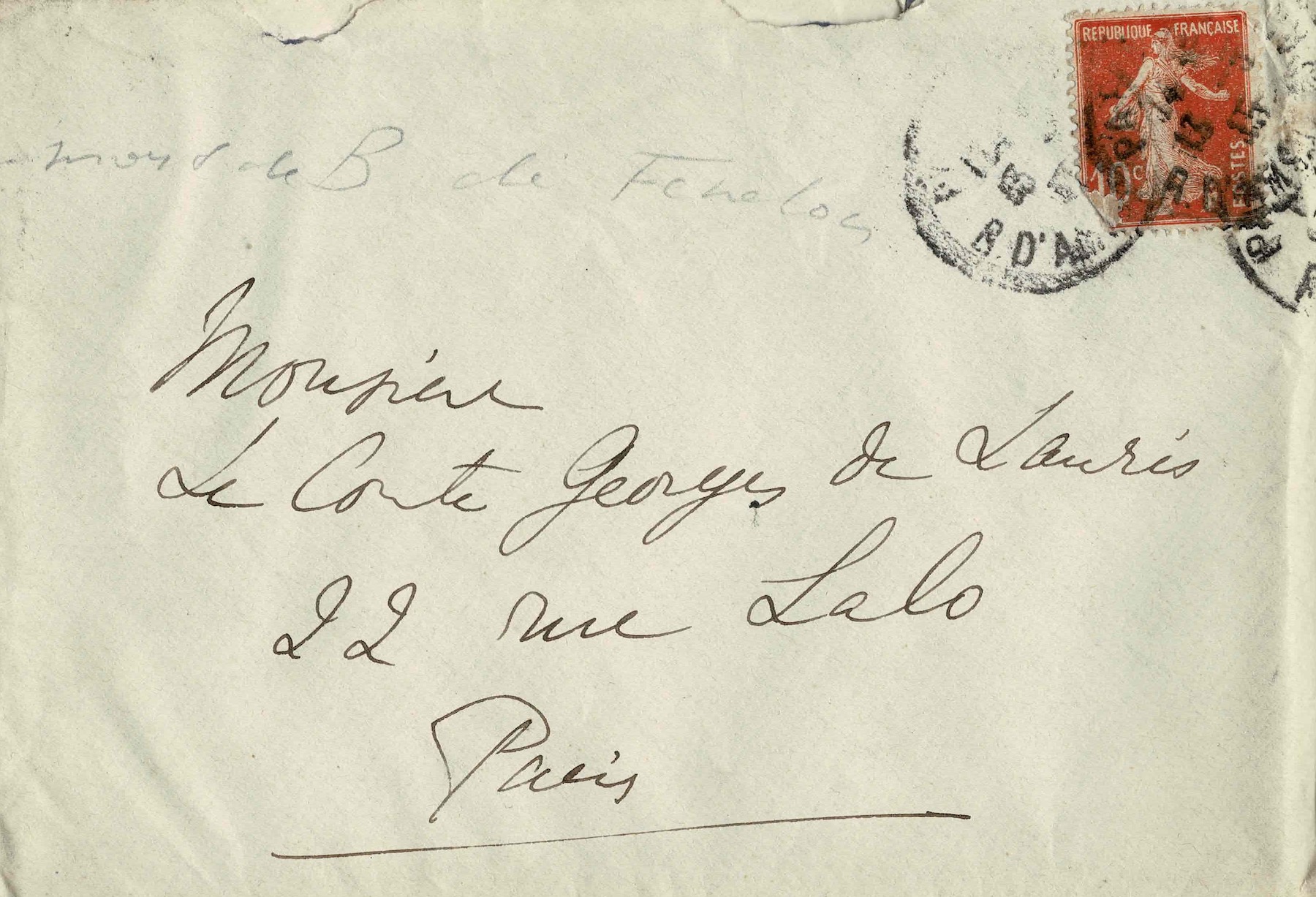
Eight pages in-8°. Autograph envelope.
Slnd [shortly before March 13, 1915]
Kolb, Volume XIV, pages 82 to 85.
"You know that however tenderly I love you, I don't consider you a completely true friend to me."
A long and beautiful letter on the dramas of the First World War, its pastiches and André Gide.
_____________________________________________________
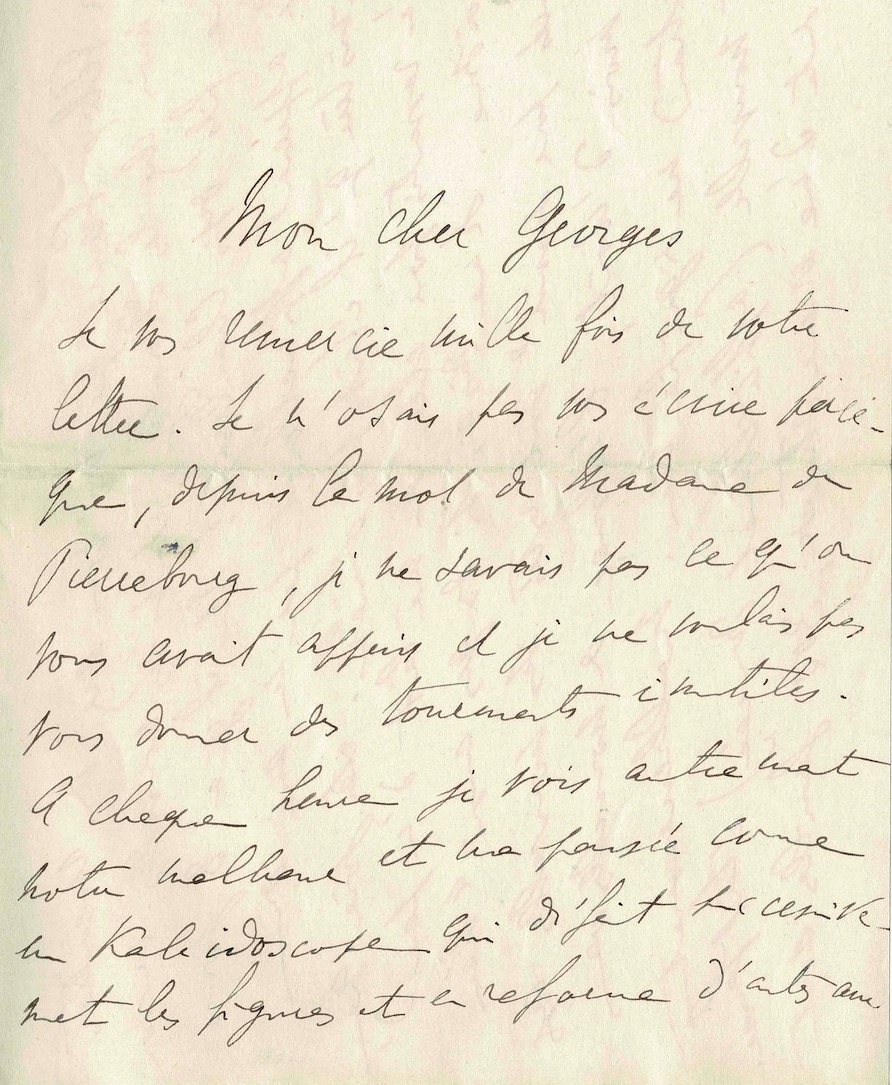
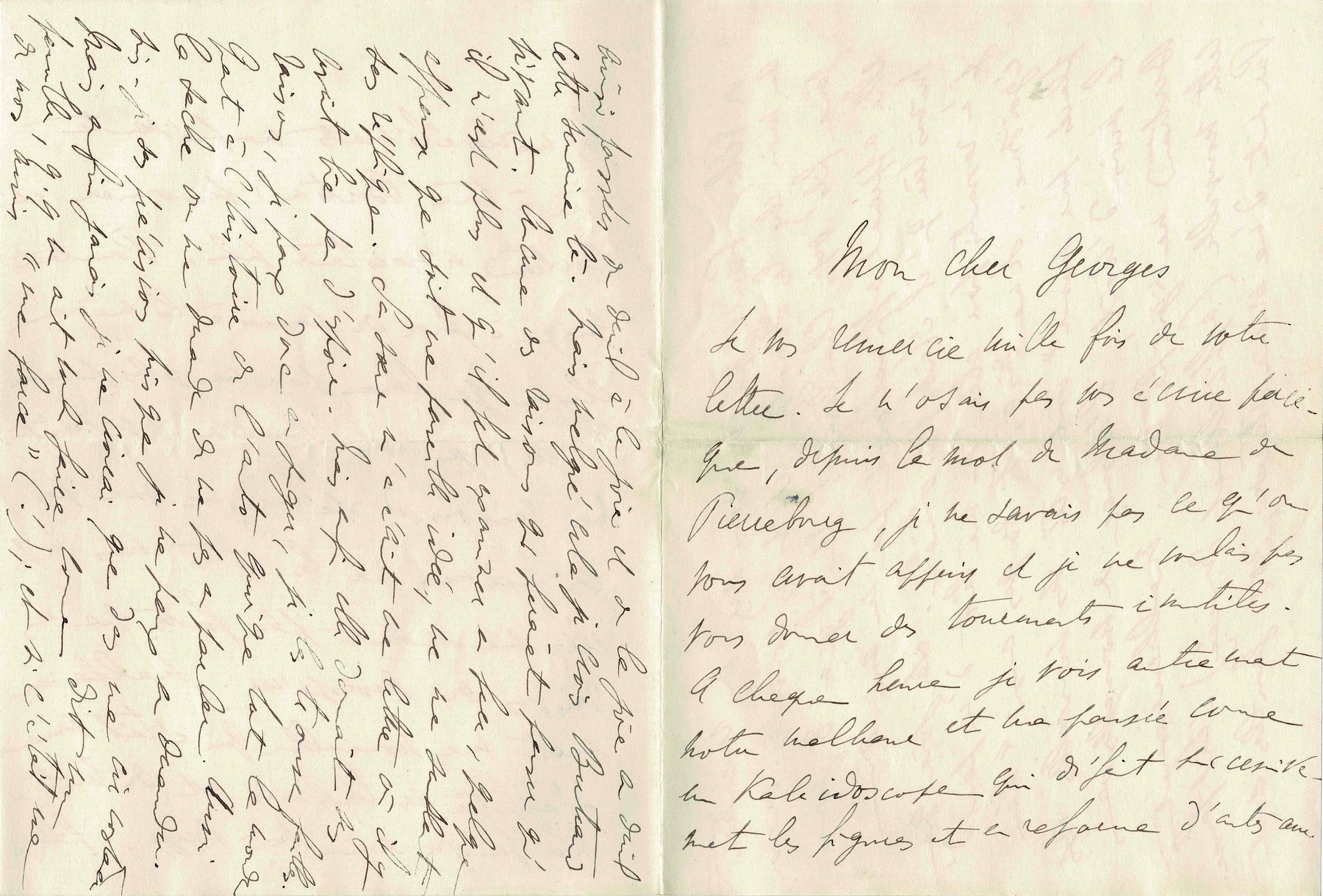
“My dear Georges, I thank you a thousand times for your letter. I did not dare to write to you because, since Madame de Pierrebourg’s note, I did not know what you had been told and I did not want to cause you unnecessary torment.
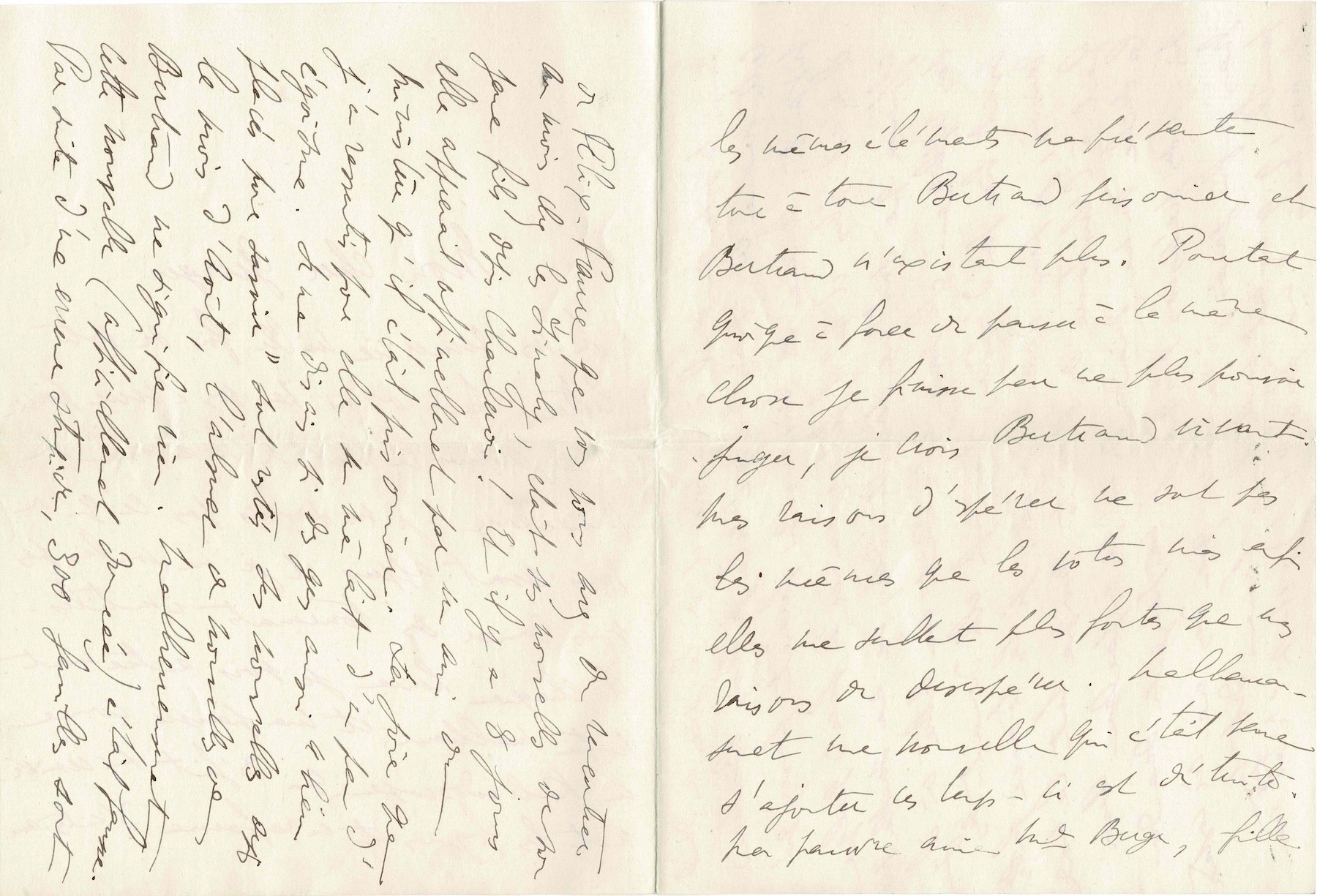
Every hour I see our misfortune differently, and my thoughts, like a kaleidoscope that successively unravels figures and reforms others with the same elements, present me by turns with Bertrand [Bertrand de Fénelon] as a prisoner and Bertrand as no longer existing. Yet, although by constantly dwelling on the same thing I end up no longer being able to judge, I believe Bertrand is alive. My reasons for hope are not the same as yours, but they seem stronger than my reasons for despair.
Unfortunately, a piece of news that had recently surfaced has been destroyed. My poor friend, Mrs. Berge, daughter of Félix Faure, whom you must have met at least once at the Finaly's, had had no news of her young son since Charleroi! And eight days ago, she officially learned from a friend at the ministry that he was a prisoner. The joy I felt for her was tinged with a bit of selfishness. I thought to myself, if people so "well-placed to know" had remained without news since August, the lack of news about Bertrand meant nothing. Unfortunately, this news (officially given) was false. As a result of a stupid error, 300 families went from mourning to joy and from joy to mourning that week.
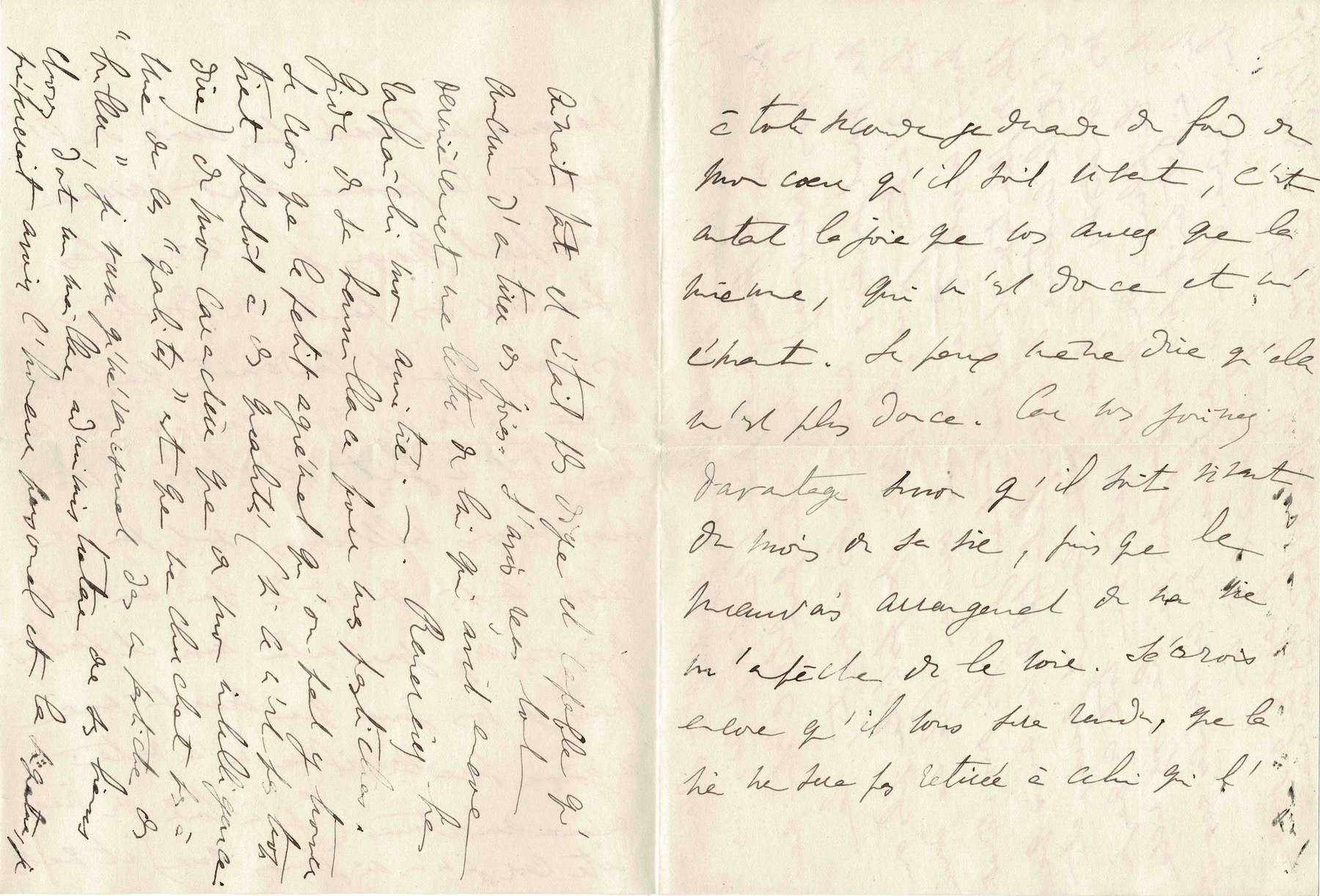
But despite all that, I believe Bertrand is alive. None of the reasons that would lead one to think he's gone and that must be confronted head-on, however dreadful such an idea may be, seemed to me to be without rebuttal. His sister wrote me a letter in which there was very little hope. But at least she gave her reasons, so I can judge them; I find them weak. As for the story of the car, although everyone knows it, I've been asked not to talk about it. So I have no details since I can't ask for them. But I will never believe that in such circumstances, someone would have wanted to play, as one of our friends put it, "a prank" (!); and if it had been a self-serving maneuver to get money, the person would have come back.
My dear Georges, I don't much like talking to you about Bertrand; you know that however tenderly I love you, I don't consider you a truly true friend to me. And my subsequent reasons pale in comparison to the unfriendly role you played between Bertrand and me. But I swear to you that, faced with such anguish, I feel no bitterness (I'm wrong to say "feels" because I never have), and that if every second I wonder from the bottom of my heart whether he is alive, it is as much the joy you will have as my own that is sweet and moves me. I can even say it is sweeter. For you will enjoy, if not his life, at least his life, since the unfortunate circumstances of my life prevent me from seeing him. I still believe that he will be returned to you, that life will not be taken from the one he loved so much and who was more worthy than anyone of deriving joy from it. I had recently received a letter from him which had further refreshed our friendship.
Please thank Gide for his kindness regarding my pastiches . I believe that the slight charm one might find in them stems more from qualities (if I may say so myself) of my character than from my intelligence. One of these "qualities" is that, not seeking to "shine," I generally indulge in pastiches of things for which a better steward of his estate would prefer to have the personal honor and signature . I am not afraid to put words in the mouths of Sainte-Beuve or Henri de Régnier (they are, I believe, my two least bad). Another quality is that, never appropriating, even unconsciously, the work of others, I never create a more or less unintentional pastiche in my writings. This gives me greater fulfillment and joy when I do it openly. This is the opposite of what one of our friends, whom you know and whom Gide also knows, does, and in whose writing I find everything I told him eight days ago, although, being quite wealthy himself, he can do without these meager gains. Yours affectionately, Marcel. If you have any "tips" about the war, it would be very kind of you to write them down for me in a line. I live so alone that I know nothing .