Marcel Proust (1871.1922)
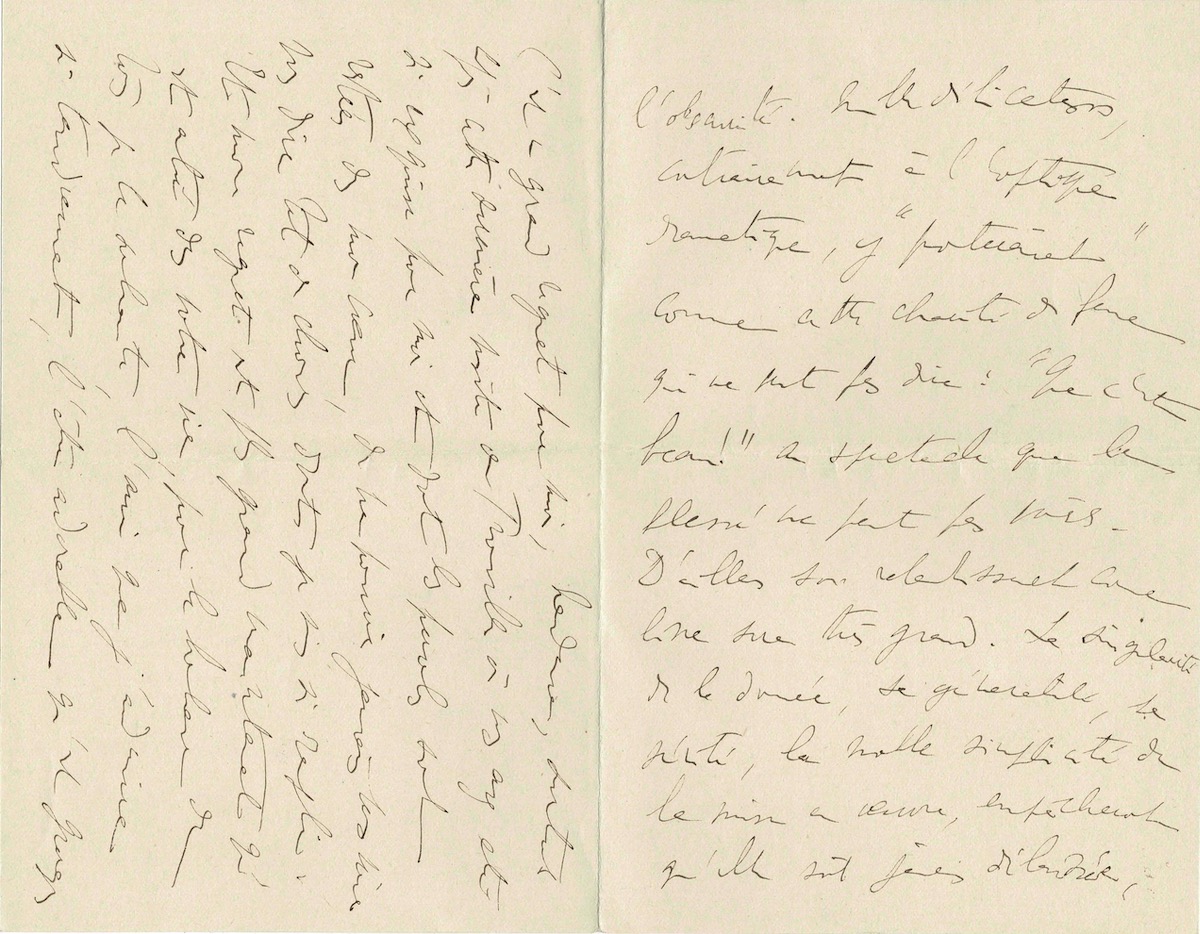
Autographed letter signed to Baroness Aimery Harty de Pierrebourg.
Eight pages in-12°. 102 bd Hausmann [early November 1911]
Kolb, Volume X, pages 368 to 370.
"I increasingly believe that the artist has his work before him, and he must not change anything about it."
Proust is delighted with Mme de Pierrebourg's latest publication.
___________________________________________________________
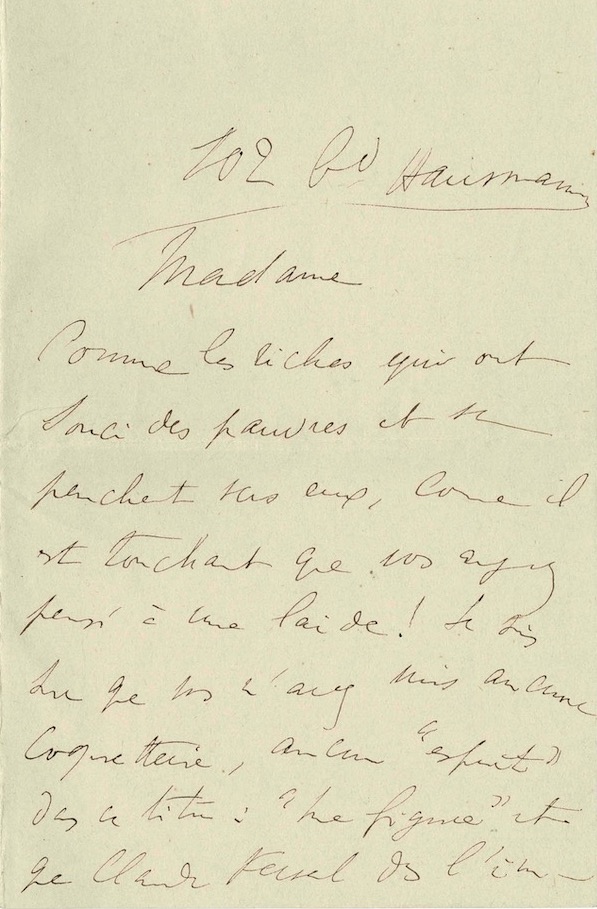
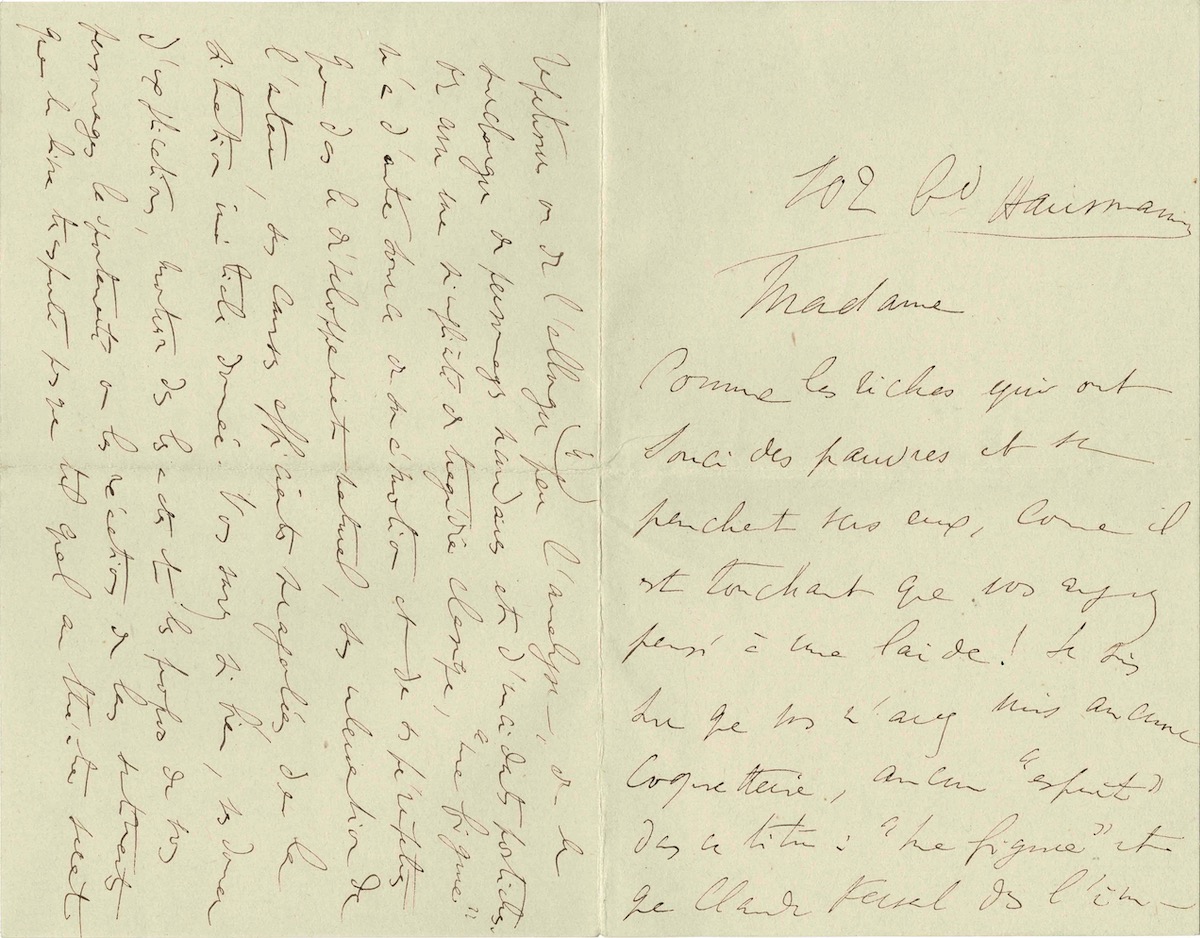
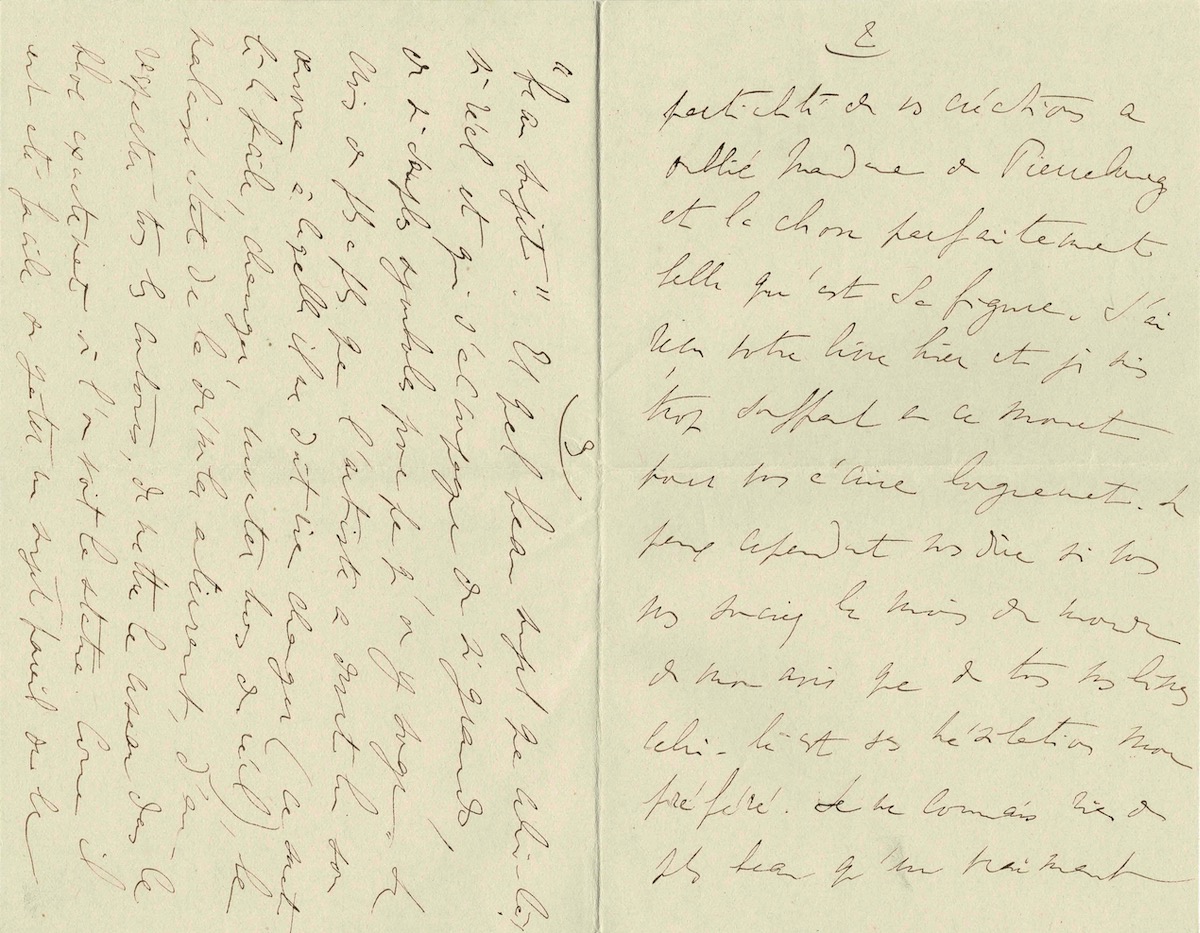
“Madam, like the rich who care for the poor and bend down to them, how touching it is that you thought of an ugly woman! I am sure that you put no coquetry, no “wittiness” into this title: My Face , and that Claude Ferval [the literary pseudonym of Mme de Pierrebourg], in the impartiality of your creations, forgot Madame de Pierrebourg and the perfectly beautiful thing that is Her face? I received your book yesterday and I am too unwell at the moment to write to you at length.”
I can tell you, however, if you care in the least about my opinion, that of all your books, this one is without hesitation my favorite. I know nothing more beautiful than a truly "beautiful subject." And what a beautiful subject this is! So real, and accompanied by such grand, such supple symbols, if one only reflects upon them. I increasingly believe that the artist has before him his work, which he must not alter in any way (that would be the easy way, to change, to invent outside of reality), the difficult thing being to reveal it entirely, to respect all its contours, to place the chisel in the block precisely where the statue is seen. How easy it would have been to spoil such a subject, to diminish or lengthen it through analysis, to overload it with secondary characters and contrived incidents. With the simplicity of classical tragedy, My Figure has no other source of emotion and vicissitudes than the natural development, without authorial intervention, without added efficient causes, of the given initial situation. You know so well how to show, without explanation, in the actions and words of your characters the spontaneity or reactions of their feelings that the book, transported almost as is to the stage, would be a truly poignant and original drama, and whose easily allegorical situation would allow each reader to substitute, if necessary, for ugliness, some other secret they might conceal from love. (And on this subject, I wondered if this is how you proceeded while working, or if you, whose destiny reflected the beauty of your smile, could truly have sincerely lived the life of an ugly woman.)
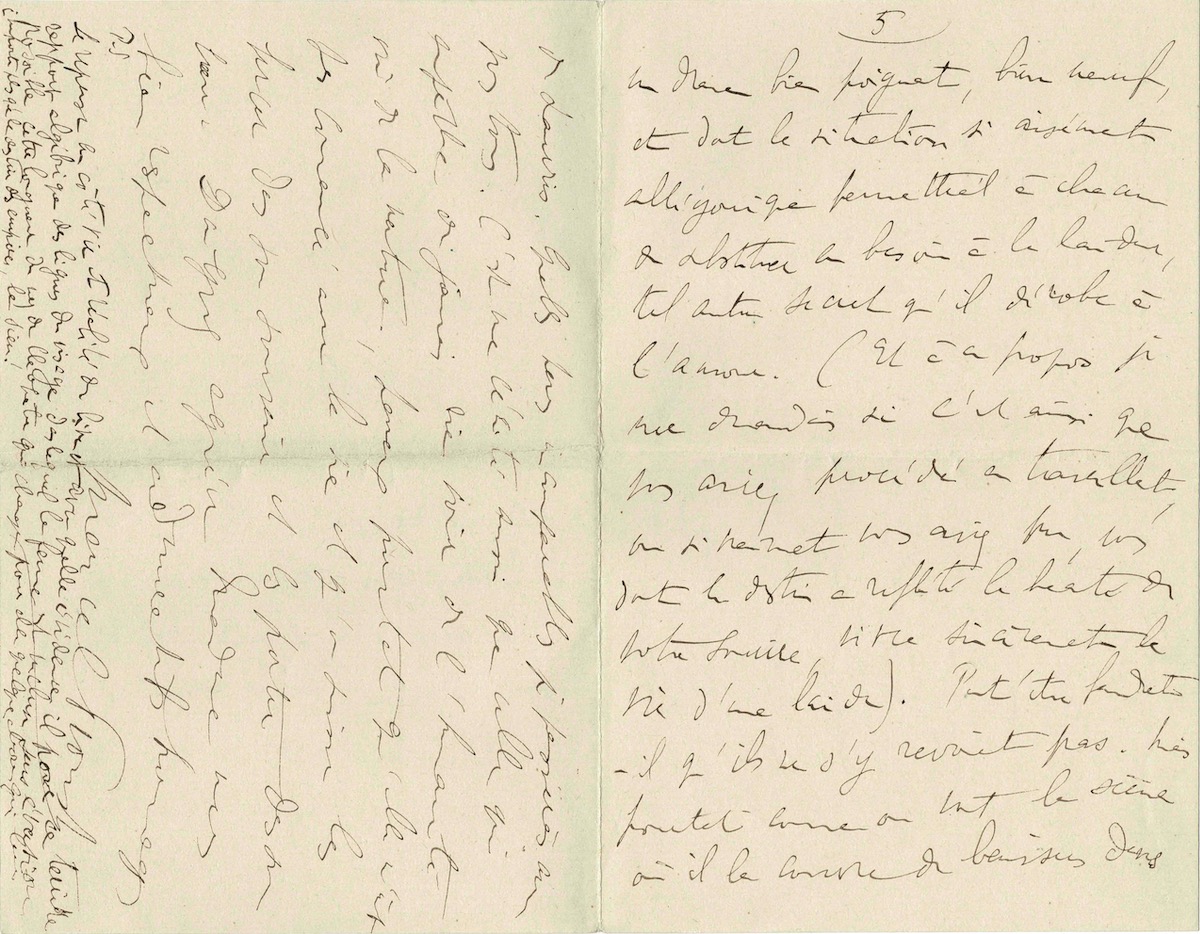
Perhaps they shouldn't see each other there again. But yet, how we see the scene where he covers her with kisses in the darkness. A thousand delicate touches, contrary to the dramatic perspective, would "carry" there, like that woman's charity that refuses to exclaim, "How beautiful!" at the sight the wounded man cannot see. Moreover, its impact as a book will be immense. The singularity of the subject matter, its generality, its truth, the noble simplicity of its execution, will prevent it from ever being forgotten.
It is with great regret that I, Madam, especially after that last visit to Trouville, where you were so exquisite to me and whose words have remained in my heart, never to see you say so many things that fill me with such emotion. And my regret is even greater now that, for the happiness of all, I hope, the friend I so tenderly admire, the adorable Georges de Lauris, has entered your life. What incomparable hours I would spend with you all! It is also a kind of blindness that prevents one from ever seeing anything of humanity or nature, fortunate though it may be that it did not begin with life itself, and that one can cherish them in one's memory and carry them in one's heart. Please accept, Madam, my most respectful and admiring regards. Marcel Proust.
PS I keep thinking about the lifelike, realistic aspect of the book and how clearly it presents this terrible algebraic relationship of facial lines in which woman is included without any possible escape, this length of Cleopatra's nose which changes something for her that matters more than the fate of empires, her own!