Léopoldine HUGO (1824.1843)
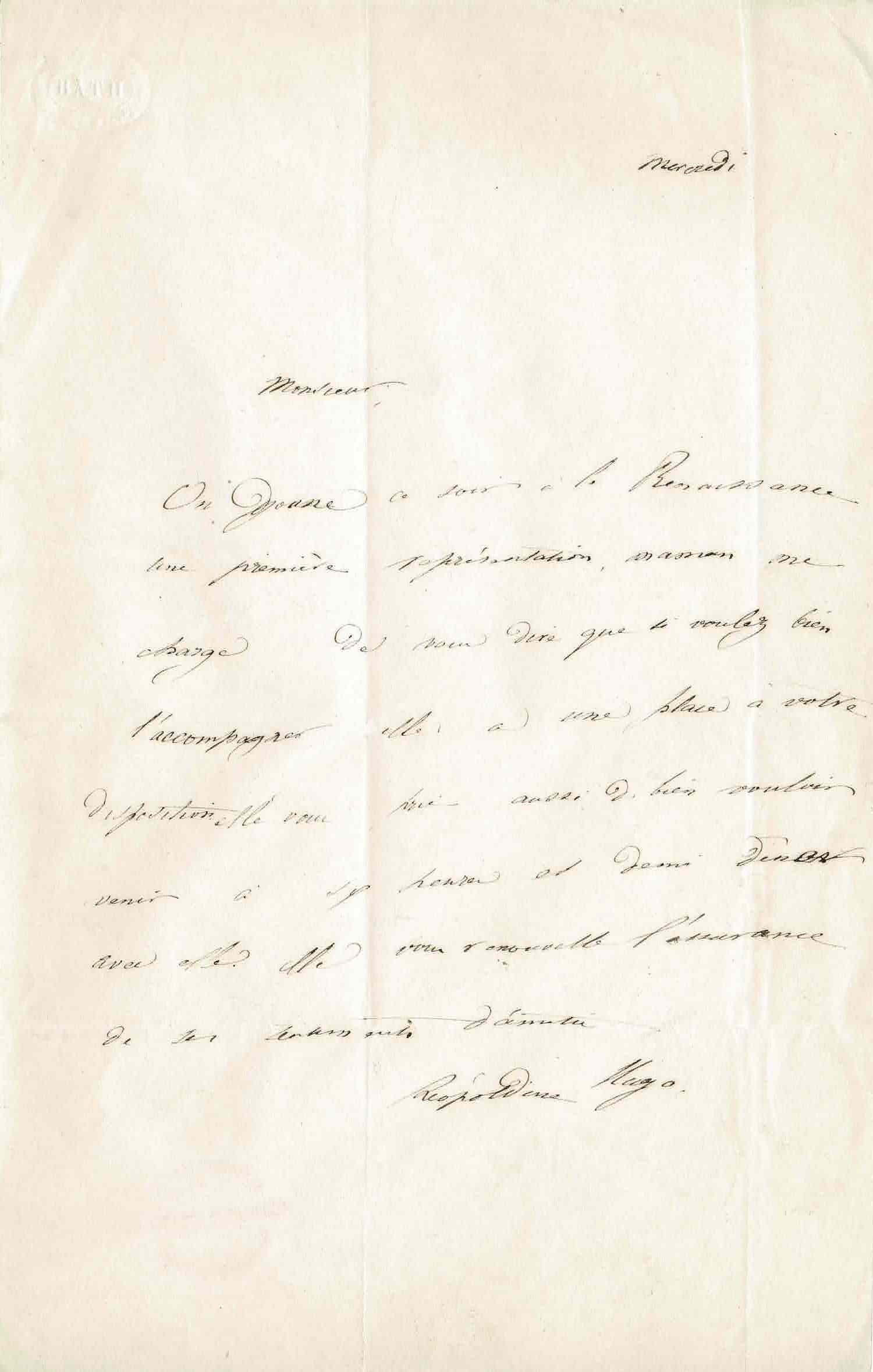
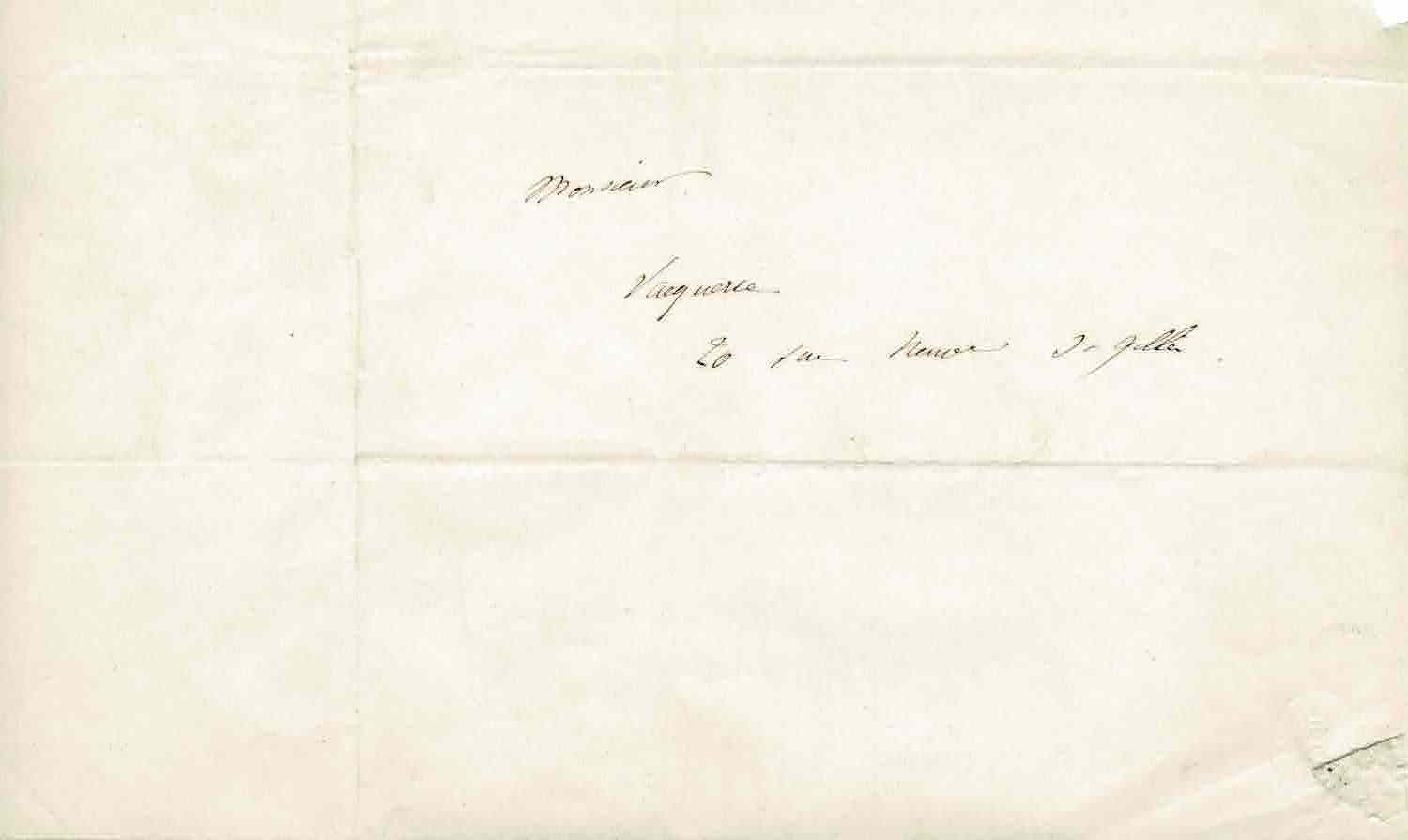
Autographed letter signed to Auguste Vacquerie.
One page in-8°. Slight residual trace of a collector's stamp.
No date. Tuesday [March 7, 1843]. Autograph address.
Rare and moving letter from Léopoldine Hugo – one of the last of her life – inviting her brother-in-law, at the request of her mother Adèle Hugo, to the first theatrical performance of Victor Hugo's historical drama, Les Burgraves.
"Sir, A first performance is being given this evening at the Renaissance. Mother has asked me to tell you that if you would be so kind as to accompany her, she has a seat available for you. She also requests that you come for dinner at 6:30. She reiterates her warmest regards. Léopoldine Hugo."
__________________________________________________________
Léopoldine was the eldest daughter of the great man. Nicknamed Didine, she was adored by her father.
Married in February 1843 to Charles Vacquerie, fate struck six months later: on September 4th, in Villequier, the couple embarked on a sailing trip. A gust of wind capsized the boat; Léopoldine, who couldn't swim, was swept away, as was Charles. She had just celebrated her 19th birthday.
Hugo, traveling with Juliette Drouet, only learned of his daughter's death on September 9th in Rochefort. Waiting for the stagecoach to La Rochelle in a café, he read the September 6th edition Le Siècle They brought me beer and a newspaper, Le Siècle. I read it. That's how I learned that half of my life and my heart had died ."
In her diary, Juliette Drouet poignantly recounts the event: “In a sort of large square, we see written in large letters: Café de l’Europe. We go in. The café is deserted at this time of day. There is only one young man, at the first table on the right, reading a newspaper and smoking, opposite the woman behind the counter, on the left. We go and sit at the very back, almost under a small spiral staircase decorated with a red calico railing. The waiter brings a bottle of beer and leaves. Under a table, opposite us, there are several newspapers. Toto takes one at random, and I take Le Charivari. I had barely had time to look at the title when my poor beloved suddenly leans over me and says in a strangled voice, showing me the newspaper he is holding: ‘This is horrible!’” “I look up at him: never, as long as I live, will I forget the nameless expression of despair on his noble face. I had just seen him smiling and happy, and in less than a second, without warning, I found him struck down. His poor lips were white; his beautiful eyes stared without seeing. His face and hair were wet with tears. His poor hand was pressed against his heart, as if to keep it from leaving his breast. I pick up the dreadful newspaper and I read… ”
Hugo never recovered from this tragic fate, and the memory of Léopoldine remained in his heart every day: "Tomorrow at dawn, when the countryside is bathed in light, I will leave. You see, I know you are waiting for me. I will go through the forest, I will go over the mountain. I cannot stay away from you any longer…."