Georges Brassens (1921.1981)
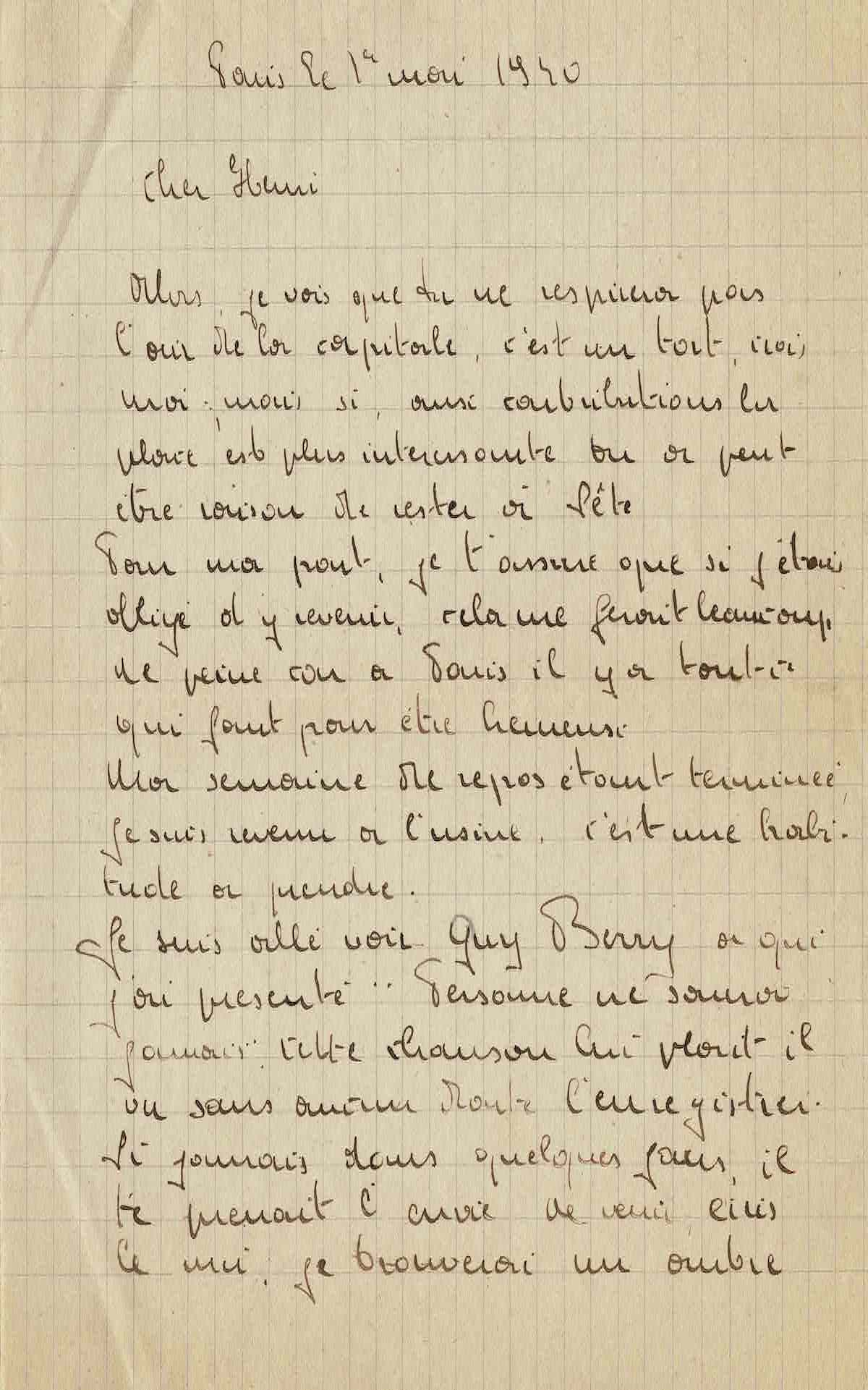
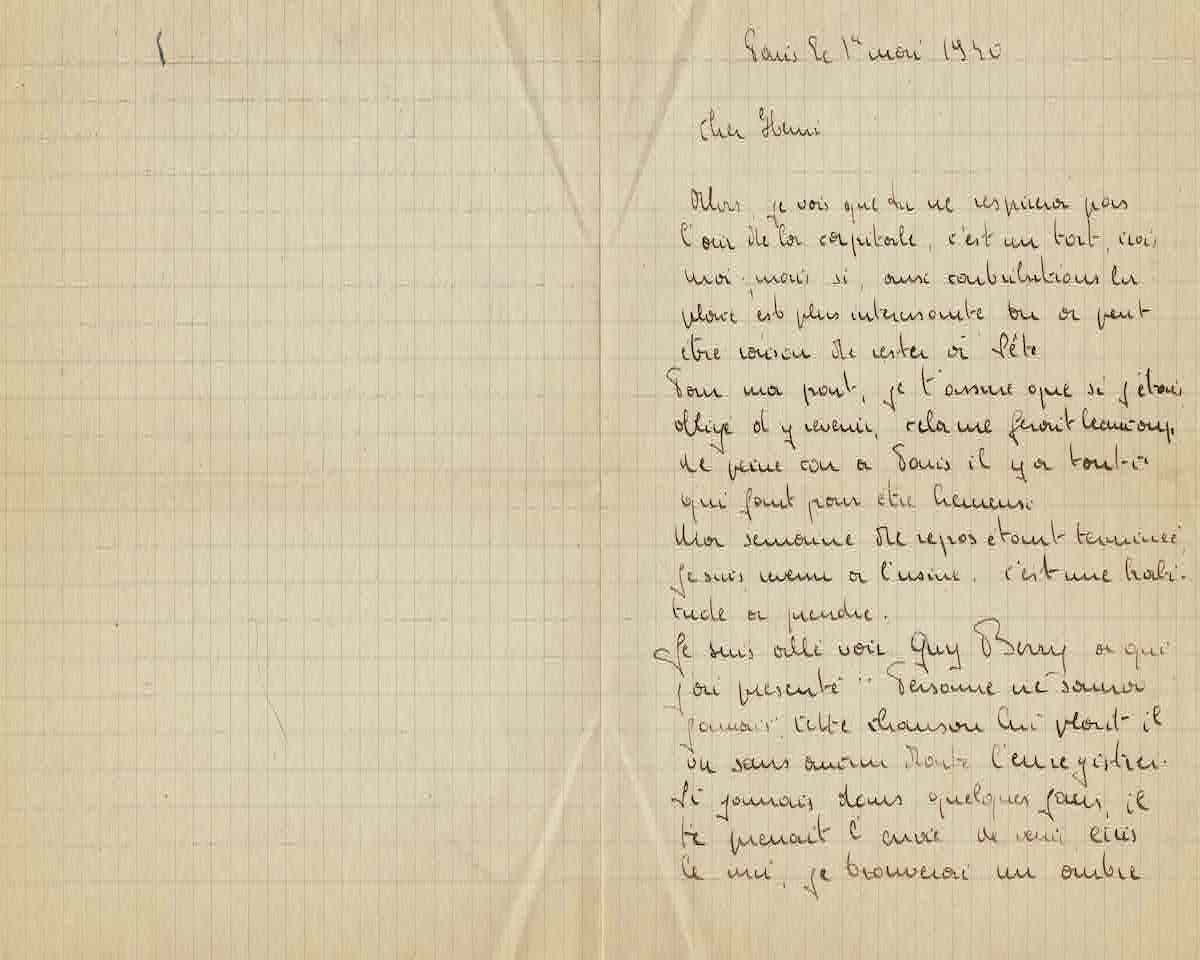
Autographed letter signed to his friend Henri Delpont.
Two octavo pages on graph paper. Paris. May 1, 1940 .
"I went to see Guy Berry and presented him with 'Personne ne saura jamais' (Nobody Will Ever Know). He likes the song and will undoubtedly record it."
The young Brassens, 18 years old, has just arrived in Paris and is already dreaming of music and song.
"Dear Henri, So I see you won't be breathing the air of the capital, which is a shame, believe me, but if your position at the tax office is more appealing, perhaps you're right to stay in Sète. For my part, I assure you that if I were forced to return, it would cause me great sorrow, because Paris has everything one needs to be happy. My week off is over, and I'm back at the factory. It's a habit one has to get used to."
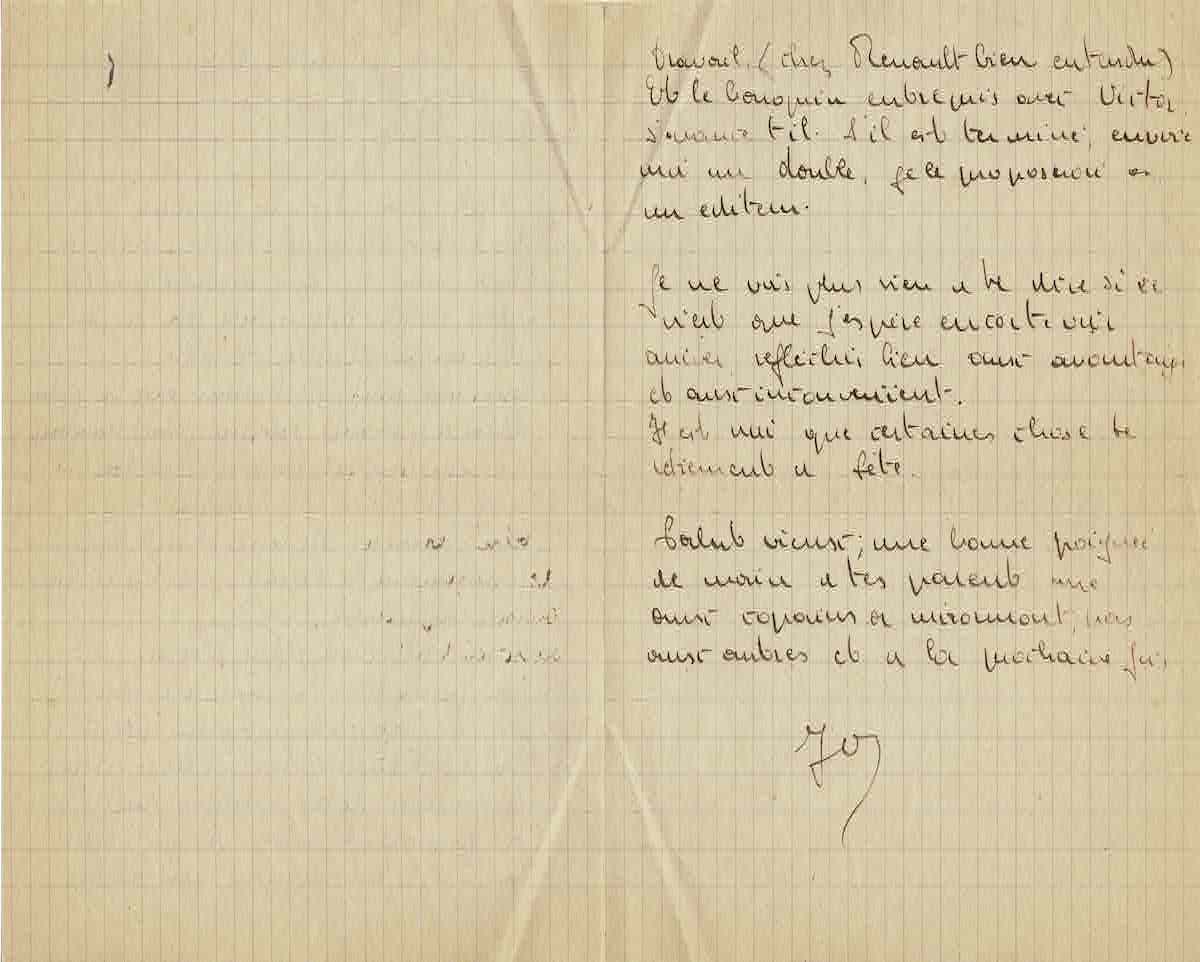
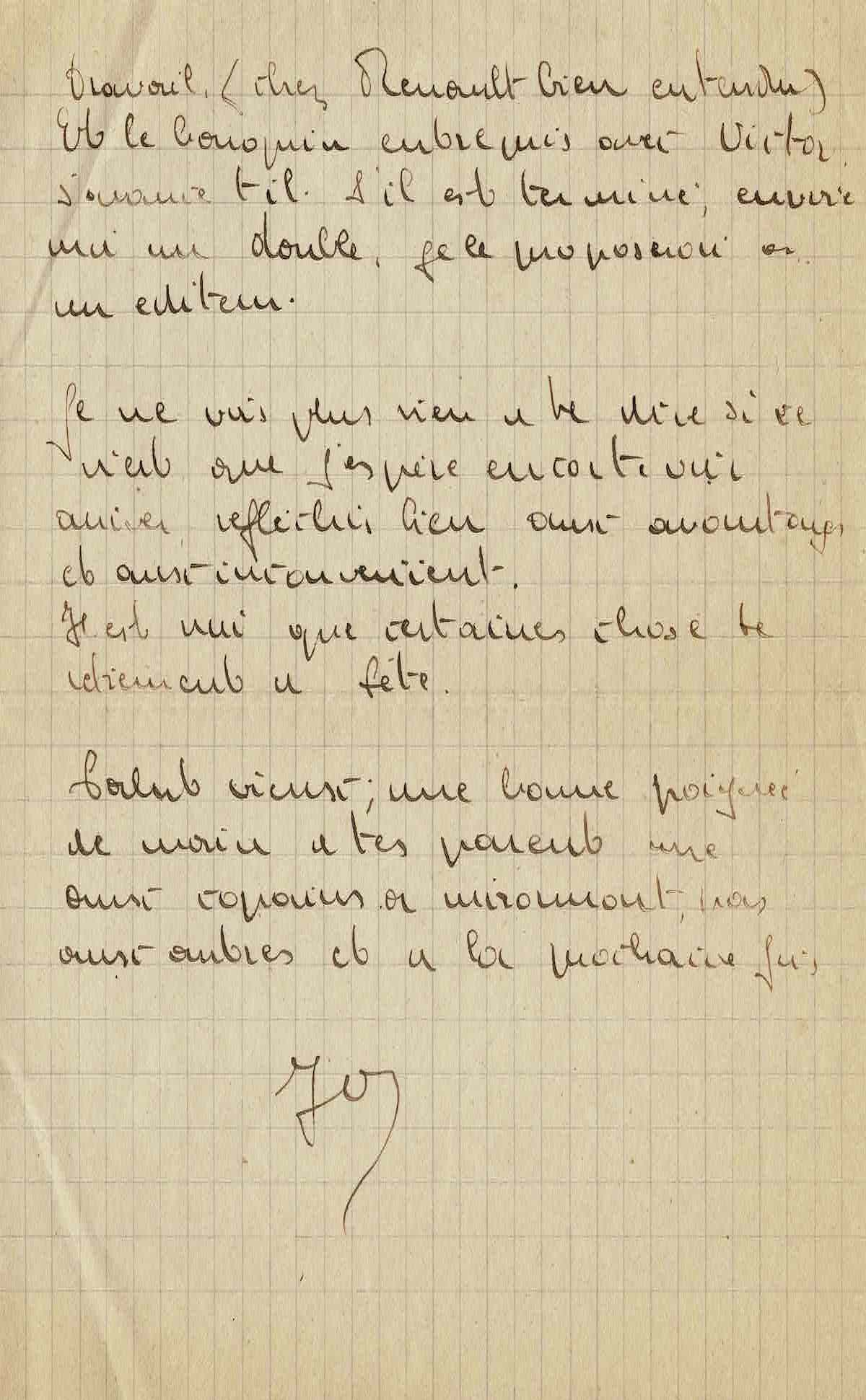
I went to see Guy Berry and presented him with "Personne ne saura jamais" (Nobody Will Ever Know). He likes the song and will undoubtedly record it. If you ever feel like coming in a few days, let me know, and I'll find another job (at Renault, of course). And how's the book you started with Victor coming along? If it's finished, send me a copy, and I'll submit it to a publisher. I have nothing more to say except that I still hope to see you arrive. Think carefully about the pros and cons. It's true that some things are keeping you in Sète. Goodbye, old friend, a big handshake to your parents, one to your buddies, to Miramont, not to the others, and see you next time. Jo.
———————————————————————————————————————————————————————————————————————————————————————————–
Georges Brassens left Sète for Paris in February 1940. As arranged with his parents, he stayed with his maternal aunt, Antoinette Dagrosa, in the 14th arrondissement. Wishing to be independent, he found a job at the Renault factories in Billancourt as a skilled laborer. His time in Paris and his life there were short-lived: on June 3rd, Paris was bombed by the Germans, and the Renault factory was hit. On the 14th, the Germans entered Paris; Brassens returned to Sète.
Last summer, realizing that his future did not lie in his native land, Brassens returned to his aunt's house in a Paris occupied by the Wehrmacht. There was no longer any question of returning to Renault: Brassens spent his days at the library, reading poets, learning versification, and embarking on writing his first poetry collections: Les couleurs vagues , Des coups d'épée dans l'eau, and À la venvole (1942).
Henri Delpont and Brassens attended the same school in Sète (along with Roger Thérond, future director of Paris-Match, Mario Poletti and Louis Bestiou). Brassens considered Delpont his "alter ego", his best friend.
In this letter, he mentions one of his first songs, "Personne ne saura" (registered with SACEM in 1942) . This love song, written in 1939, was therefore offered by Brassens to the singer and actor who was popular at the time, Guy Berry.