Carl Gustav Jung and Freud's sexual and analytical theories.
« The neurotic problem cannot be solved by reducing sexuality
Sold

« The neurotic problem cannot be solved by reducing sexuality
Sold
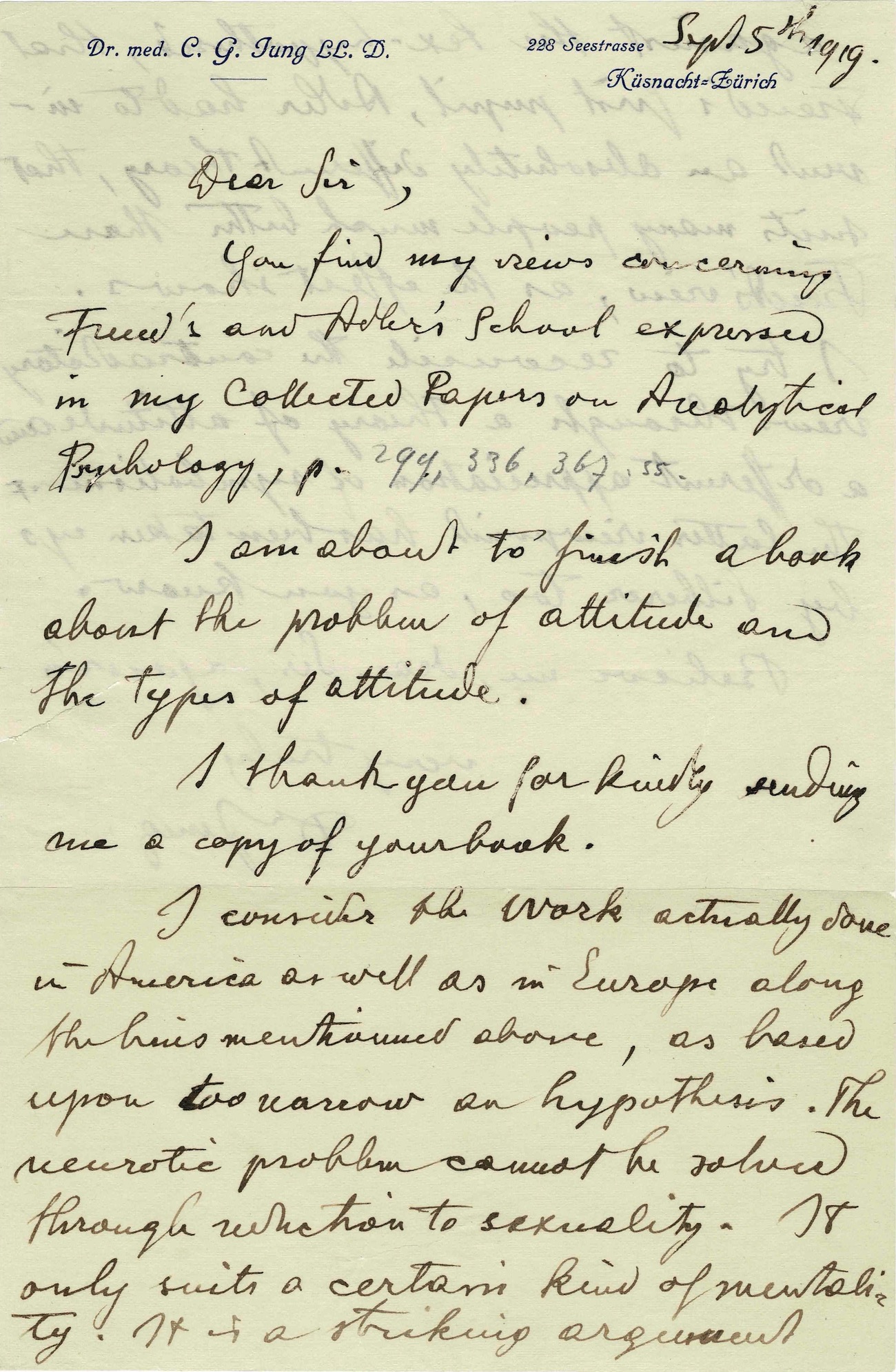
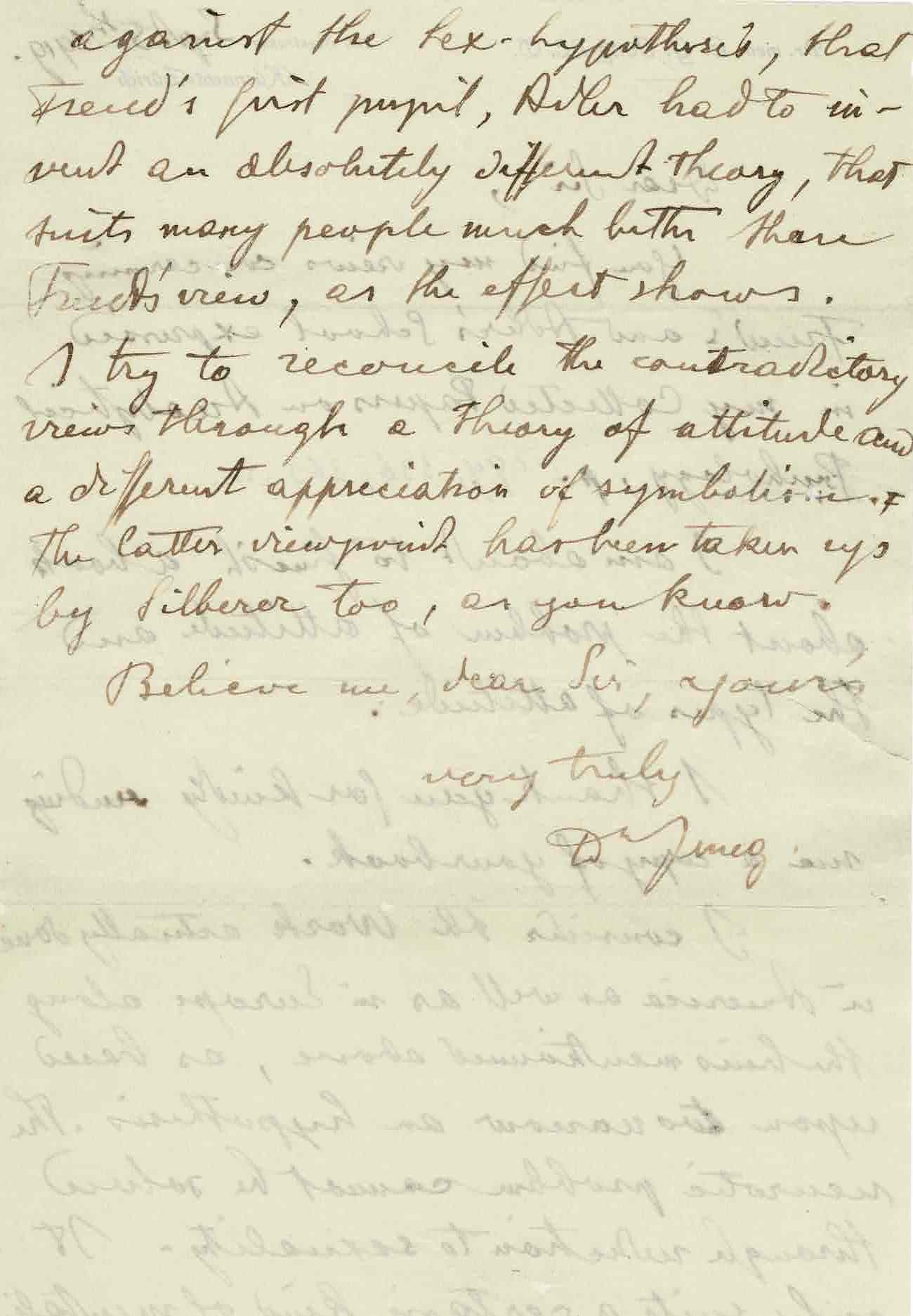
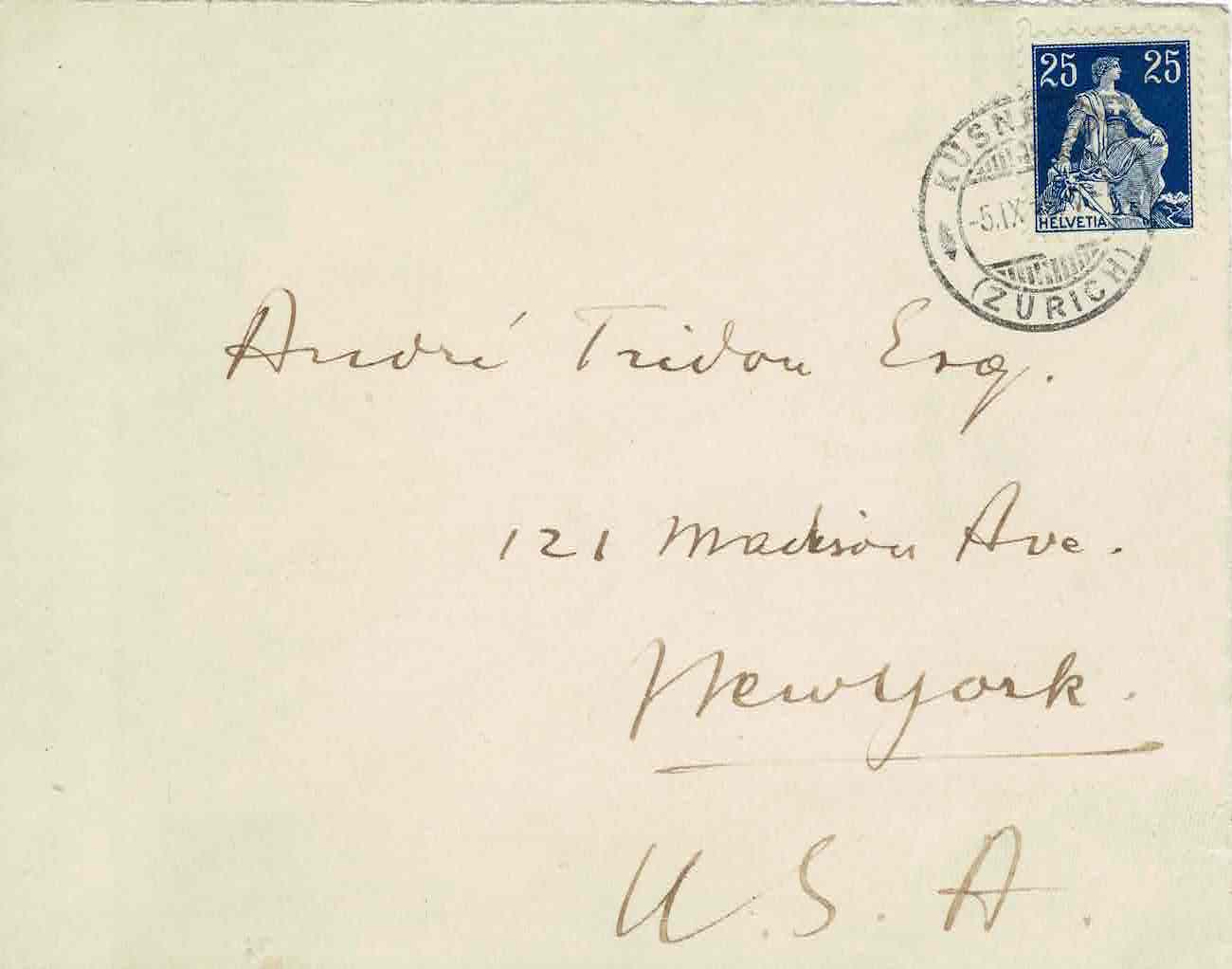
Autograph letter signed "Dr Jung " to the psychoanalyst André Tridon.
Two octavo pages in English, on his letterhead Dr. med. CG Jung. Küsnacht-Zurich. September 5, 1919. Envelope.
« The neurotic problem cannot be solved by reducing sexuality
A remarkable letter from the Swiss psychiatrist dissociating himself from the sexual theories developed by Freud, explaining his own understanding of libido, and specifying his ongoing work on Psychological Types and Symbolism.
—————————————————————————————————————————————————————————————————————————-
"Dear Sir, You will find my opinions concerning the School of Freud and Adler expressed in my work Collected Papers on analytical Psychology [Essay on Analytical Psychology] p. 299, 336, 367, 55.
I am about to finish a book on the problem of attitude and attitude types [“Psychological Types,” originally published in Germany in 1921] . Thank you for kindly sending me a copy of your book. I believe that the work currently being done in America, as well as in Europe, as mentioned above, rests on too narrow a hypothesis. The neurotic problem cannot be solved by a reduction of sexuality. This can only be suitable for a certain type of mentality.
This is a damning argument against the Sexual Theory [of Sigmund Freud, developed in 1905 in his work "Three Essays on the Theory of Sexuality"], so that Freud's first student, Adler, had to invent an entirely different theory, which suits many people much better than Freud's view, as the results prove.
I am trying to reconcile all these contradictory viewpoints through a theory of attitude and a different appreciation of symbolism. This latter viewpoint was also taken up by [Herbert] Silberer, as you know. Believe me, dear Sir, yours most sincerely, Dr. Jung.
—————————————————————————————————————————————————————————————————————————–
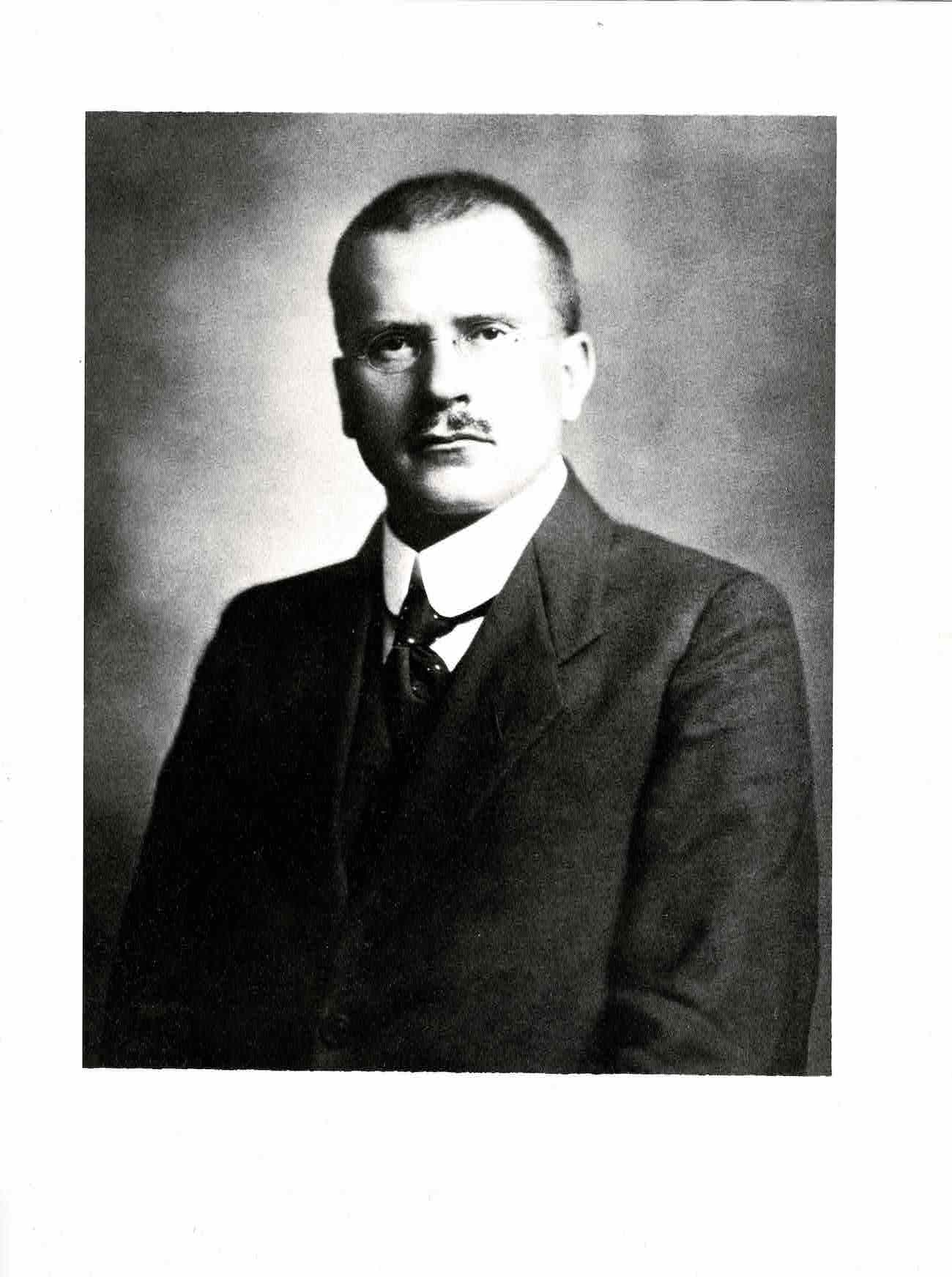
We know that Jung was one of Sigmund Freud's first disciples. Nevertheless, from the moment he wrote his * Metamorphoses and Symbols of the Libido (published in 1912), Jung knew that this undertaking would mark the end of his friendship with the father of psychoanalysis. Indeed, Freud, deeply hurt, immediately interpreted Jung's work as an attempt to "desexualize" the libido and a clear attempt to "kill the father."
The deterioration of their relationship truly began in 1911, at the Weimar Congress, when Freud suspected Jung (who was largely unavailable to the International Psychoanalytical Association , of which he was then President) of wanting to create his own psychoanalytic movement. The break between the two men quickly proved definitive and was cemented by Jung's theories on the collective unconscious and the publication of his book, in 1912, Metamorphoses of the Soul and Its Symbols . Freud denounced this as heresy and henceforth considered Jung a dissident, much like Alfred Adler (founder of Individual Psychology, mentioned in our letter) at the beginning of the psychoanalytic movement.
In August 1913, as if to formalize this break, Jung succinctly presented his new approach, which he called Analytical Psychology , at the 17th International Congress of Medicine held in London, distinguishing it from Freud's psychoanalysis. Jung suggested freeing psychoanalytic theory from its " exclusively sexual point of view ." This lecture dealt a fatal blow to the relationship between the two men. Freud, in his letter of October 27, 1913—the last between them—confirmed the break: " Your allegation that I treat my followers as patients is obviously false (...) Therefore, I propose that we abandon our personal relationship completely. "
—————————————————————————————————————————————————————————————————————————–
Original version:
“Dear Sir, You find my views concerning Freud's and Adler's School expressed in my Collected Papers on analytical Psychology , p. 299,336, 367, 55. I am about to finish a book about the problem of attitude and the types of attitude. I thank you for kindly sending me a copy of your book. I consider the work actually done in America as well as in Europe along the lines mentioned above, as based upon too narrow an hypothesis. The neurotic problem cannot be solved through reduction to sexuality. It only suits a certain kind of mentality. It is a striking argument against the Sex-hypothesis , that Freud's first pupil, Adler had to invent a different theory, that suits many people absolutely much better than Freud's view, as the effect shows. I try to reconcile the contradictory views through a theory of attitude and a different appreciation of symbolism. The latter viewpoint has been taken up by Silberer too, as you know. Believe me, dear Sir, yours very truly Dr Jung. »