
Rare letter from Gandhi, intimate and benevolent, giving advice to his protégée Shanta S. Patel.
Sold
Mohandas Karamchand, Mahatma GANDHI (1869.1948)
Autographed letter signed "Bapu" to Shanta S. Patel.
Three quarto pages in English.
Travancore. January 17, 1937.
A fatherly soul. Gandhi, intimate and benevolent, gives his advice to his protégée Shanta S. Patel.
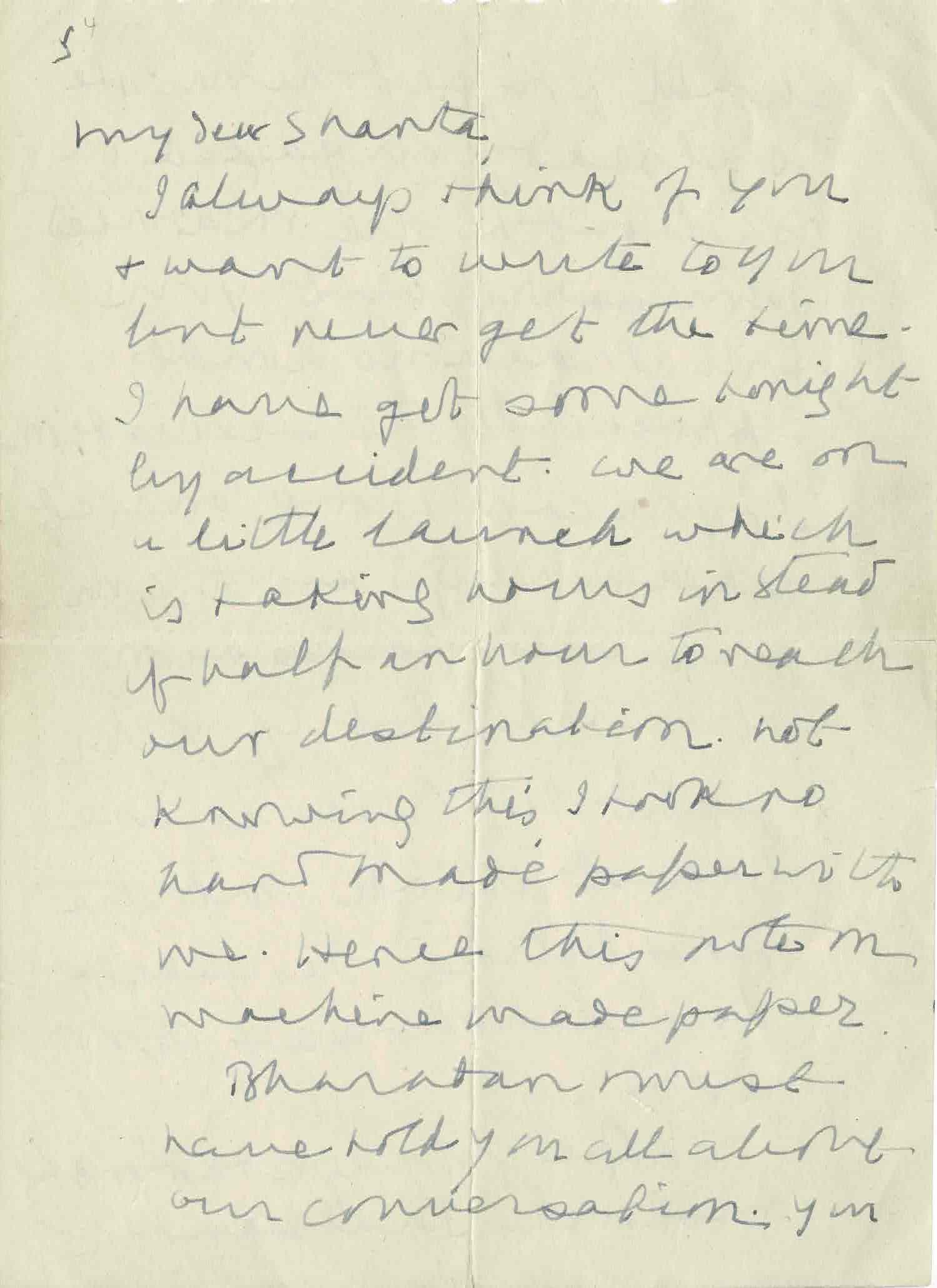
“My dear Shanta, I always think of you & want to write to you but never get the time. I have gotten some tonight by accident. We are on a little launch which is taking hours instead of half an hour to reach our destination. Not knowing this I took no handmade paper with me. Hence this note machine made paper.
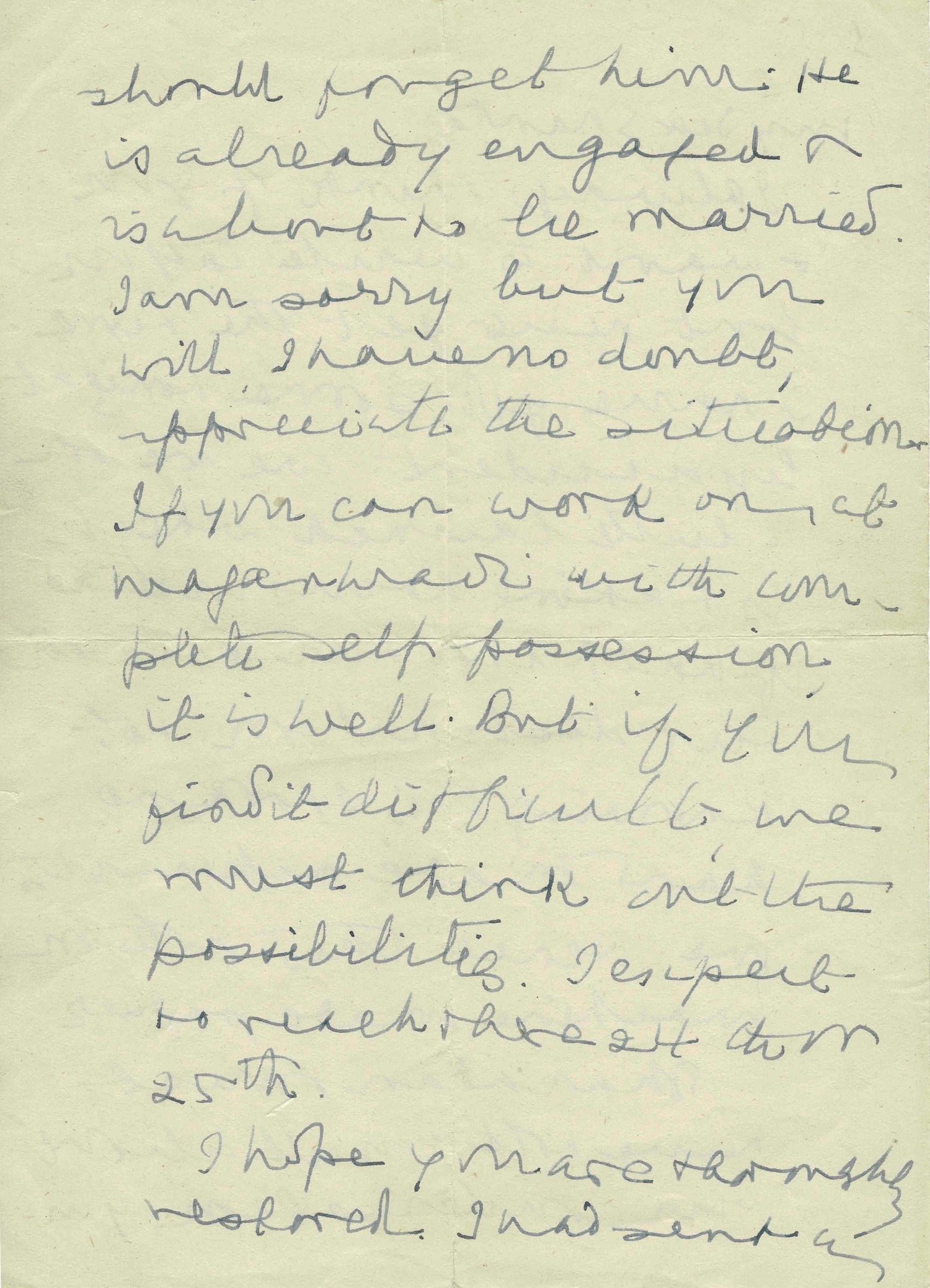
Bharatan must have told you all about our conversation. You should forget him. He is already engaged & is about to be married. I am sorry but you will, I have no doubt, appreciate the situation.
If you can work on at Maganwardi with complete self-possession, it is well. But if you find it difficult, we must think on the possibilities. I expect to reach there 24 th or 25 th .
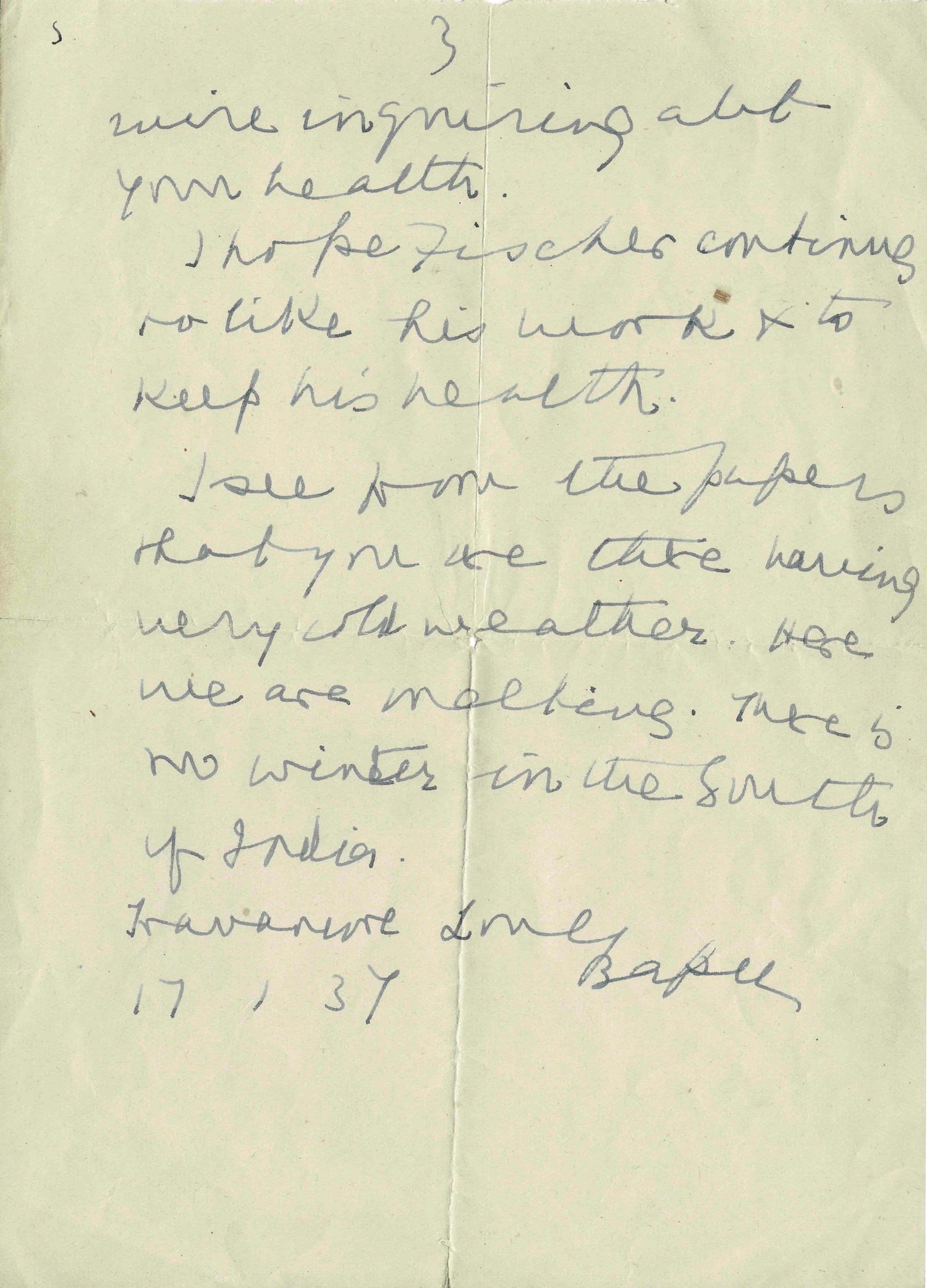
I hope you are throngly restored. I had sent a wire inquiring about your health. I hope Fischer continues to like his work & to keep his health. I see from the papers that you are having very hot weather. Here we are walking. There is no winter in the south of India. Travancore. Love. Bapu. 17 1 37
_________________________
English version: "My dearest Shanta, I'm always thinking of you and want to write, but I never seem to find the time. Luckily, I have some tonight. We're on a small boat that's taking hours instead of half an hour to reach our destination. Not knowing this, I didn't bring any handwritten notes. Hence this note on typed paper. Bharatan must have told you everything about our conversation. You should forget about him. He's already engaged and about to get married. I'm sorry, but I have no doubt you'll be able to adapt to the situation. If you can continue working in Maganwardi without any problems, that's fine. But if you find it difficult, we need to consider other options. I expect to arrive there on the 24th or 25th. I hope you've made a full recovery. I sent a telegram to inquire about your health." I hope Fischer continues to enjoy his work and maintain his good health. I see in the newspapers that you have very hot weather. Here, we are walking. There is no winter in southern India. Travancore. Bapu. 17 1 37.
_________________________
The recipient of this letter is Shanta S. Patel, daughter of Shankarbhai Patel. Her family was very close to Gandhi's, who acted as Shanta's protector, as evidenced by this letter and the rest of their correspondence (which begins around 1930).
Gandhi's letters to Shanta form a correspondence of precepts and advice on life, covering all aspects of the young girl's life, from morality to diet. Gandhi's paternal tone confirms the surrogate father role he seems to have played for Shanta, whom he sometimes calls his "Dear daughter.".
Gandhi here asks her to renounce a man already engaged and about to be married. This fatherly advice is accompanied by an invitation to stay and work in Maganwardi, the name of Gandhi's "headquarters" established in Wardha, in central India. It was there that Mahatma Gandhi settled in 1936 after a final stint in prison. He spent twelve years there, until his death in 1948.
Shanta's name reappears in Gandhi's writings a few months later, on August 4, 1937, when he writes, "Did I tell you that Shanta did not go to England? [...] She is very happy with Mahadev and very useful to him." Gandhi apparently found her a husband and a position, with Mahadev Desia as his personal secretary.
_________________________
Gandhi's trip to Travancore in January 1937 remains highly symbolic of the Mahatma's work in India and a significant episode in his life. Indeed, a few years earlier, in 1925, Gandhi had been refused entry to the inner sanctum of the Travancore temple, only being allowed to walk around it. "I was not allowed to go to the inner sanctum because I had been to England," Gandhi complained in an article in his journal Navjivan entitled "Darshan of Kanyakumari" (March 29, 1925).
Indeed, going abroad was considered taboo by Hindus of the time, and those who violated this belief were refused entry to temples. These people could only enter the sanctuaries after performing purification rituals.
In 1933, the King of Travancore, Sree Chithira Thirunal Balarama Varma, lifted these restrictions imposed due to travel abroad or other alleged impurities. In January 1937, the King invited Gandhi as a special guest to the historic ceremony at the Travancore temples, which finally opened their doors to all Hindus, including those of the lower castes.
Finally, the name Fischer which is mentioned perhaps refers to the journalist Louis Fischer who had been invited by Gandhi to spend a week with him and who remains one of his most famous biographers.