Jean Jaurès (1859.1914)
Autograph manuscript signed.
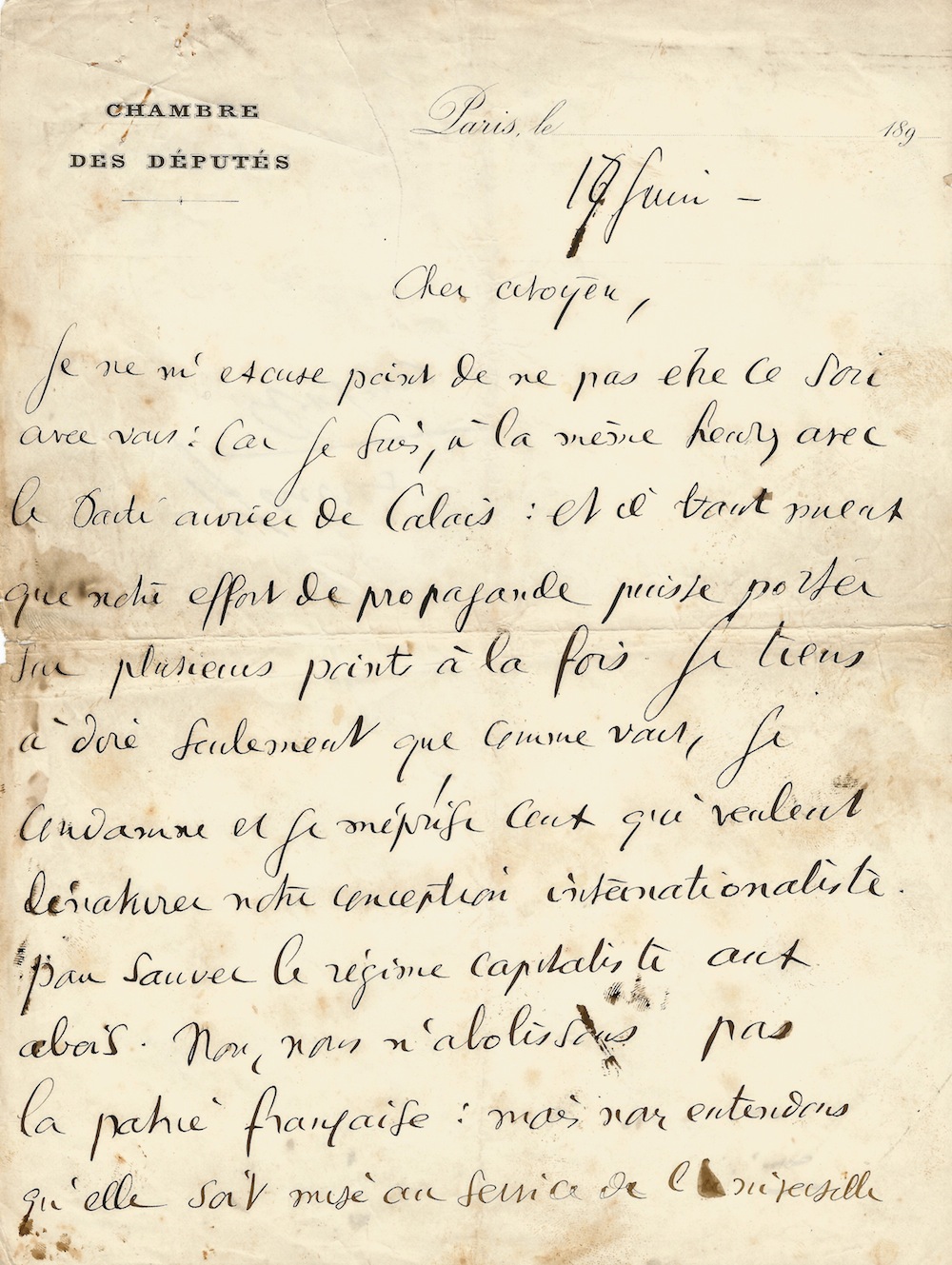
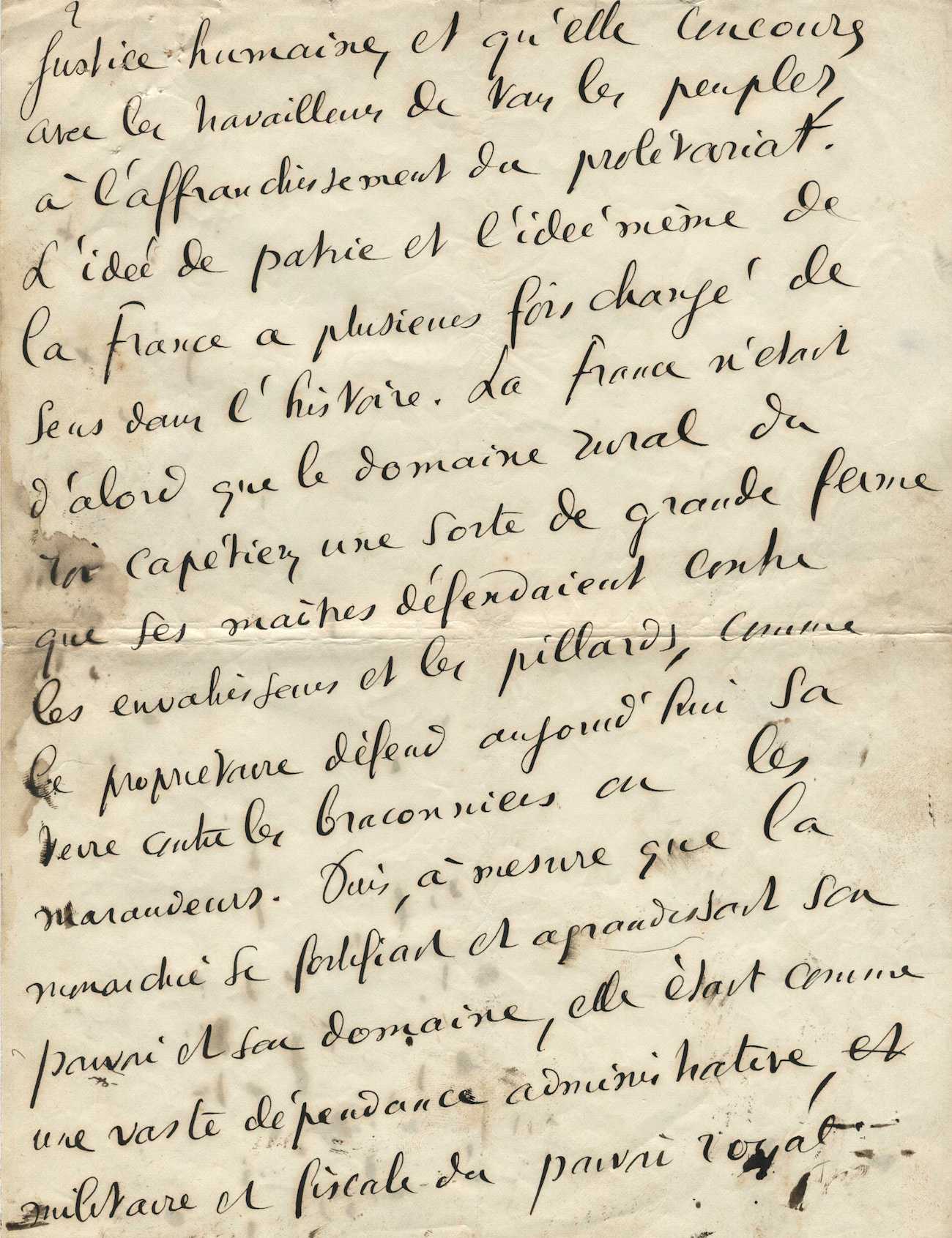
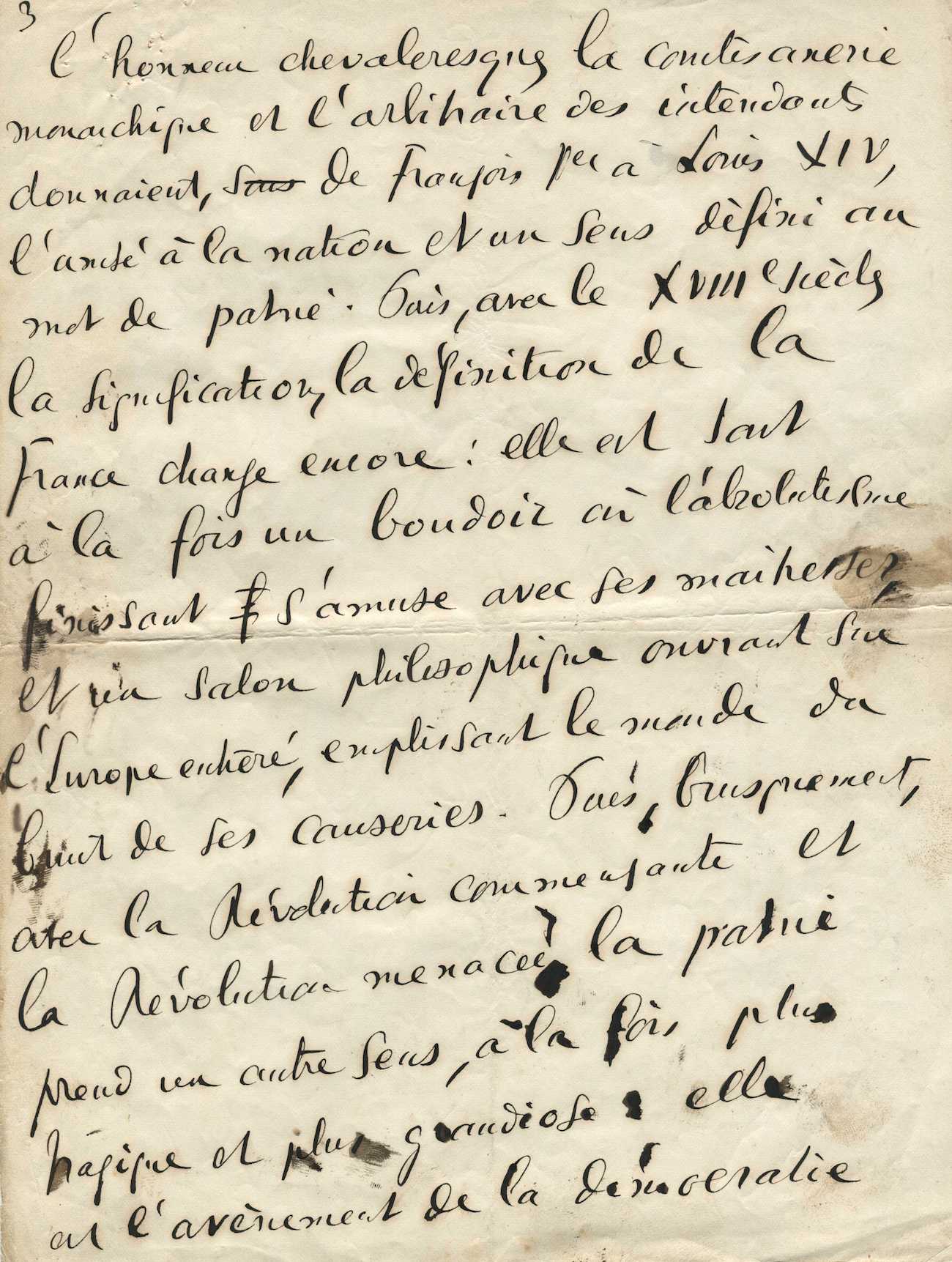
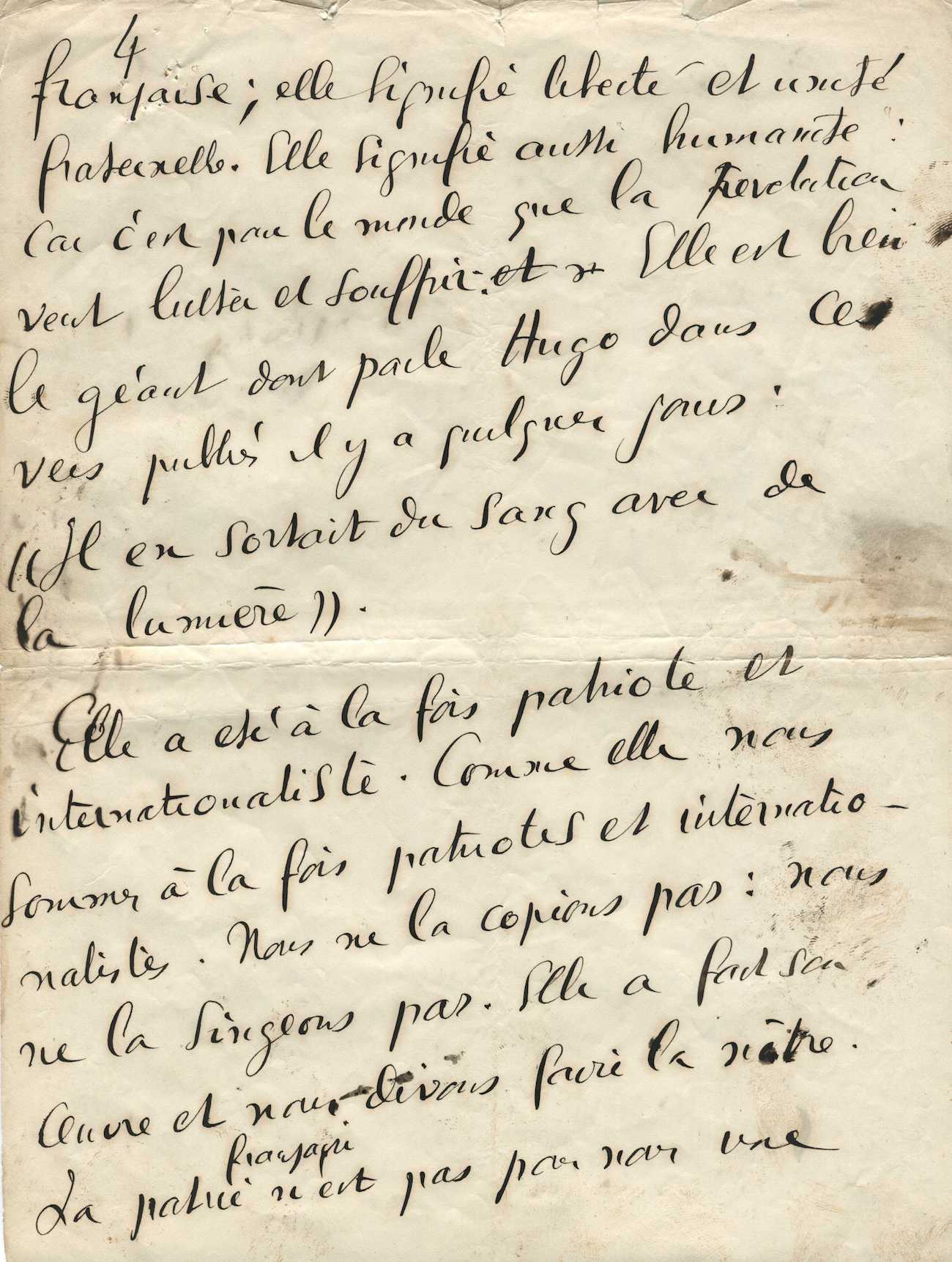
Six quarto pages on letterhead of the Chamber of Deputies.
Paris, June 17 (Circa 1895).
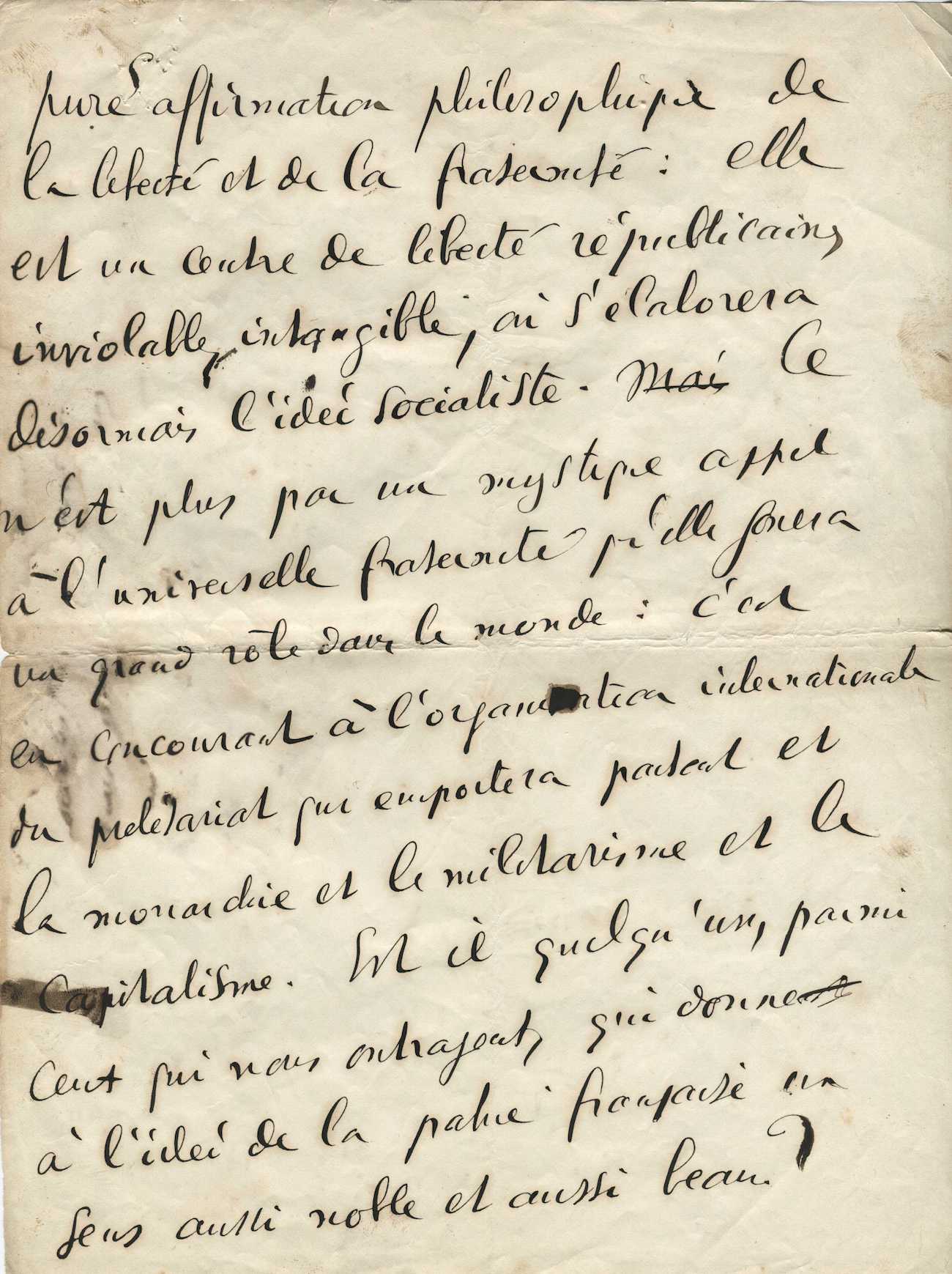
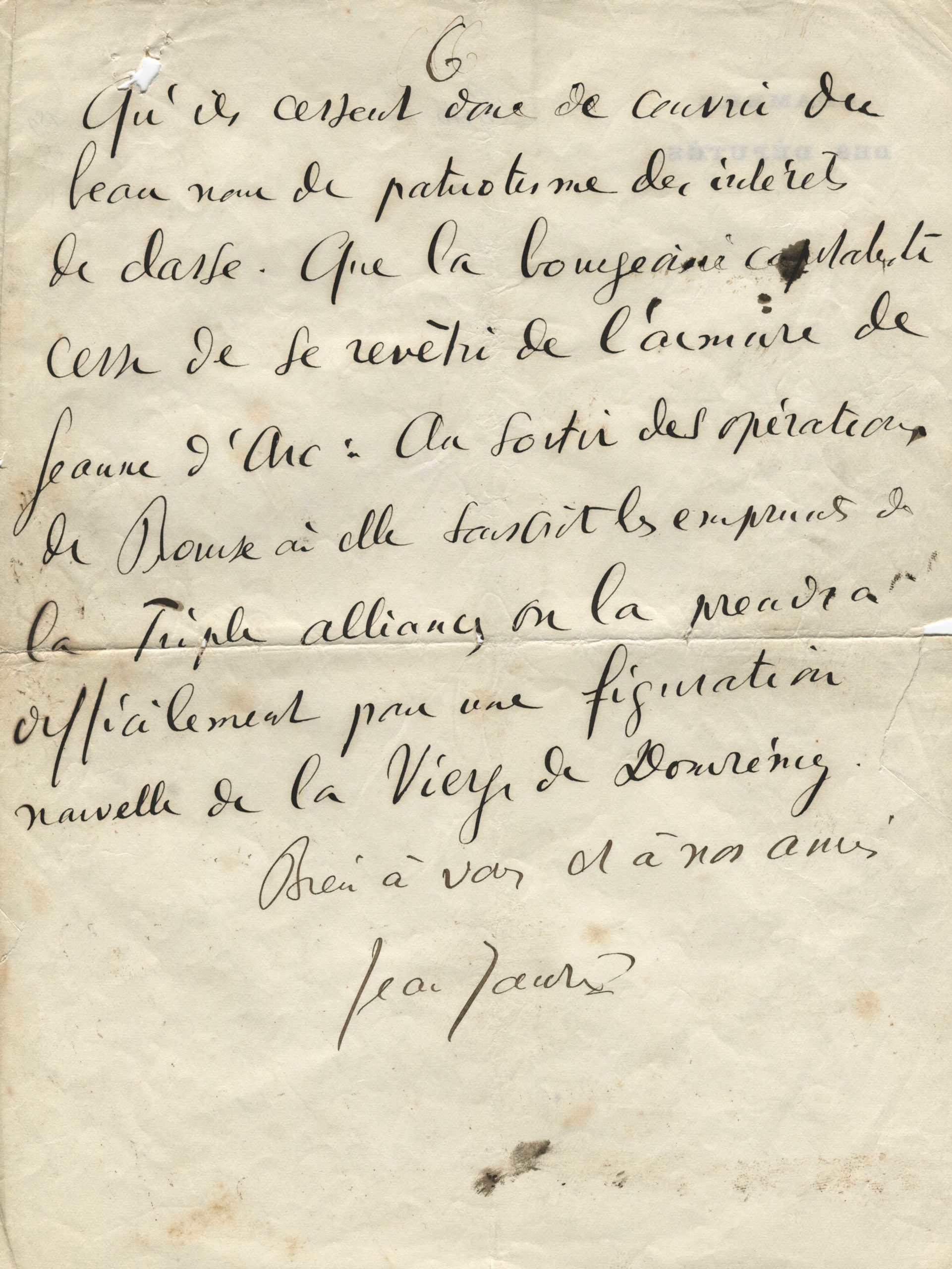
A remarkable plea from Jaurès, affirming here the full force of his patriotic, republican, and humanist ideas while insisting on the necessity of socialism as a universal value.
“Dear Fellow Citizen, I make no apologies for not being with you this evening, for I am with the Workers' Party of Calais at the same time. And it is better that our propaganda efforts be able to address several points at once . I only wish to say that, like you, I condemn and despise those who seek to distort our internationalist vision in order to save the dying capitalist system. No, we are not abolishing the French nation ; but we intend for it to be placed at the service of universal human justice, and for it to work with the workers of all peoples for the liberation of the proletariat . The idea of the nation, and indeed the very idea of France, has changed meaning several times throughout history. France was initially merely the rural domain of the Capetian king, a kind of large farm that its masters defended against invaders and plunderers, just as a landowner today defends his land against poachers or marauders.” Then, as the monarchy strengthened and expanded its power and domain, it became like a vast administrative, military, and fiscal dependency of the royal power. Chivalric honor, monarchical courtly intrigue, and the arbitrary rule of the intendants, from Francis I to Louis XIV, gave unity to the nation and a defined meaning to the word "patrie" (fatherland). Then, with the 18th century, the meaning and definition of France changed again : it was simultaneously a boudoir where waning absolutism amused itself with its mistresses and a philosophical salon opening onto all of Europe, filling the world with the noise of its conversations. Then, abruptly, with the beginning of the Revolution and the Revolution threatened, the fatherland took on another meaning, at once more tragic and more grandiose: it was the advent of French Democracy; it signified liberty and fraternal unity. It also signified humanity, for it was for the world that the Revolution wished to fight and suffer . She is indeed the giant Hugo speaks of in those verses published a few days ago: "blood flowed from her, along with light." She was both a patriot and an internationalist. Like her, we are both patriots and internationalists . We do not copy her; we do not ape her. She has done her work, and we must do ours. The French homeland is not for us a purely philosophical affirmation of liberty and fraternity: it is an inviolable, intangible center of republican freedom, where the socialist ideal will henceforth be developed. It is no longer through a mystical appeal to universal fraternity that it will play a great role in the world: it is by contributing to the international organization of the proletariat, which will sweep away monarchy, militarism, and capitalism everywhere. Is there anyone among those who insult us who gives the idea of the French homeland such a noble and beautiful meaning ? Let them cease cloaking class interests in the fine name of patriotism. Let the capitalist bourgeoisie cease donning the armor of Joan of Arc : after its stock market transactions, where it subscribes to the loans of the triple alliance, it will hardly be mistaken for a new incarnation of the Virgin of Domrémy. Yours sincerely, and to our friends. Jean Jaurès .
Elected to the Chamber of Deputies in January 1893 as an independent socialist, Jaurès became the champion of the working class in its struggle. As a historian of the French Revolution, Jaurès readily referred to revolutionary values as universal principles enshrined in the Declaration of the Rights of Man and of the Citizen. This letter reflects his concern about the danger that excessive capitalist concentration would pose to the people, as well as his call for proletarian unity.