"Dalí is too subservient to respectable ideas to deserve any other title than 'painter for priests.'"
9.500€
René Magritte (1898.1967)
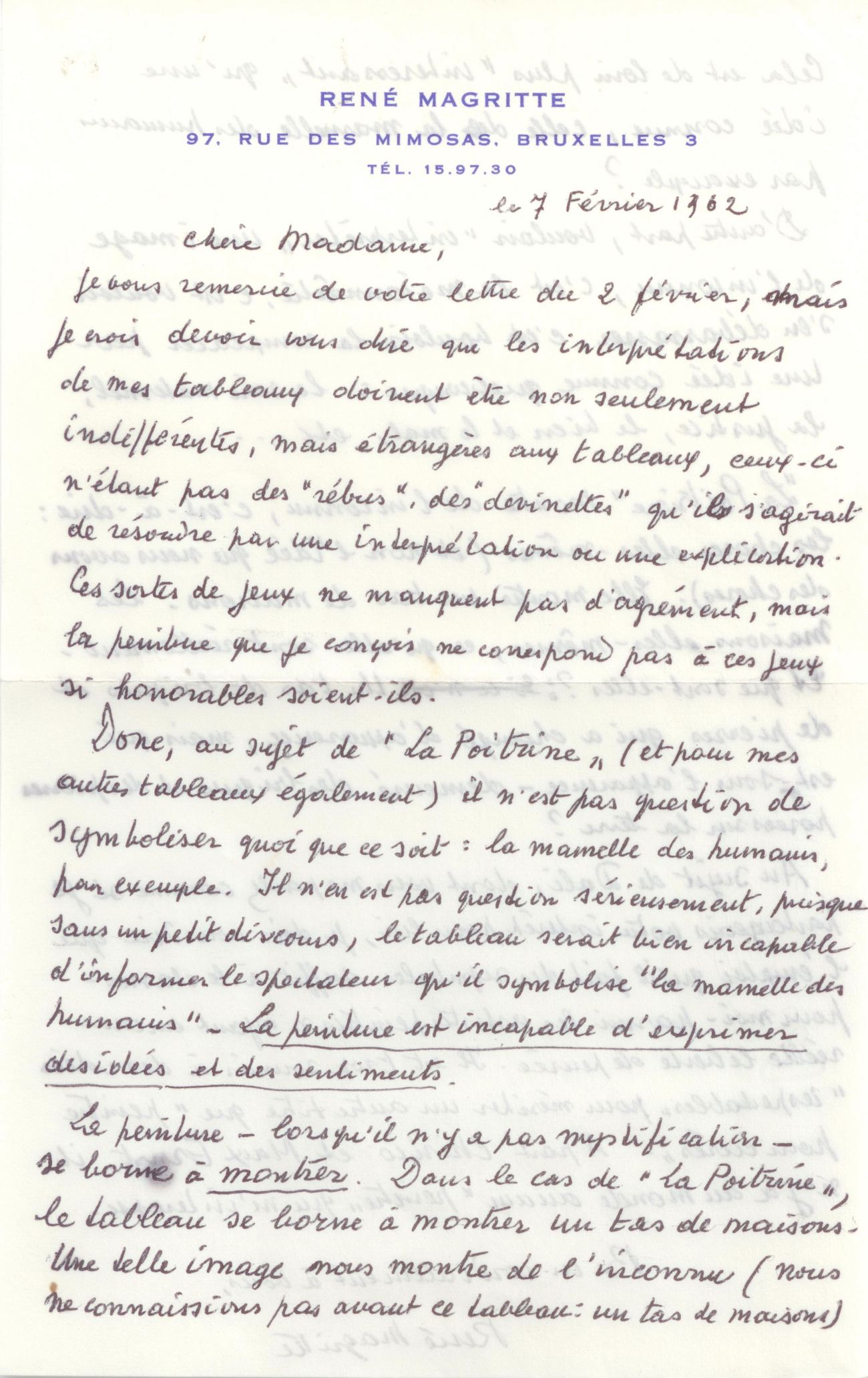
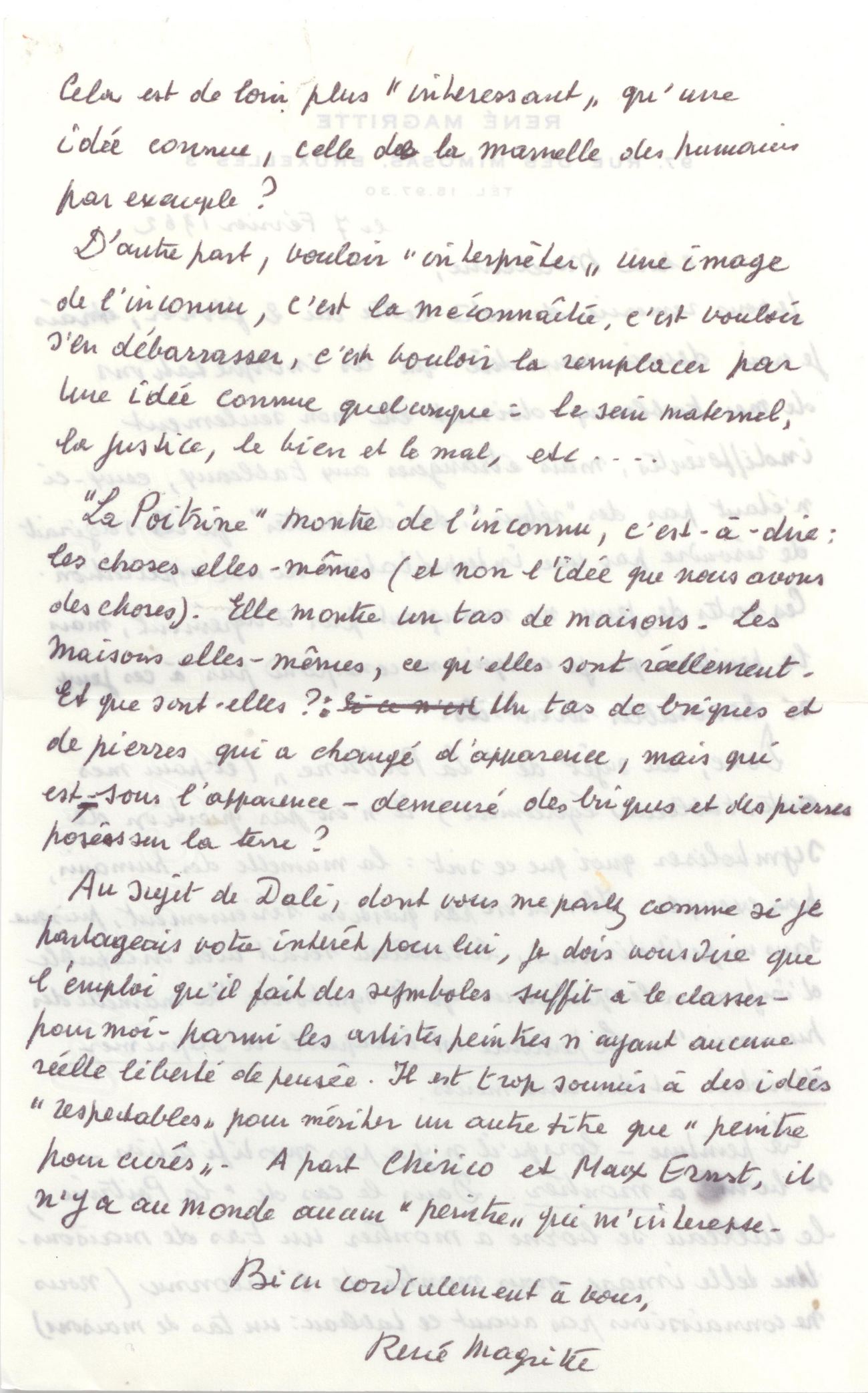
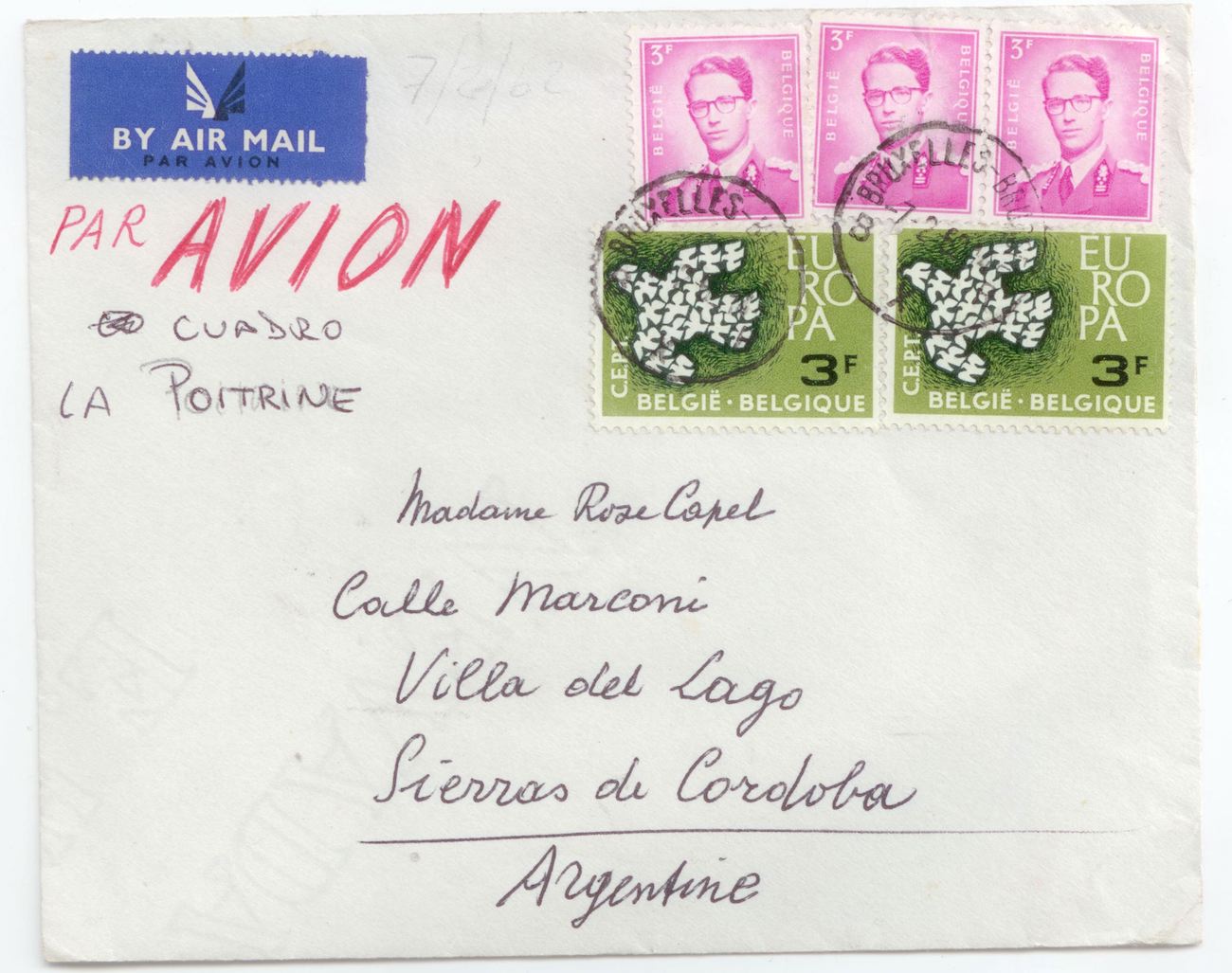
Autographed letter signed to Rose Bauwens-Capel
Two octavo pages on his letterhead. Autograph envelope, stamped and postmarked.
Brussels. February 7, 1962.
Dalí is too subservient to respectable ideas to deserve any other title than "painter for priests".
An extraordinary and precious letter from the surrealist painter, revealing his vision of his work and vigorously refuting all interpretations of his use of symbolism. Magritte concludes his letter with a scathing paragraph against Salvador Dalí, while simultaneously confessing his admiration for Ernst and de Chirico.
_______________________________________
“Dear Madam, Thank you for your letter of February 2nd, but I feel I must tell you that interpretations of my paintings should be not only indifferent to, but entirely separate from, the paintings themselves. They are not “riddles” or “puzzles” to be solved through interpretation or explanation. Such games are certainly enjoyable, but the painting I create does not correspond to these games, however honorable they may be. Therefore, regarding “The Breast” (and my other paintings as well), there is no question of symbolizing anything : the human breast, for example. It is not a serious matter, since without some kind of explanation, the painting would be quite incapable of informing the viewer that it symbolizes “the human breast.”
Painting is incapable of expressing ideas and feelings . Painting—when there is no mystification—is limited to showing . In the case of "The Breast," the painting simply shows a pile of houses. Such an image shows us the unknown (we didn't know before this painting: a pile of houses). Is this far more interesting than a known idea, that of the human breast, for example? On the other hand, to want to "interpret" an image of the unknown is to misunderstand it, to want to get rid of it, to want to replace it with some known idea: the maternal breast, justice, good and evil, etc. "The Breast" shows the unknown, that is to say, things themselves (and not the idea we have of things). It shows a pile of houses. The houses themselves, what they truly are. And what are they? A pile of bricks and stones that has changed its appearance, but which – beneath the appearance – has remained bricks and stones laid on the earth?
Regarding Dalí, whom you mention as if I shared your interest in him, I must tell you that his use of symbols is enough to classify him—in my opinion—among those painters who possess no real freedom of thought. He is too beholden to respectable ideas to deserve any other title than "painter for priests." Apart from Chirico and Max Ernst, there is no painter in the world who interests me. »
_______________________________________
Magritte is referring here to his painting The Breast , created in 1961, which depicts a cluster of multicolored houses on the horizon. The work is now in the collection of the Royal Museums of Fine Arts of Belgium in Brussels.
The collector couple, Rose Bauwens and Joseph Capel, were close friends with the Surrealist artists. Rose Bauwens-Capel was also the editor of the magazine Le Ciel bleu , published in 1945, to which Breton, Colinet, Magritte, Mariën, Picasso, Scutenaire, etc., contributed.
Ref: David Sylvester (ed.), Sarah Whitfield & Michael Raeburn, René Magritte, Catalogue Raisonné , Antwerp, 1994, vol. IV, appendix 140, p. 325.