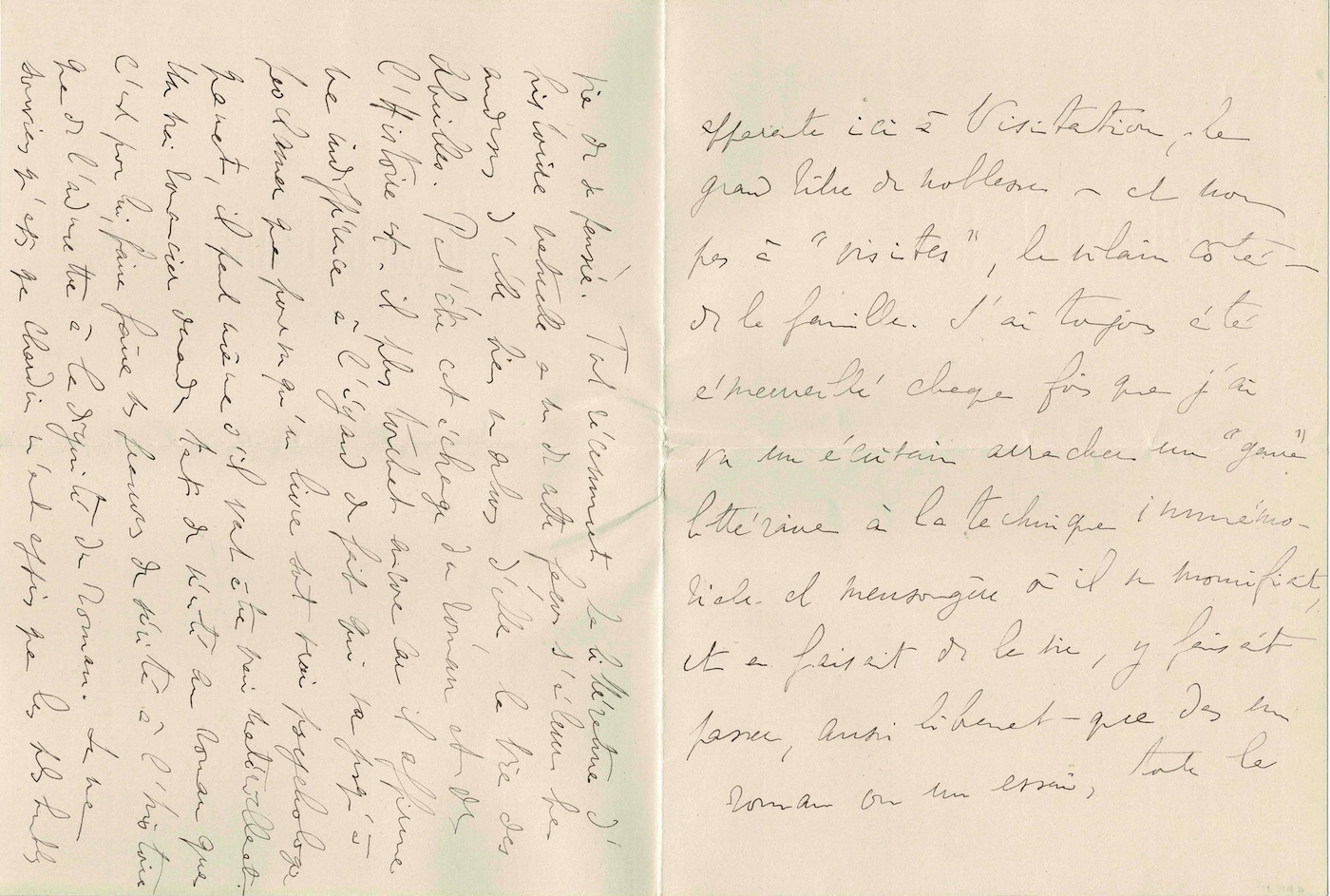

"I have always been amazed whenever I have seen a writer seize upon a literary 'genre'."
Sold
Marcel Proust (1871.1922)
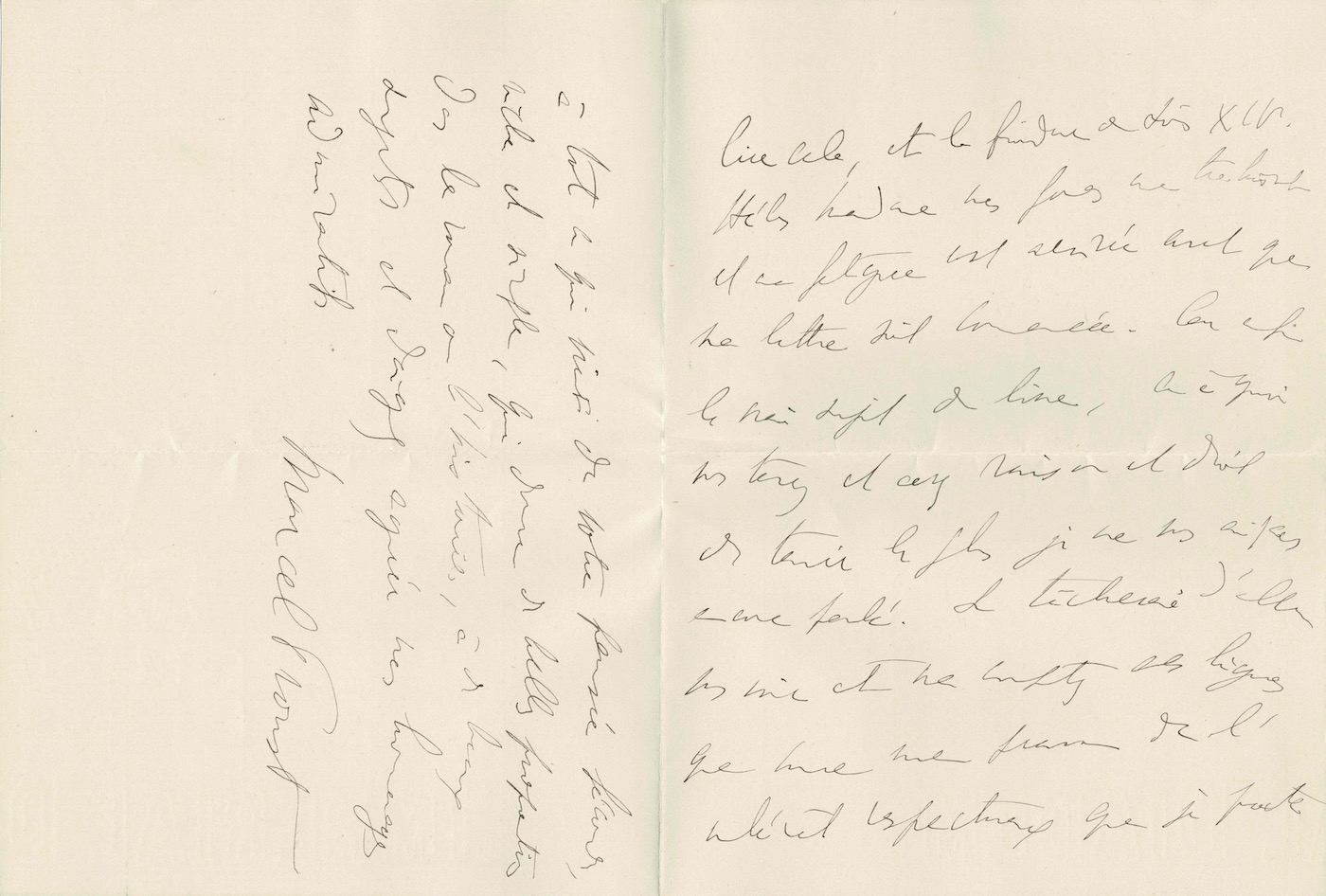
Autographed letter signed to Baroness Aimery Harty de Pierrebourg.
Seven pages in-8°. No place [Shortly after June 6, 1913]
Kolb, Volume XII, pages 195 to 198.
"I have always been amazed whenever I have seen a writer seize upon a literary 'genre'."
A magnificent literary letter. Proust shares the teachings of Chardin and Veronese on Beauty.
_____________________________________________________
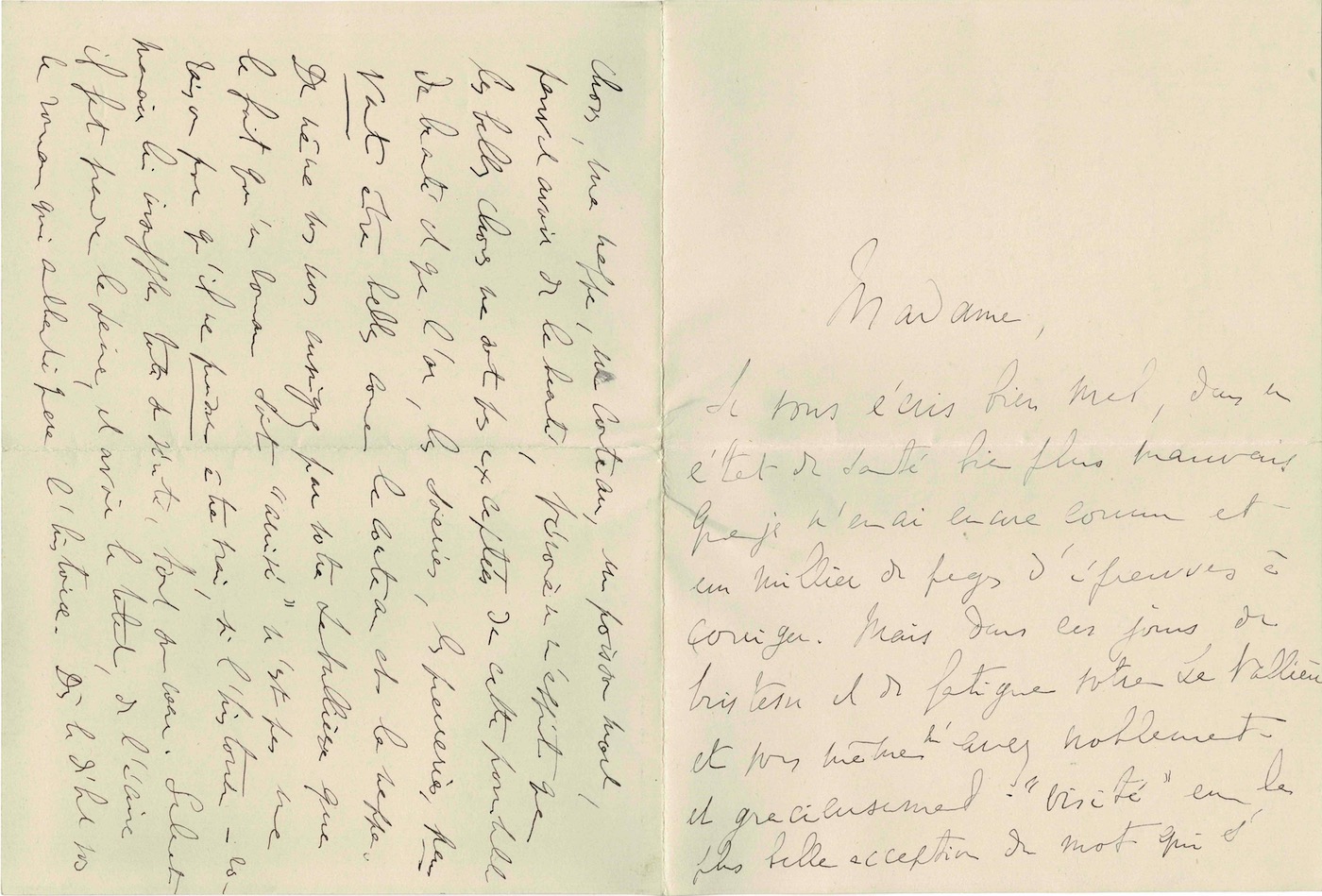
“Madam, I am writing to you in very poor health, in a state of health much worse than I have ever known, and with a thousand pages of proofs to correct. But in these days of sadness and fatigue, your La Vallière and you yourself have nobly and graciously “visited” me in the most beautiful sense of the word, which here is akin to Visitation – the great title of nobility – and not to “visits,” the ugly side of the family.”
I have always been amazed whenever I have seen a writer wrest a literary "genre" Life of Bees rise in this way, far above it, far beyond it .
Perhaps this exchange between the novel and History is even more poignant because it affirms an indifference to fact that goes so far as to proclaim that provided a book is psychologically true, it can even be materially true if it so desires. A true novelist demands so much truth from the novel that it is only to make it prove its truthfulness to history that it is granted the dignity of the novel.
I remember that after Chardin taught me that the humblest things—a tablecloth, a knife, a dead fish—can possess beauty, Veronese taught me that beautiful things are not exempt from this possibility of beauty , and that gold, silks, and precious stones can be as beautiful as the knife and the tablecloth. Similarly, you teach us through your La Vallière that the fact that a novel has "come to pass" is no reason why it cannot be true, if the historian-novelist breathes into it all his truth, all his heart. It is simply a matter of taking the trouble, and having the talent, to write the novel that will authenticate history.
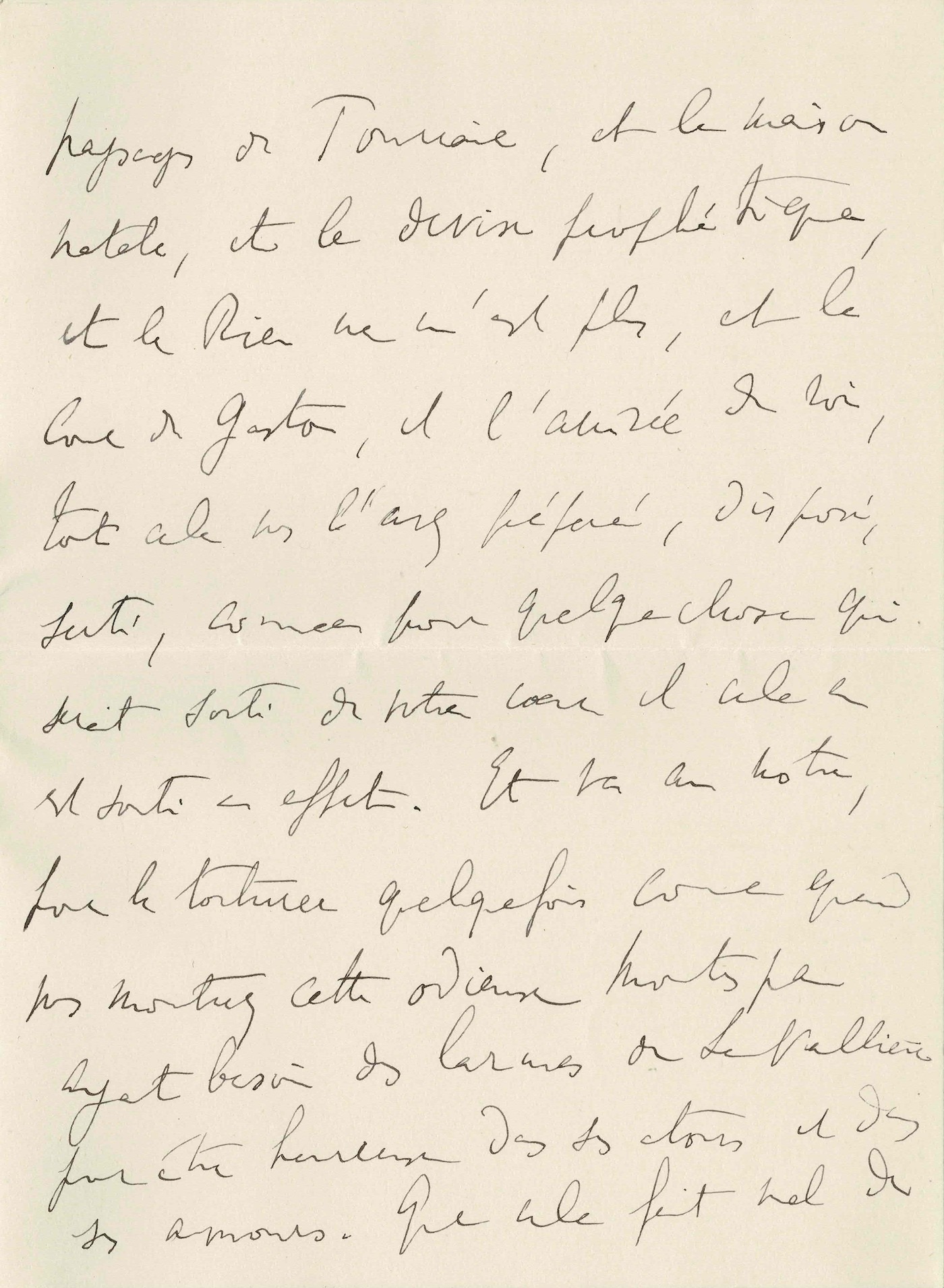
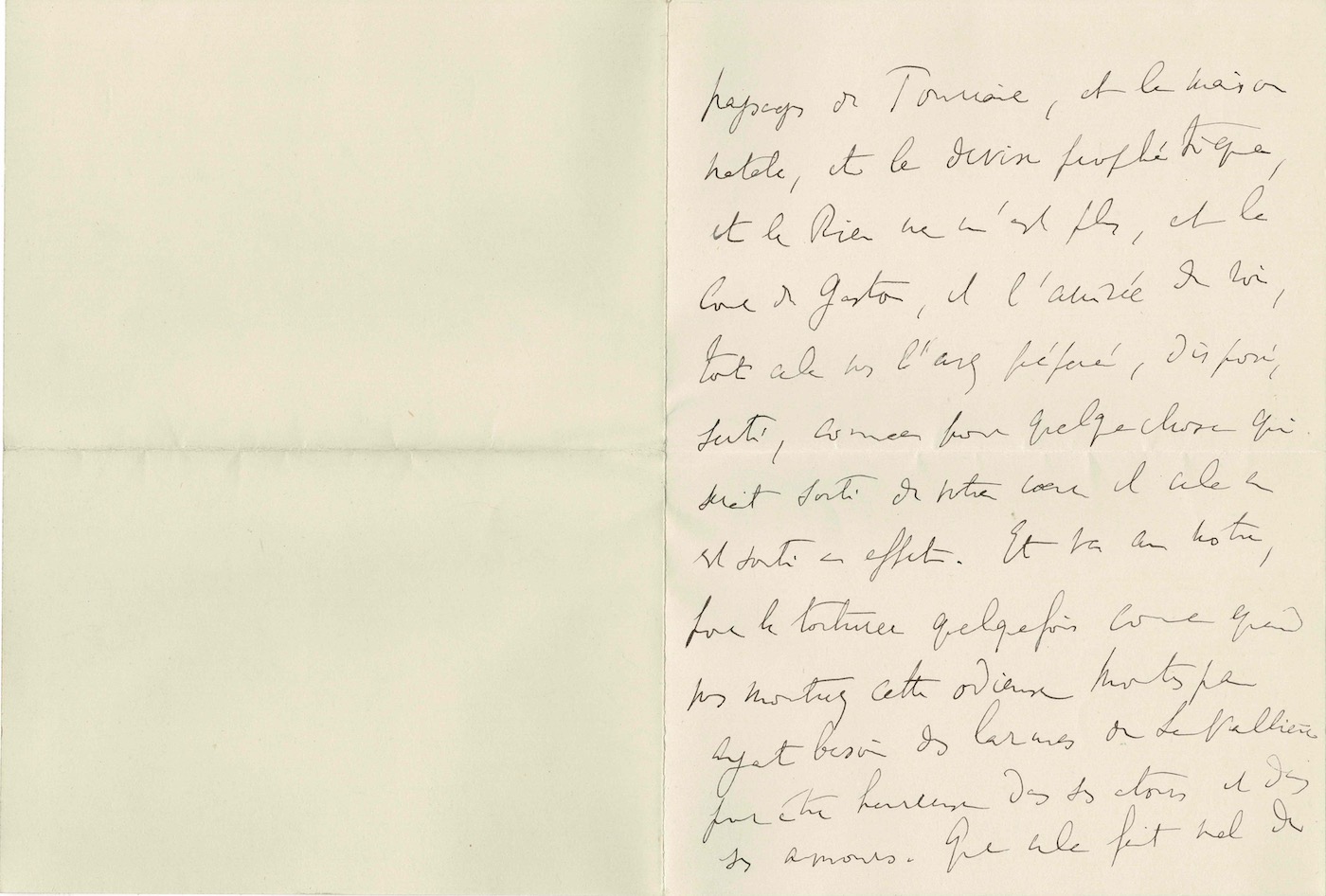
From the very beginning, your landscapes of Touraine, your birthplace, your prophetic motto, your "Nothing matters to me anymore," Gaston's court, and the king's army—all of this you have prepared, arranged, and set in place, as if it were something that sprang from your heart, and indeed it did. And it goes to ours, sometimes tormenting it, as when you show that odious Montespan needing La Vallière's tears to be happy in her finery and in her love affairs. How painful it is to read this, and the coldness of Louis XIV.
Alas, Madam, my strength fails me, and my fatigue has arrived before I could even begin my letter. For, in short, the true subject of the book, that to which you are most attached and rightly so attached, I have not yet spoken to you . I will try to come and see you, and consider these lines only as proof of the respectful interest I have in everything that springs from your fertile, rich, and simple thought, which lends such beautiful proportions to fine subjects in novels and stories. Please accept my admiring regards. Marcel Proust.