Marcel Pagnol (1895.1974)
Autograph manuscript – Jazz.
Nine and a half pages in-4° with mounts.
Lined pages taken from a notebook.
Slnd [late 1926]
A remarkable working manuscript forming the basis of his four-act satirical and dramatic play, Jazz .
The subject of Jazz is deeply dramatic: a Hellenist scholar named Jean Blaise devotes the best years of his life to a work he believed to be crucial: the discovery of a lost dialogue by Plato, the Phaethon. Having become a renowned scholar, Jean Blaise discovers too late the vanity of his work and the futility of his sacrifice when an English scholar reveals that his text is merely a late pastiche. Now haunted by his lost youth, Blaise tries in vain to recapture his lost time, but time, embodied in the form of a ghostly adolescent, kills him.
Created at the Grand Théâtre de Monte Carlo on December 9, 1926, the play was immediately revived in Paris at the Théâtre des Arts on December 21, 1926.
______________________________________________________________
Jazz
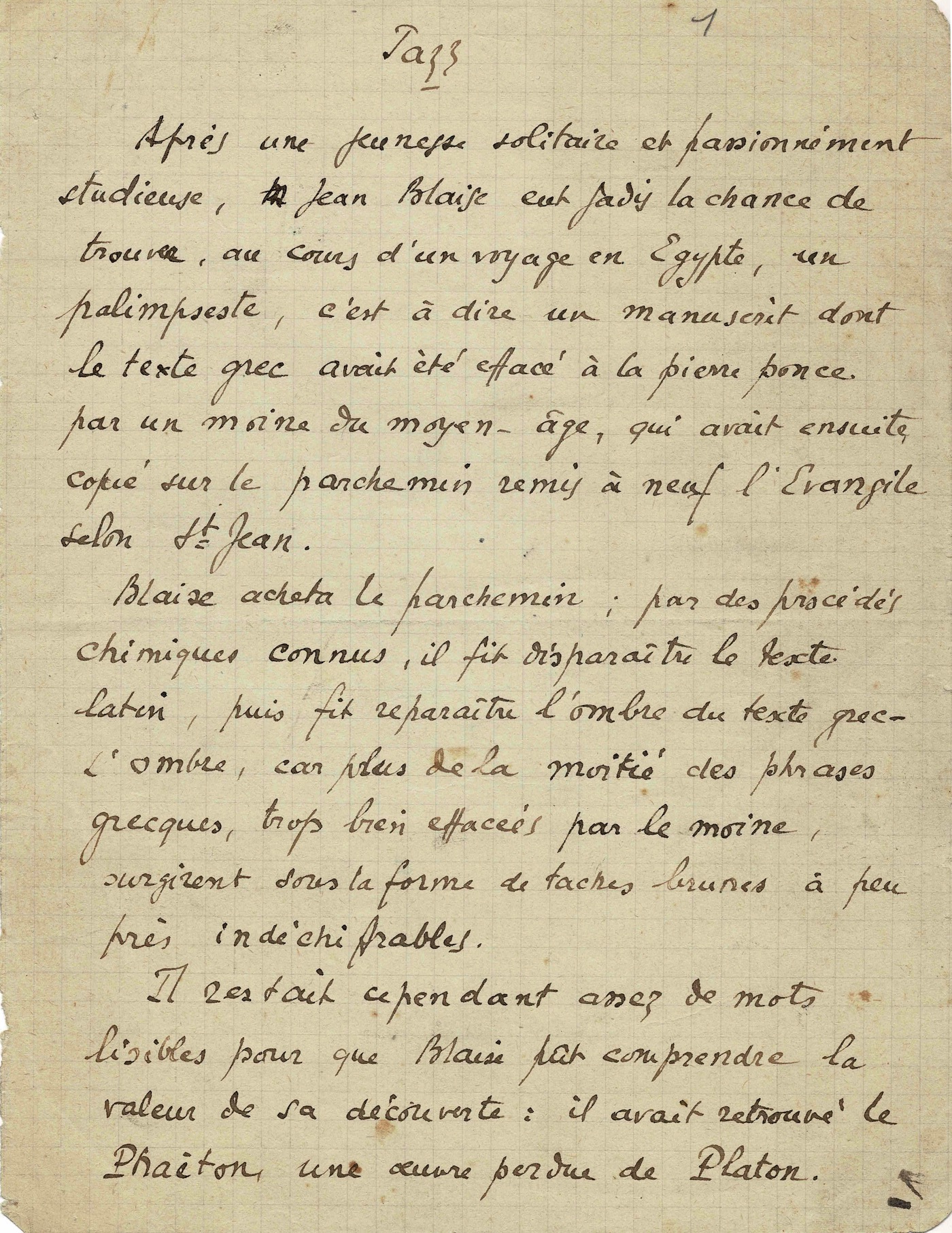
“After a solitary and passionately studious youth, Jean Blaise once had the chance to find, during a trip to Egypt, a palimpsest, that is to say a manuscript whose Greek text had been erased with pumice stone by a monk of the Middle Ages, who had then copied the Gospel according to St John onto the newly restored parchment.
Blaise bought the parchment; using known chemical processes, he erased the Latin text, then brought back the shadow of the Greek text. The shadow, because more than half of the Greek sentences, too thoroughly erased by the monk, emerged as almost indecipherable brown stains. However, enough legible words remained for Blaise to grasp the value of his discovery: he had rediscovered the Phaethon, a lost work by Plato.
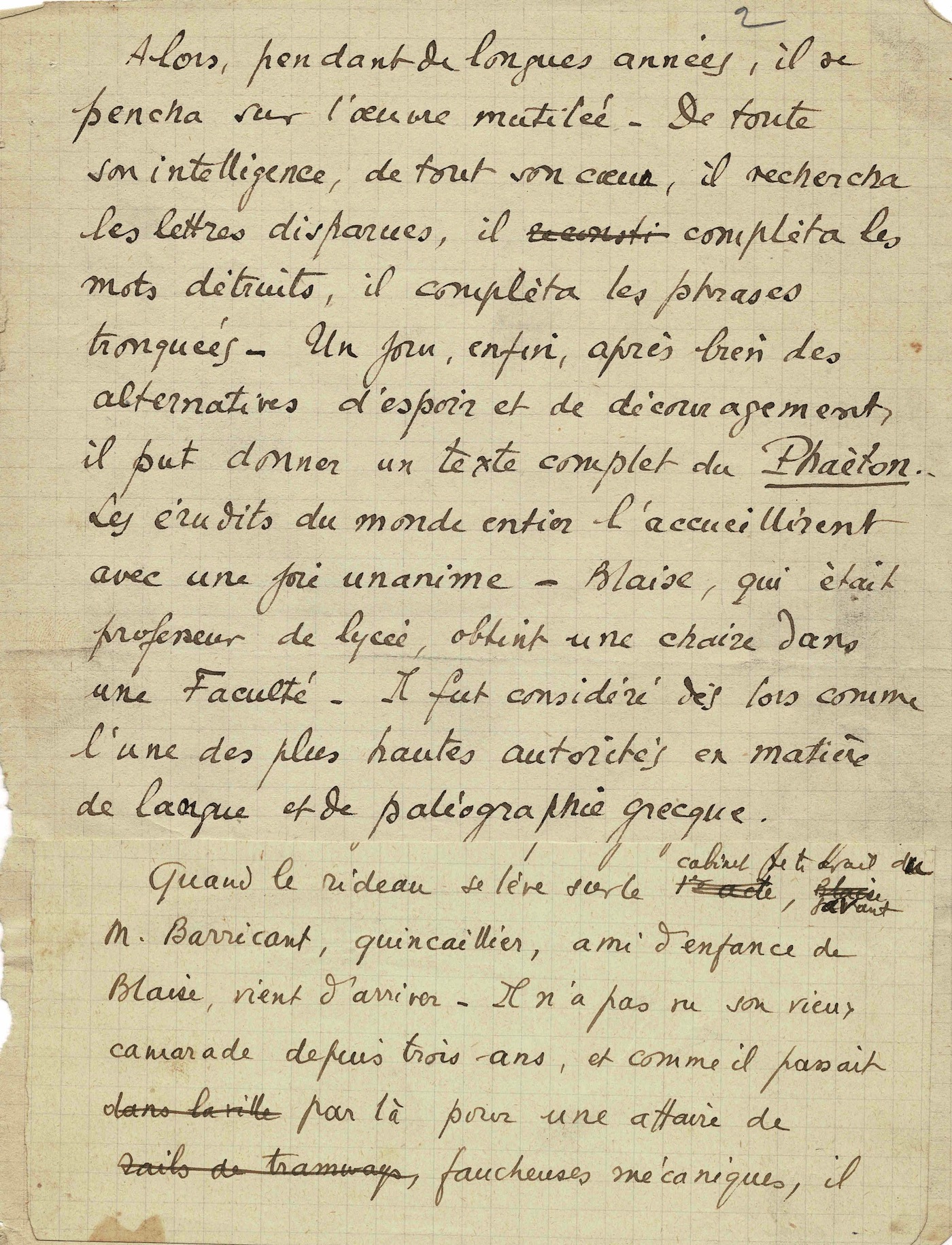
So, for many long years, he pored over the mutilated work. With all his intelligence and all his heart, he searched for the missing letters, he filled in the broken words, he completed the truncated sentences. One day, finally, after many swings between hope and discouragement, he was able to produce a complete text of the Phaethon . Scholars throughout the world greeted him with unanimous joy. Blaise, who had been a high school teacher, obtained a professorship at a university. From then on, he was considered one of the foremost authorities on Greek language and paleography.
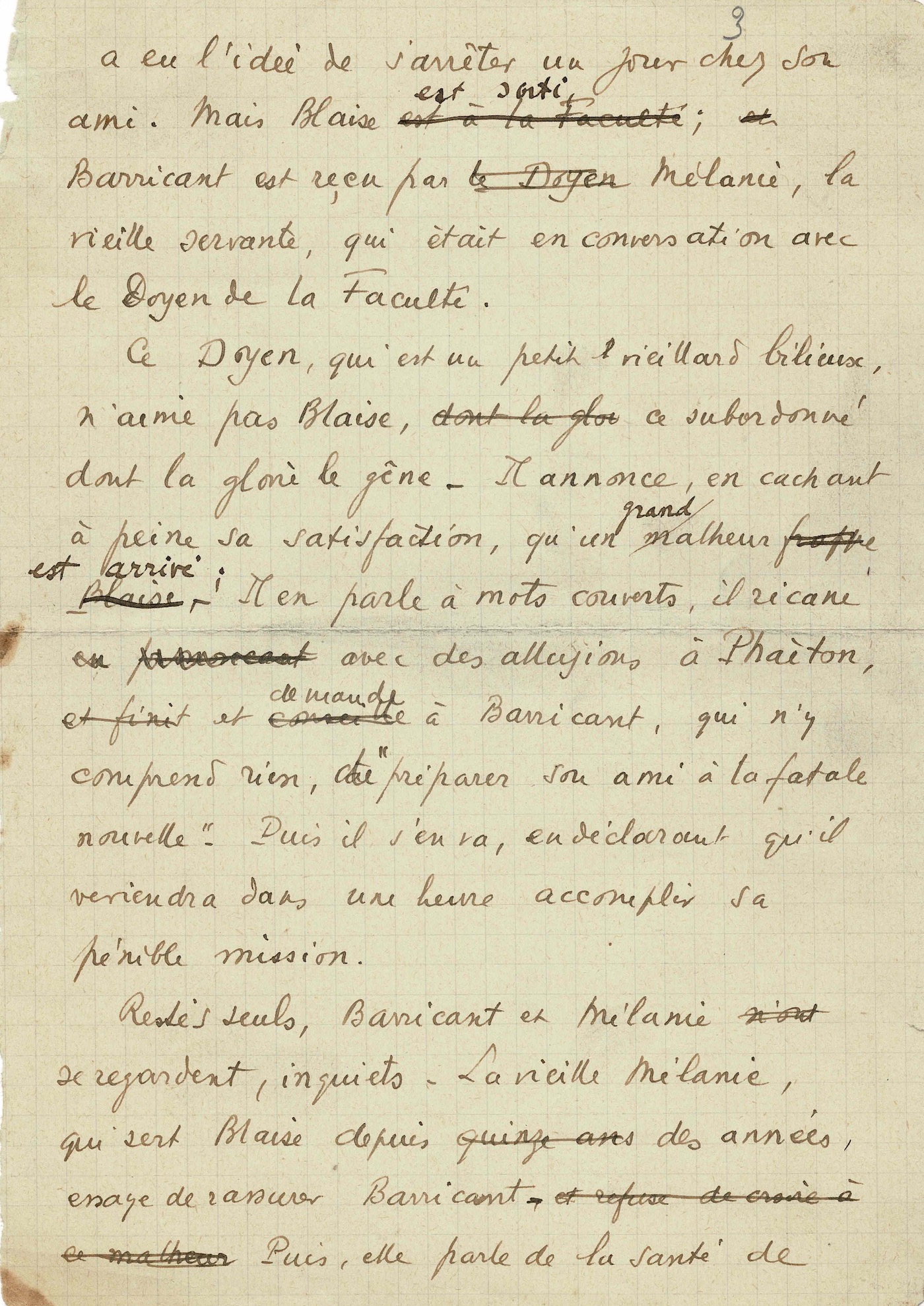
When the curtain rises on the study of the scholar, Mr. Barricant, the hardware store owner and Blaise's childhood friend, has just arrived. He hasn't seen his old friend for three years, and since he was passing through on business involving mechanical mowers, he had the idea of stopping by his friend's place one day. But Blaise has already left; Barricant is received by Mélanie, the old servant, who was in conversation with the Dean of the Faculty.
This Dean, a small, bilious old man, dislikes Blaise, this subordinate whose glory bothers him. Barely concealing his satisfaction, he announces that a great misfortune has befallen him; he speaks of it in veiled terms, sneering with allusions to Phaethon, and asks Barricant, who understands nothing of it, to "prepare his friend for the fatal news." Then he leaves, declaring that he will return in an hour to carry out his arduous task.
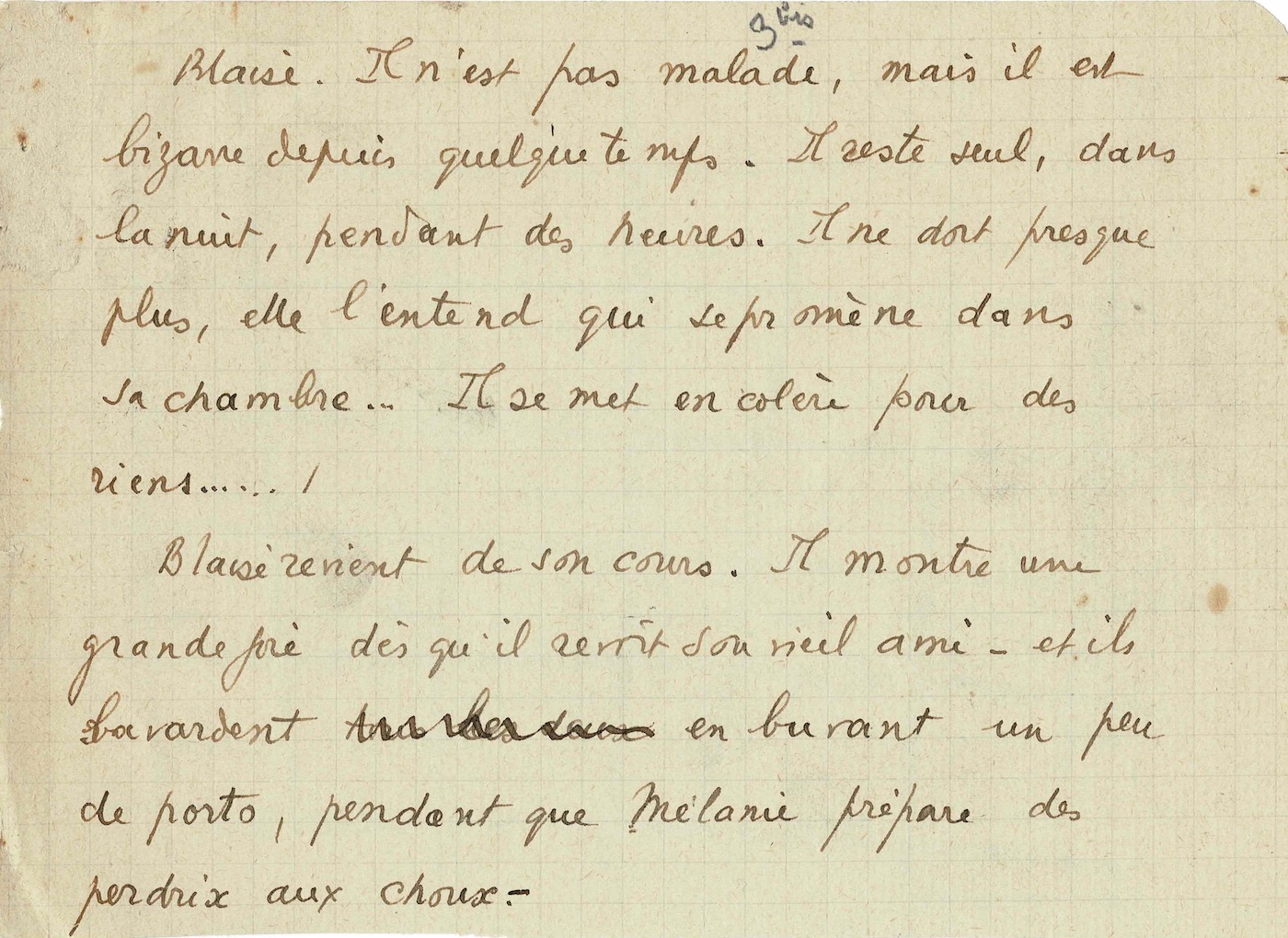
Left alone, Barricant and Mélanie looked at each other, worried. Old Mélanie, who had served Blaise for years, tried to reassure Barricant. Then she spoke of Blaise's health. He wasn't sick, but he had been acting strangely for some time. He stayed alone for hours at night. He hardly slept anymore; she could hear him pacing in his room… He got angry over nothing…
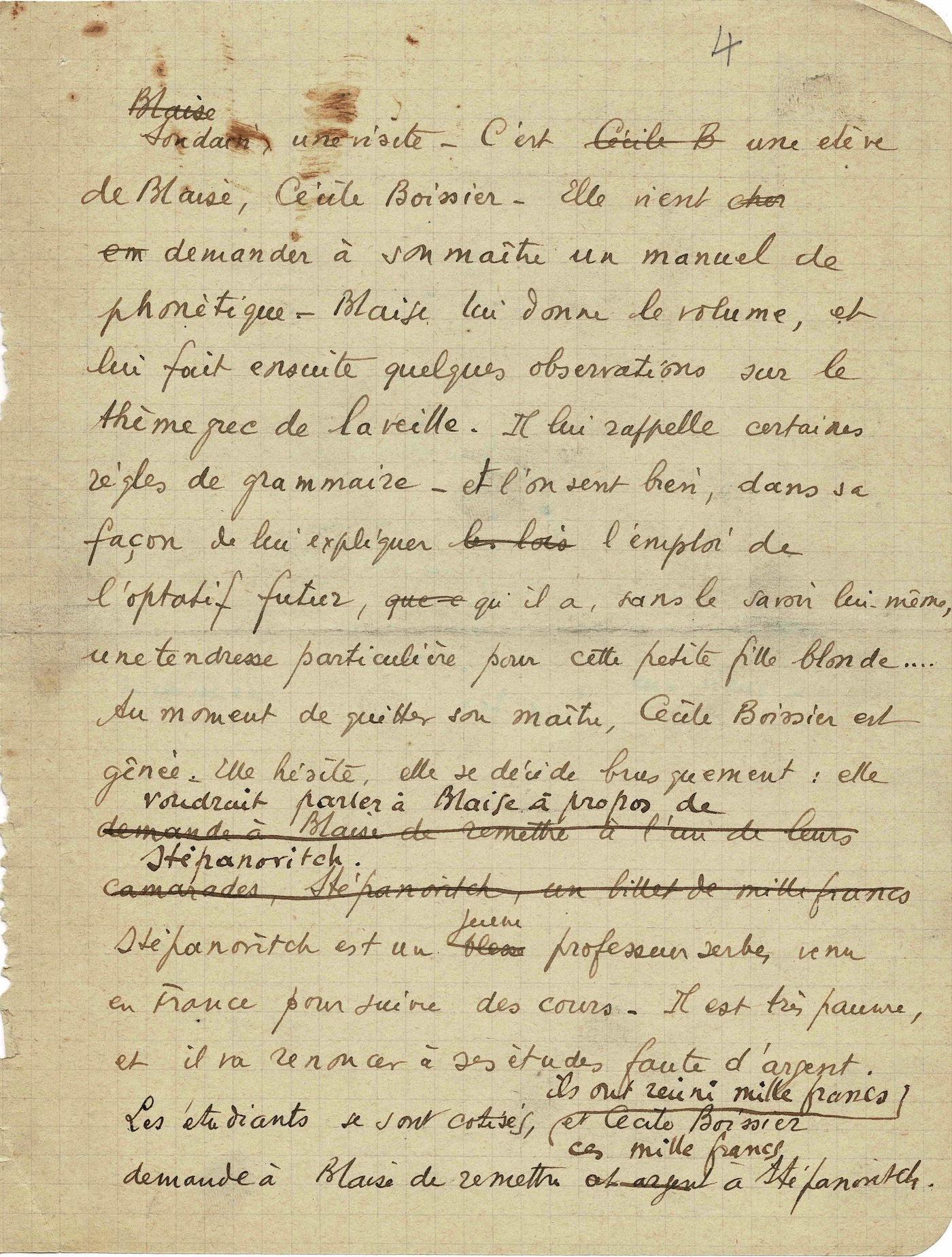
Blaise returns from his lesson. He is overjoyed to see his old friend again, and they chat over a little port while Mélanie prepares partridge with cabbage. Suddenly, a visitor arrives. It is one of Blaise's students, Cécile Boissier. She has come to ask her teacher for a phonetics textbook. Blaise gives her the volume and then makes a few observations on the Greek theme from the previous day. He reminds her of certain grammar rules—and one senses, in the way he explains the use of the future optative, that he has, without realizing it himself, a particular fondness for this little blonde girl… As she is about to leave her teacher, Cécile Boissier feels awkward. She hesitates, then suddenly decides: she wants to talk to Blaise about Stepanovich.
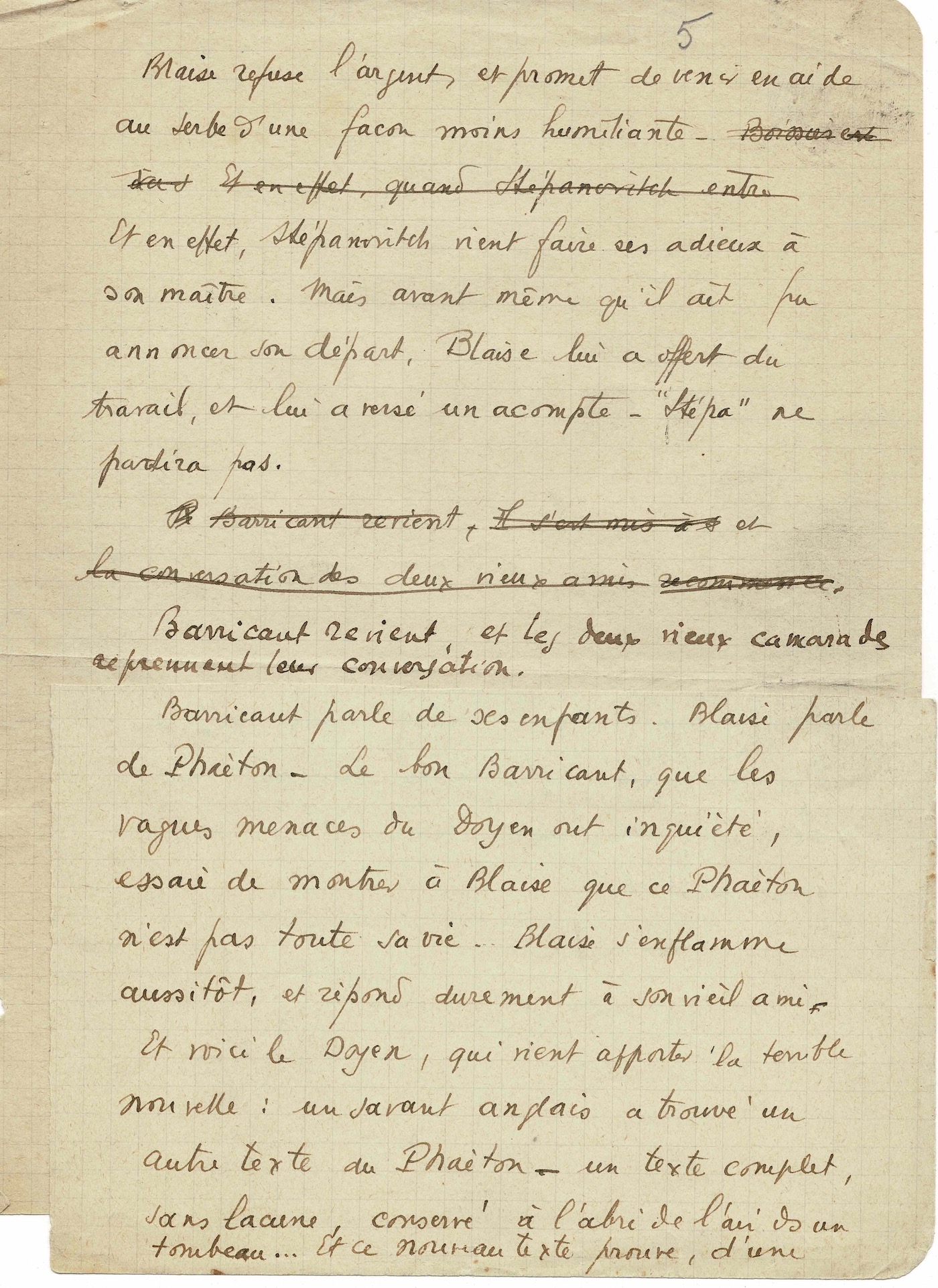
Stepanovich is a young Serbian professor who has come to France to study. He is very poor and is about to give up his studies due to lack of money. The students have pooled their resources, raising a thousand francs, and Cécile Boissier asks Blaise to give this thousand francs to Stepanovich. Blaise refuses the money and promises to help the Serbian in a less humiliating way. And indeed, Stepanovich comes to say goodbye to his teacher. But even before he can announce his departure, Blaise offers him a job and gives him an advance. "Stepa" will not be leaving.
Barricant returns, and the two old friends resume their conversation. Barricant speaks of his children. Blaise speaks of Phaeton. Good old Barricant, worried by Doyen's vague threats, tries to show Blaise that Phaeton isn't his whole life… Blaise immediately flies into a rage and answers his old friend harshly. And here comes Doyen, bringing the terrible news: an English scholar has found another text of Phaeton. A complete text, without gaps, preserved from the air in a tomb… And this new text proves, irrefutably, that all of Blaise's conjectures to fill the gaps in his palimpsest are entirely false. - schoolmaster who amused himself by creating pastiches… The Dean brings in the article by the English scholar, the very article that destroys a lifetime's work…
And here was Blaise alone, sitting at his desk, bent over the pages that were destroying his glory… Little by little, his face tightened, tears streamed down his cheeks… Then, emerging from the shadows behind him, a young man, poorly dressed, unshaven, pale, carrying a school satchel and an old umbrella, appeared. This young man leaned over Blaise and read over his shoulder, shaking his head, as the curtain fell.
The set for Act 2 depicts a lecture hall at the Faculty of Arts. Blaise, who has stayed home for a few days, is about to return to teach his class. The Dean is worried. He wishes Blaise hadn't returned so soon after the collapse of the Phaeton, which had caused quite a stir. He can't prevent him from coming back, but he has the students dismissed by the usher. Only a few loyal students remain: Cécile Boissier, Stépanovitch, Mademoiselle Poche… Others want to see Blaise again, out of curiosity. When he arrives, there are about ten of them, and it is before them that he delivers his final lecture. The stranger from the end of the act has entered with him; he has sat down among the students, who don't see him; evidently, it is he who inspires Blaise with the unexpected words he utters from his lectern: intellectual effort is absurd and futile. Intellectual pursuits are but a game and literary culture is but a means of existence authorized by law … Only one thing matters: to live a simple, human life, far from books, in the sun.
He regrets the wasted years, his youth ruined by books. He leaves, followed by the young man, leaving his students stunned.
Finally, in Act 3 , the mysterious young man speaks. This young man, whose invisible presence made Blaise nervous in Act 1, represents his youth, the young man he was at twenty. The poor student, a prisoner of books. The one who longed to speak to young women… Phaeton's downfall has freed him. First, he demands an explanation.
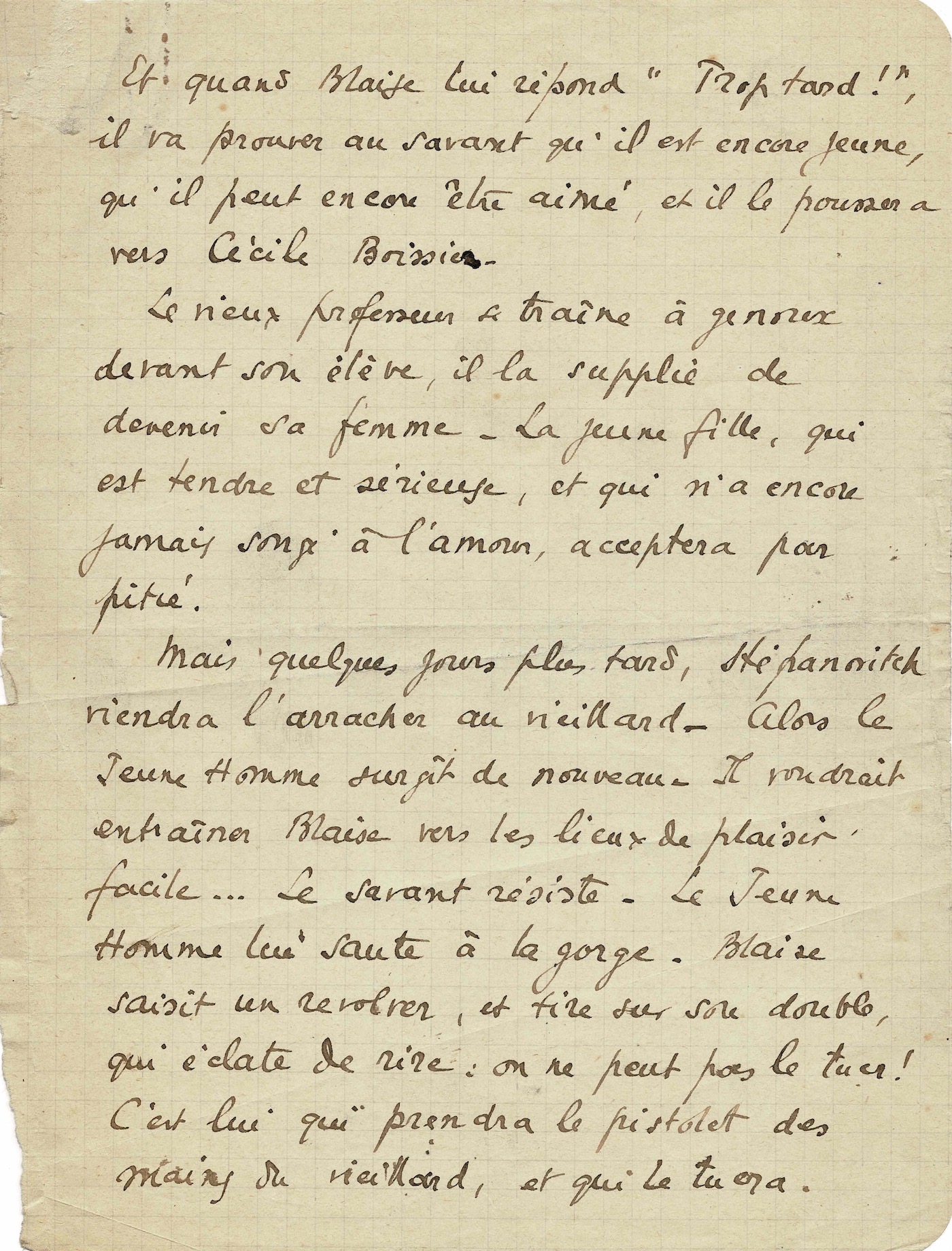
And when Blaise replies, "Too late!", he sets out to prove to the scholar that he is still young, that he can still be loved, and he will push him toward Cécile Boissier. The old professor crawls on his knees before his student, begging her to become his wife. The young woman, who is tender and serious, and who has never before considered love, will accept out of pity.
But a few days later, Stepanovich came to snatch him away from the old man. Then the young man appeared again. He wanted to lure Blaise to places of easy pleasure… The scholar resisted. The young man leaped at his throat. Blaise grabbed a revolver and shot his double, who burst out laughing: he couldn't be killed! He was the one who would take the pistol from the old man's hands and kill him.
______________________________________________________________
After the failure of his play, Les Marchands de gloire , in 1925, Jazz achieved critical and acclaimed success. However, it wasn't until the young Provençal playwright's third play, Topaze , premiered in 1928, that Marcel Pagnol's name became firmly established in the theatrical world.