Jean Cocteau (1889.1963)
Illustrated autograph manuscript – An essay in indirect criticism
Four pages, large quarto, in pencil
No place or date. [1932]
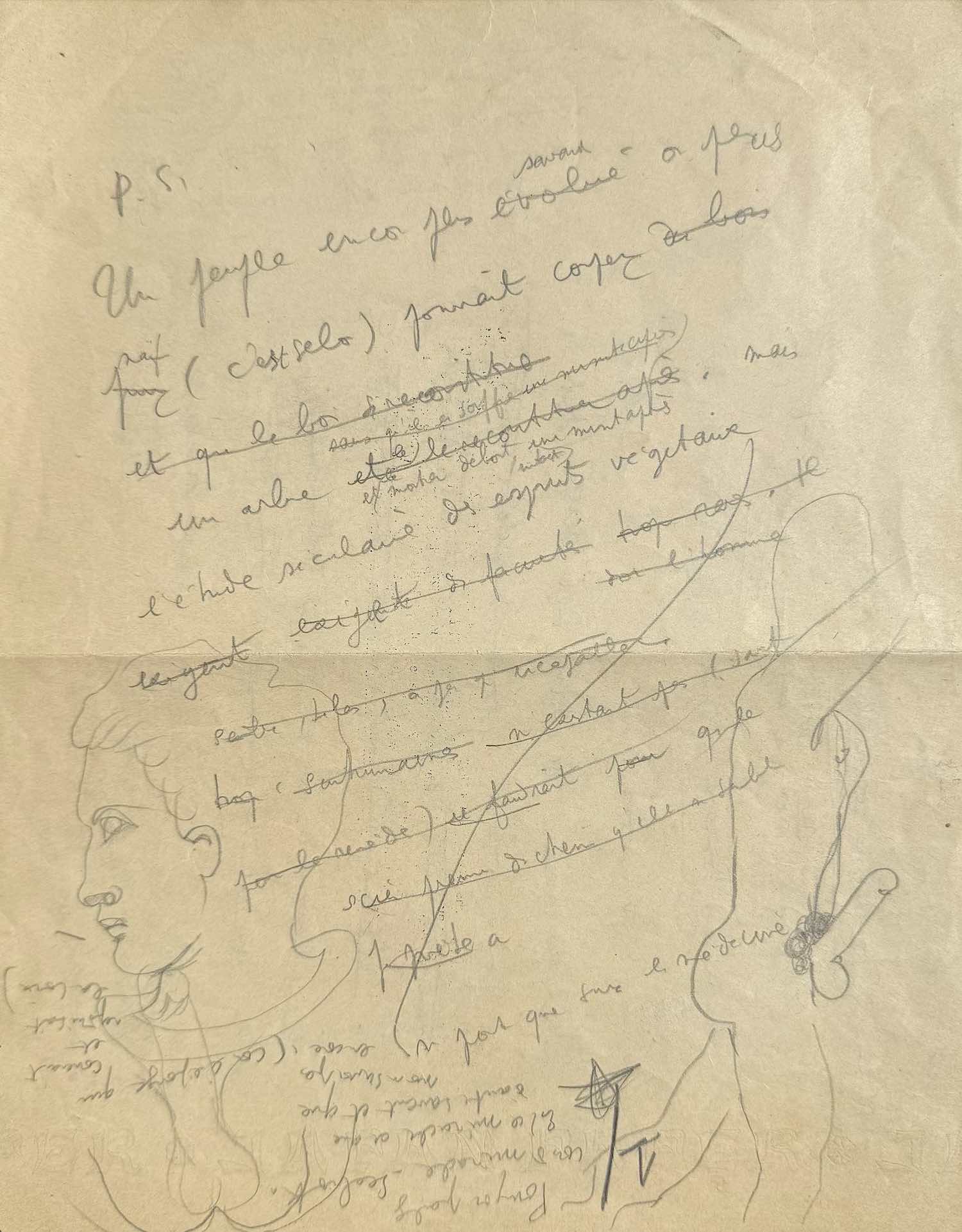
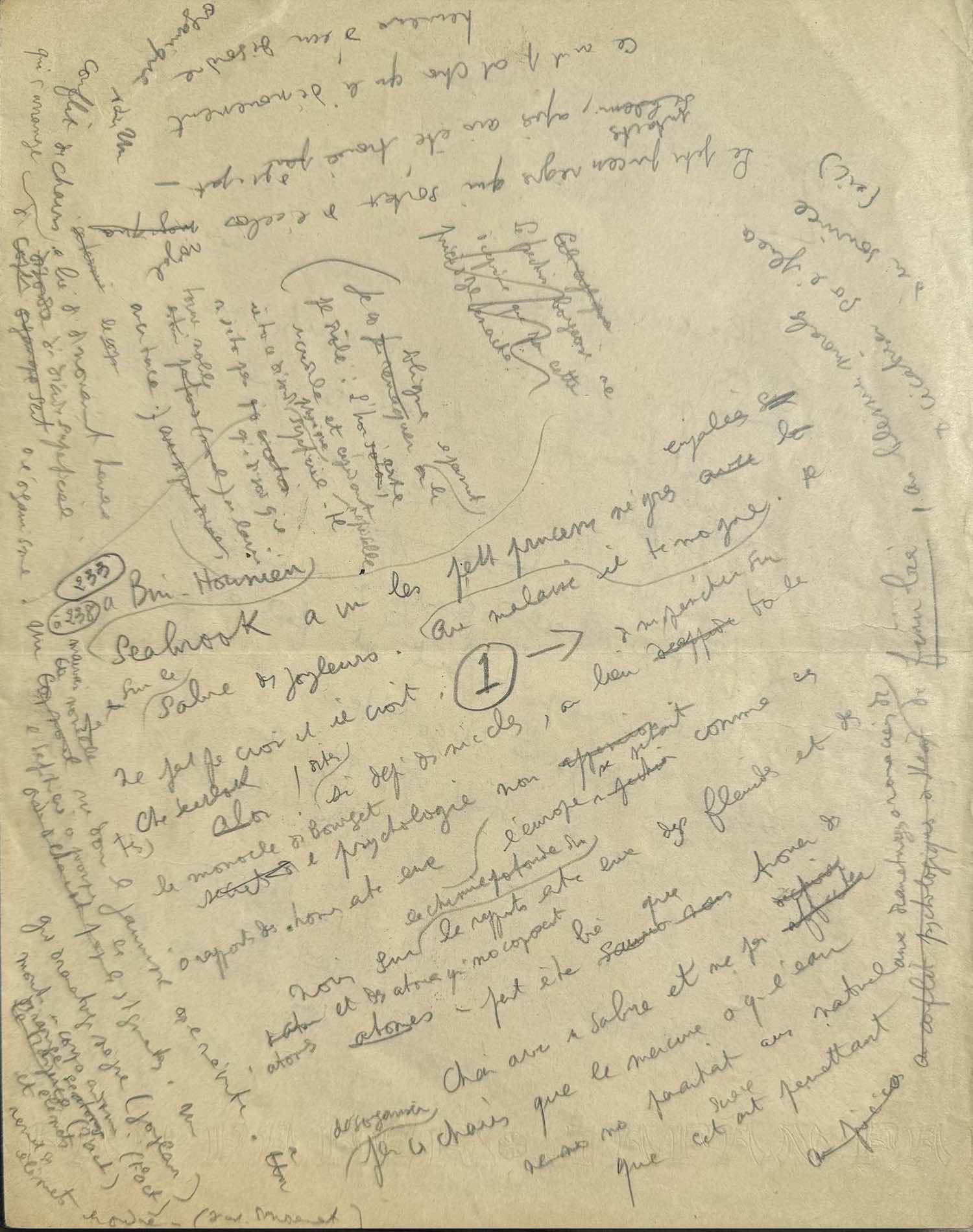
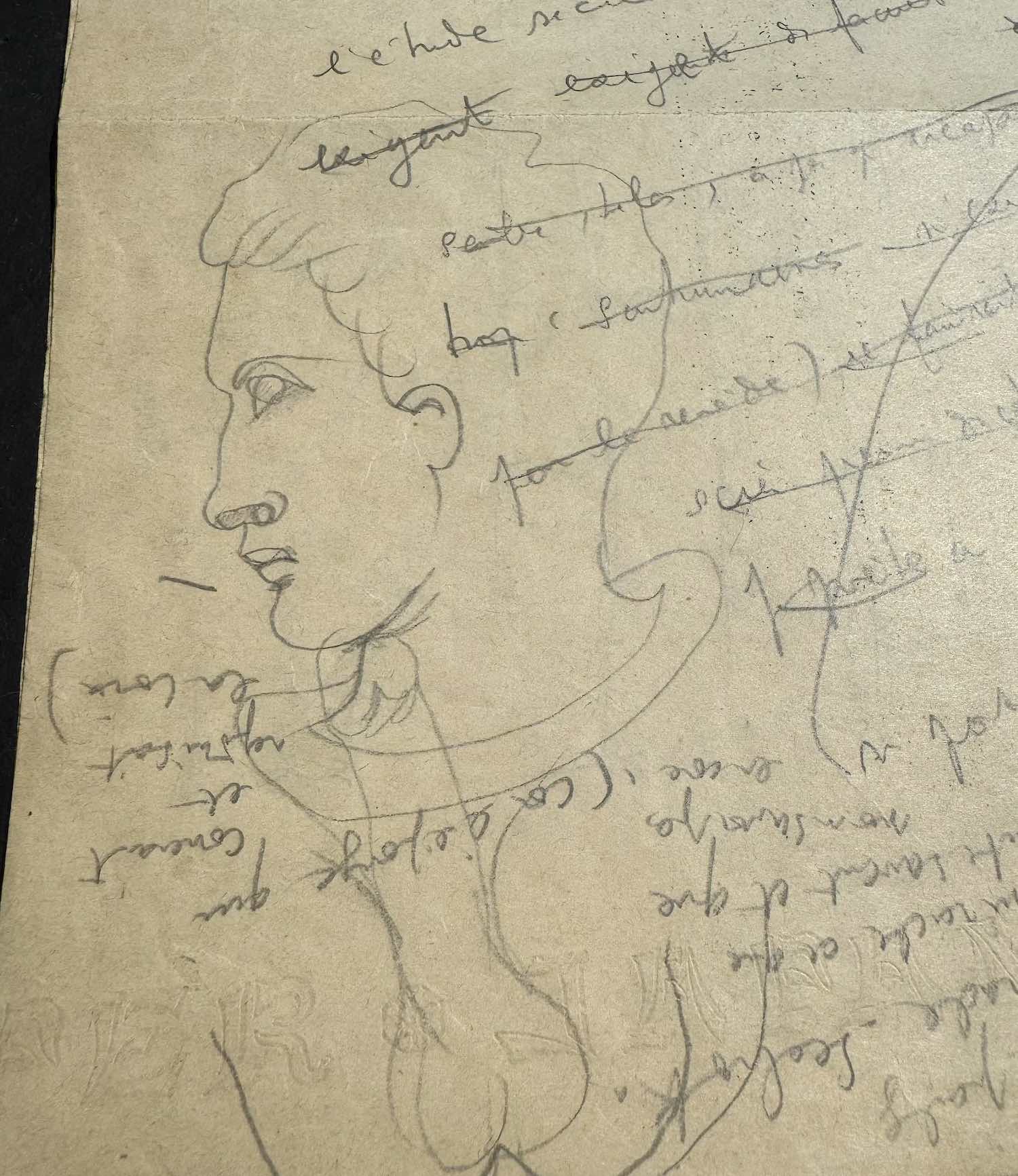
A magnificent working manuscript, a first draft, in very dense handwriting, and illustrated with two male profiles and two erect phalluses. Numerous variations exist in the text of this review, which was finally published by Grasset in 1932.
______________________________________________________________
At Bin-Hounien, Seabrook saw the little black princesses impaled on the jugglers' swords. […] If for centuries, instead of studying Bourget's monocle, psychology, or the relationships between men, Europe had studied, like these black people, deep chemistry, the relationships between fluids and atoms, perhaps piercing flesh with a sword and not disrupting it any more than mercury or water would seem natural to us, like the method that allows playwrights to have happy endings, and moral wounds to heal under the influence of a smile.
The little black girls who emerge unscathed from the enclosure, after being riddled with holes, represent nothing other than the happy resolution of an organic disorder, a conflict of flesh that is resolved, instead of the resolution of a superficial disorder of the organism.
I should point out, in passing, the funniest part. The man remains incredulous, yet he judges this physical disorder to be contemptible. He is not surprised that a disorder he finds profound and noble leaves no trace. Widows consoled, etc.
Bad news gives us jaundice, neuritis. At the Salpêtrière, they induce stigmata. A great Black playwright (the juggler) shows a sleeping body – Act 1 – Disturbs its parts – Act 2 – Puts its parts back in order – Act 3. Denouement.
It is curious that Europe does not know that one can lull to sleep the minds of which man is made, as well as his spirit.
The truth about all this is that the European places his body very high and recites with Jules Lemaitre this disgusting prayer: "My God, preserve me from physical suffering; I'll take care of moral suffering myself."
The people of the East, the Black people, endure torture because, for them, strength of spirit also governs the form of the soul, that is to say, the body. The Aissaoua who dance while stabbed, the fakirs buried alive, pierced with needles, demonstrate Eastern strength of spirit. Our mania for understanding leaves us only half-asleep. Yet, everything is a matter of sleep. The sleep of plants, of animals, of fakirs, of Voodoo.
The princess of San Dei sleeps, but she sleeps soundly. The sword that pierces her pierces a thousand little sleepers who do not know it, who move aside, and who return to their original place without having noticed anything.