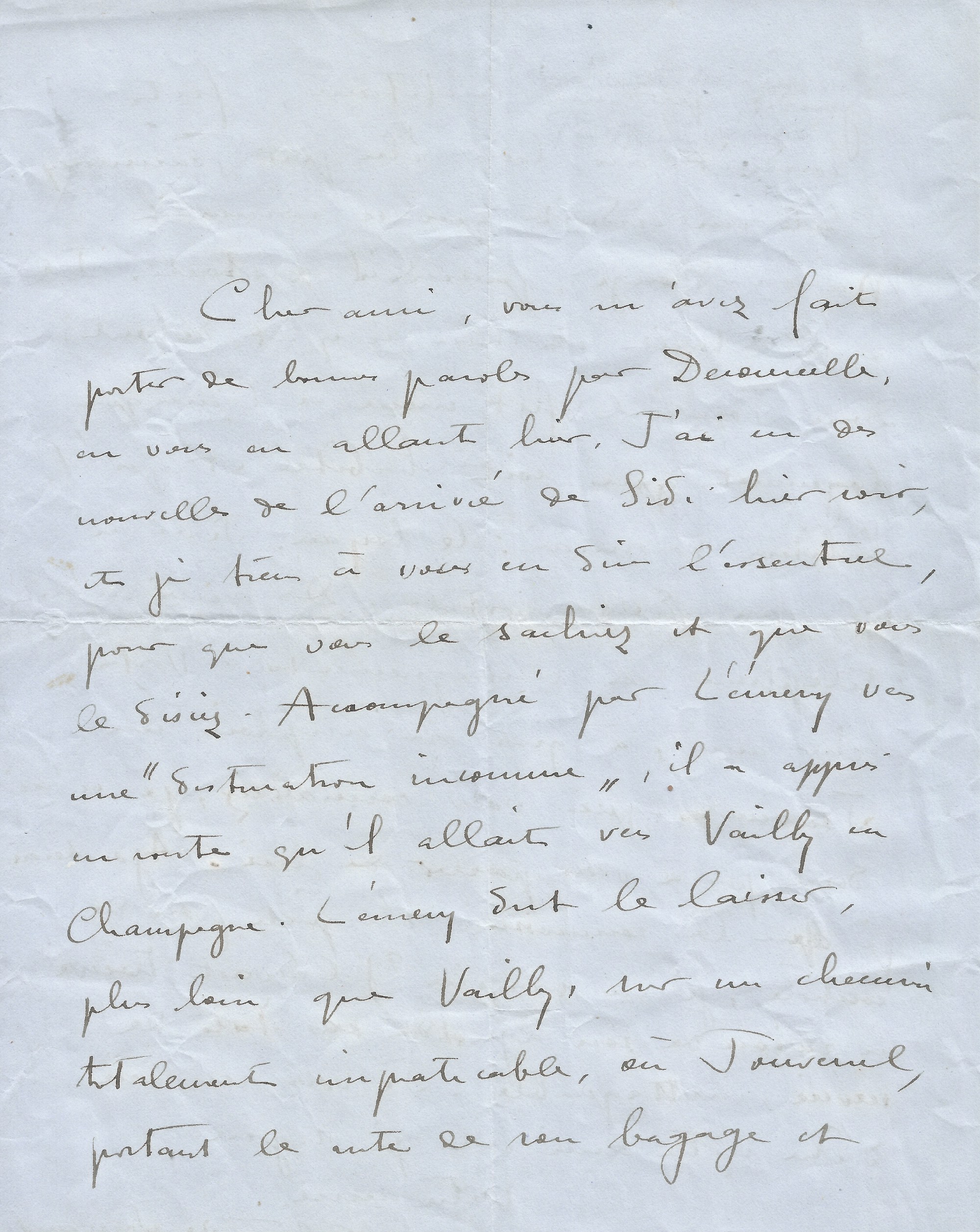
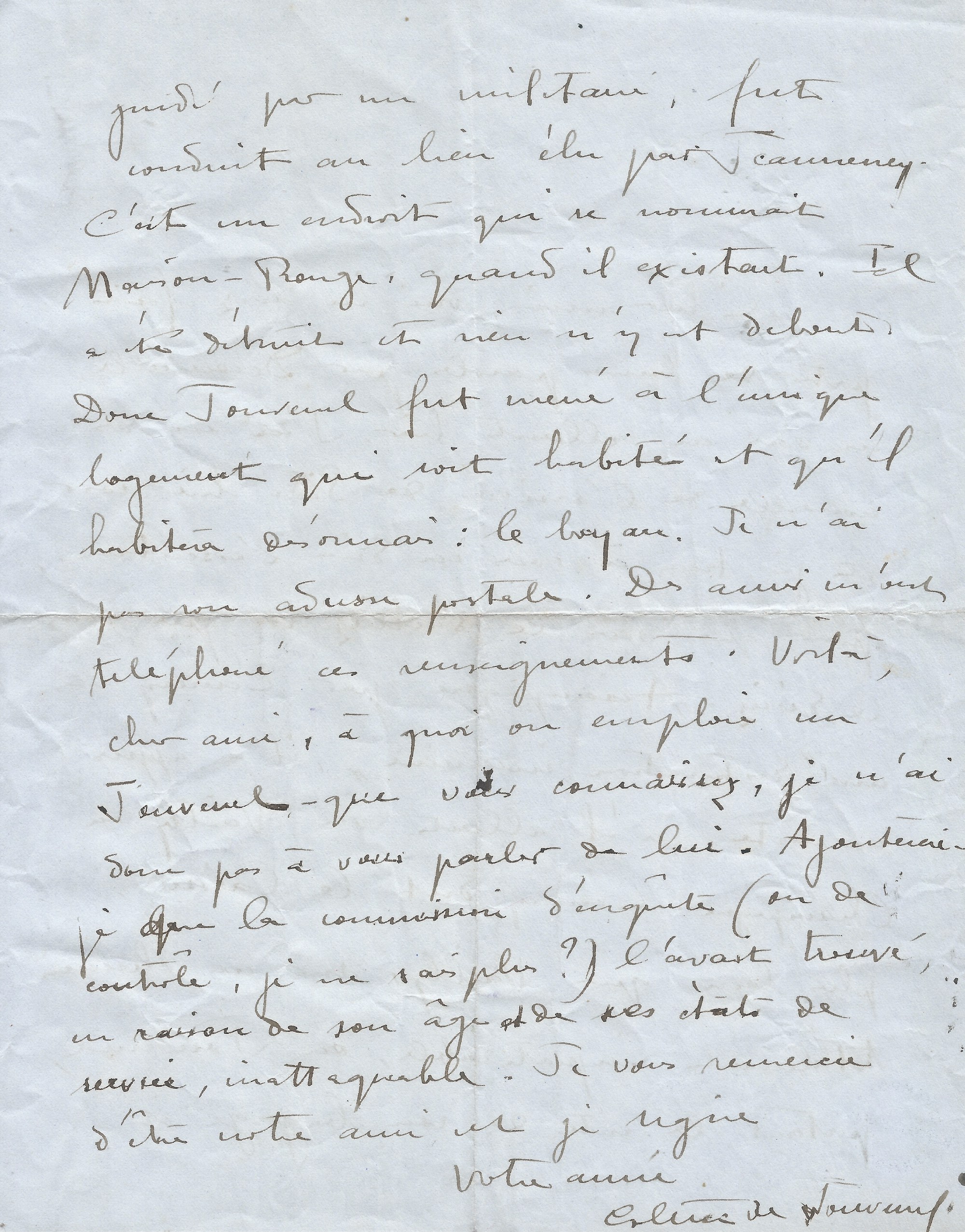

« "That, my dear friend, is what a Jouvenel is used for – whom you know, so I don't need to tell you about him."
650€
Sidonie Gabrielle Colette , known as COLETTE (1873.1954)
Autograph letter signed to Philippe Berthelot.
Two quarto pages on blue paper. No date [1914 or 1915].
"That, my dear friend, is what a Jouvenel is used for."
Colette expressed her concern to Berthelot about the situation of her husband, Henry de Jouvenel, during the First World War.
__________________________
“My dear friend, you sent me kind words via Decourcelle on your departure yesterday. I received news of Sidi’s arrival last night , and I want to tell you the essentials so that you know and will spread the word. Accompanied by Lémery to an ‘unknown destination,’ he learned en route that he was going to Vailly in Champagne. Lémery had to leave him beyond Vailly, on a completely impassable road, where Jouvenel, carrying the rest of his luggage and guided by a soldier, was taken to the place chosen by Jeanneney .
This is a place that used to be called Maison-Rouge, when it existed. It was destroyed and nothing is left standing. So Jouvenel was taken to the only inhabited dwelling, the one he would now inhabit: the trench. I don't have his postal address. Friends phoned me with that information. There you have it, my dear friend, that's what a Jouvenel is used for —one you know, so I don't need to tell you about him.
I should add that the commission of inquiry (or oversight committee, I can't remember which?) found him, due to his age and service record, beyond reproach. Thank you for being our friend, and , Colette de Jouvenel.
__________________________
Henry Lémery (1874-1972) was very close to Henry de Jouvenel since their student days and the Dreyfus Affair. “In 1917-1918, Lémery, a colleague of Jules Jeanneney in the government, came to plead the case of Henry de Jouvenel, who was mobilized in Paris, at the famous Maison de la Presse, when there was talk of sending him to the front. He was very poorly received and Jouvenel left” (Jean-Noël Jeanneney).
Indeed, Lémery had been appointed Under-Secretary of State for Transport in Georges Clemenceau's government in November 1917 (the first Martinican to hold a position in a French government). However, by that time, Jouvenel had returned from the front: the letter likely dates from the beginning of the war, when her husband was sent to Verdun.
(From March 1917, Jules Jeanneney sat on the Personnel Control Commission responsible for settling the cases of shirkers and sending them to the front.)