KUBA LELE / BASHILELE MASK, DRC
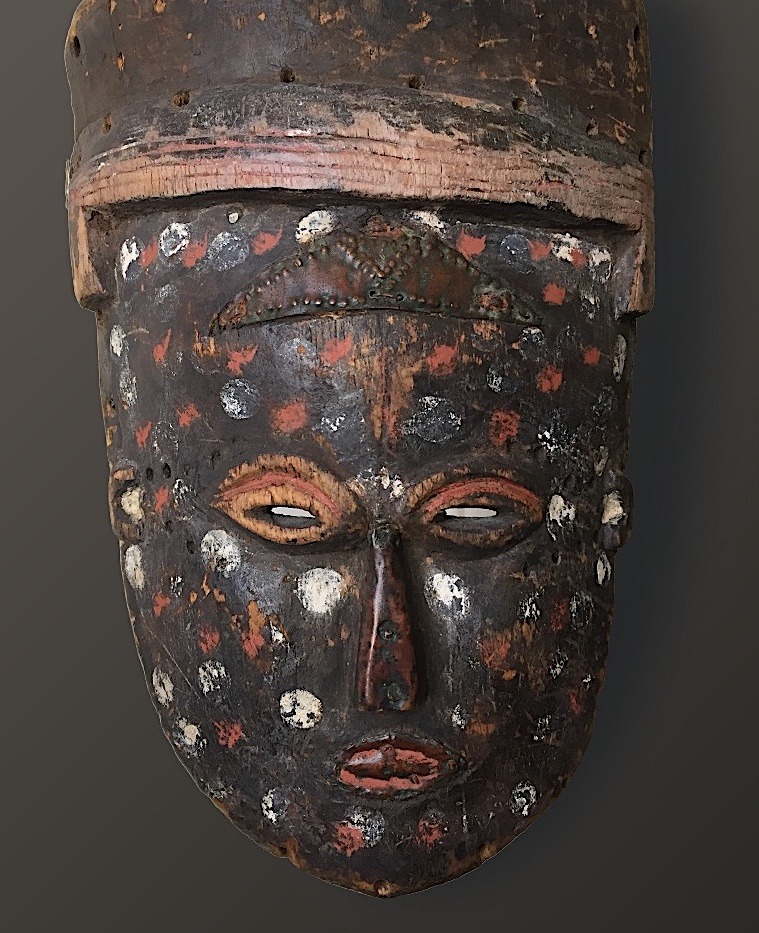
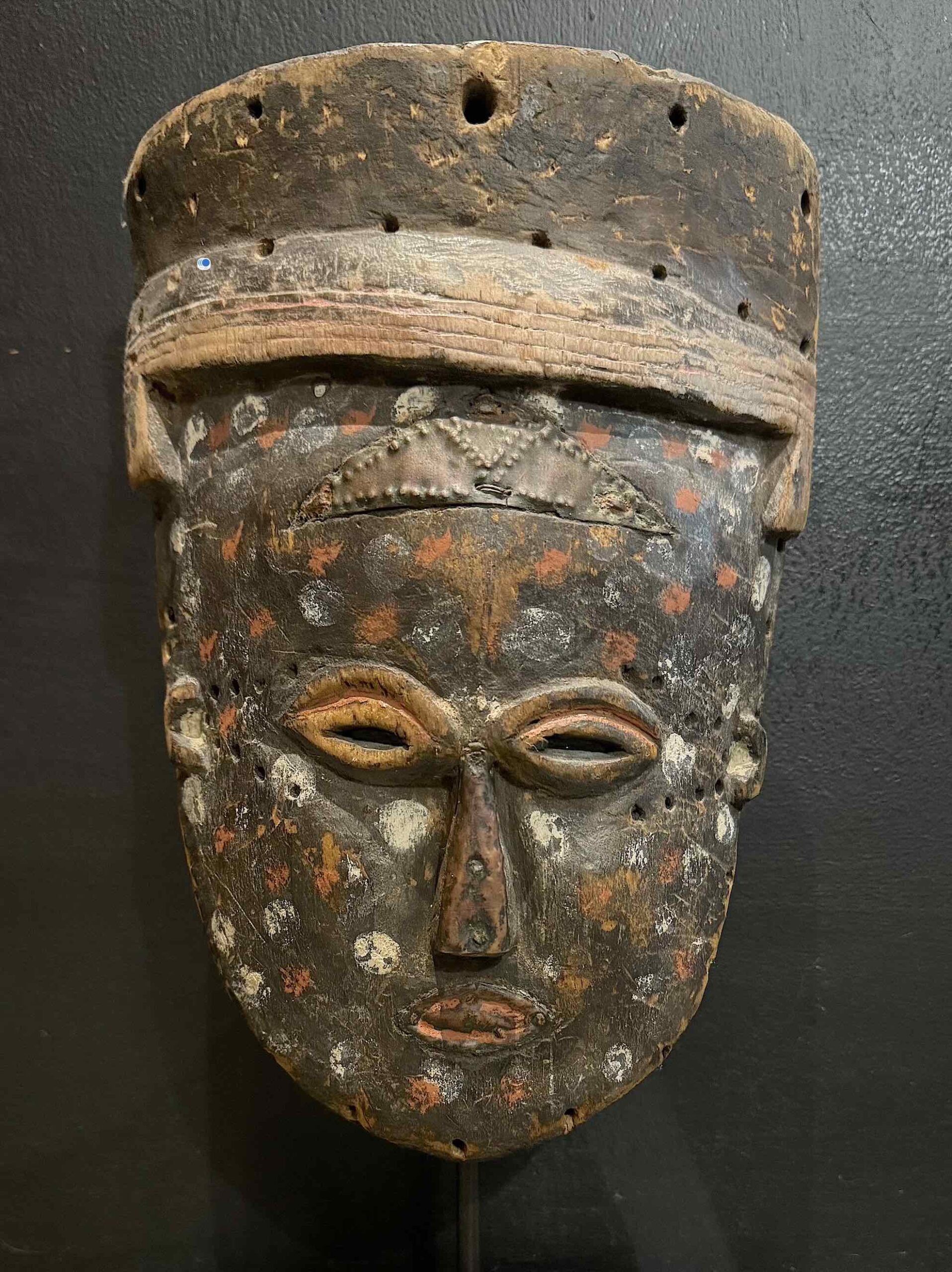
Magnificent polychrome cephalomorphic LELE or BASHILELE mask.
Brown wood with natural polychrome pigments and hammered copper.
Early 20th century. Formerly in the Peter Loebarth collection.
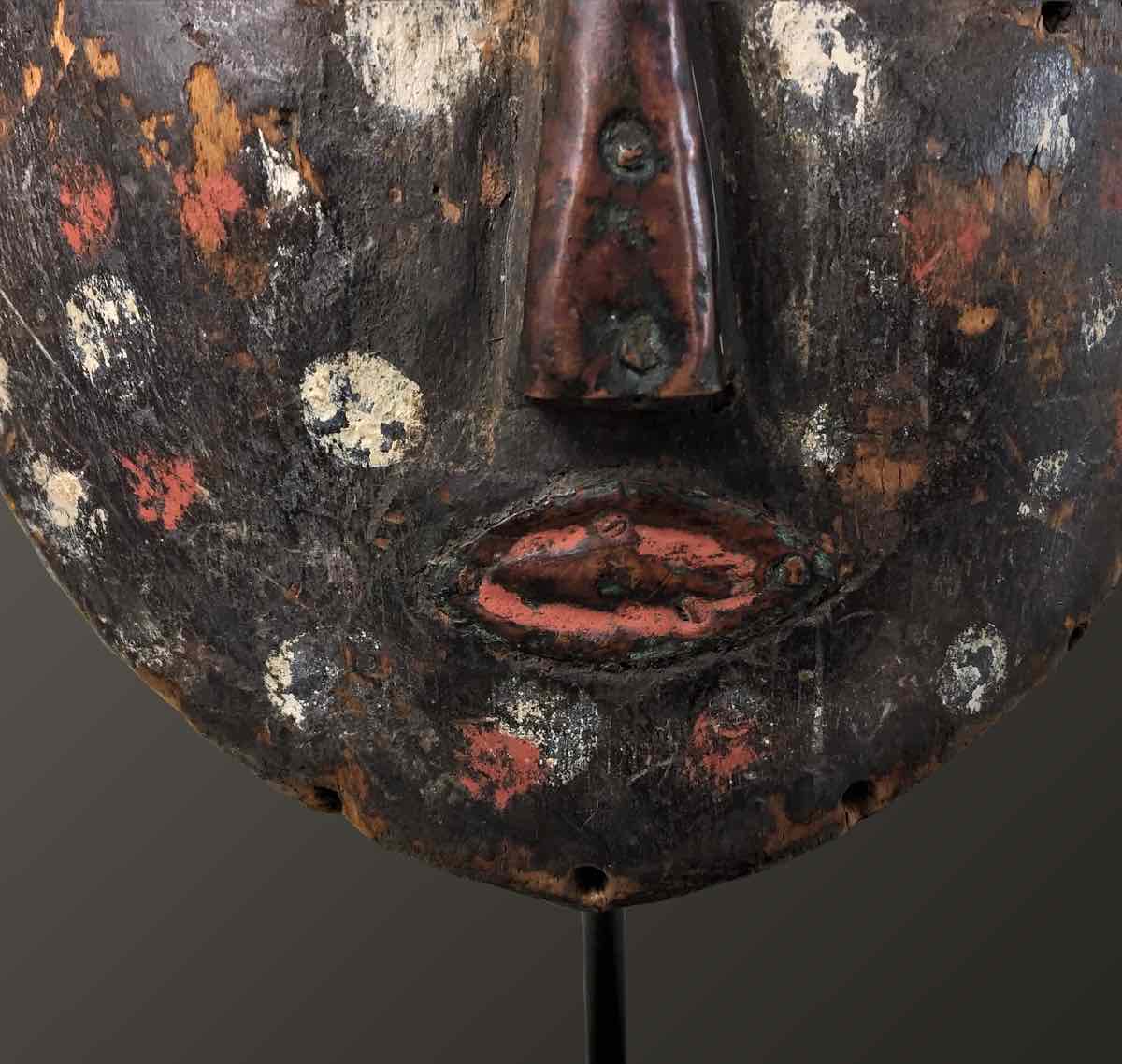
With a clean and finely sculpted style, the mask displays a beautiful patina of use in a dark brown color adorned with natural pigments based on cinnabar and kaolin admirably deposited in dotted lines.
This mask is unique in that it features thin hammered copper plates at the forehead, nose and mouth, resulting in a successful multi-material combination and a very aesthetically pleasing outcome.
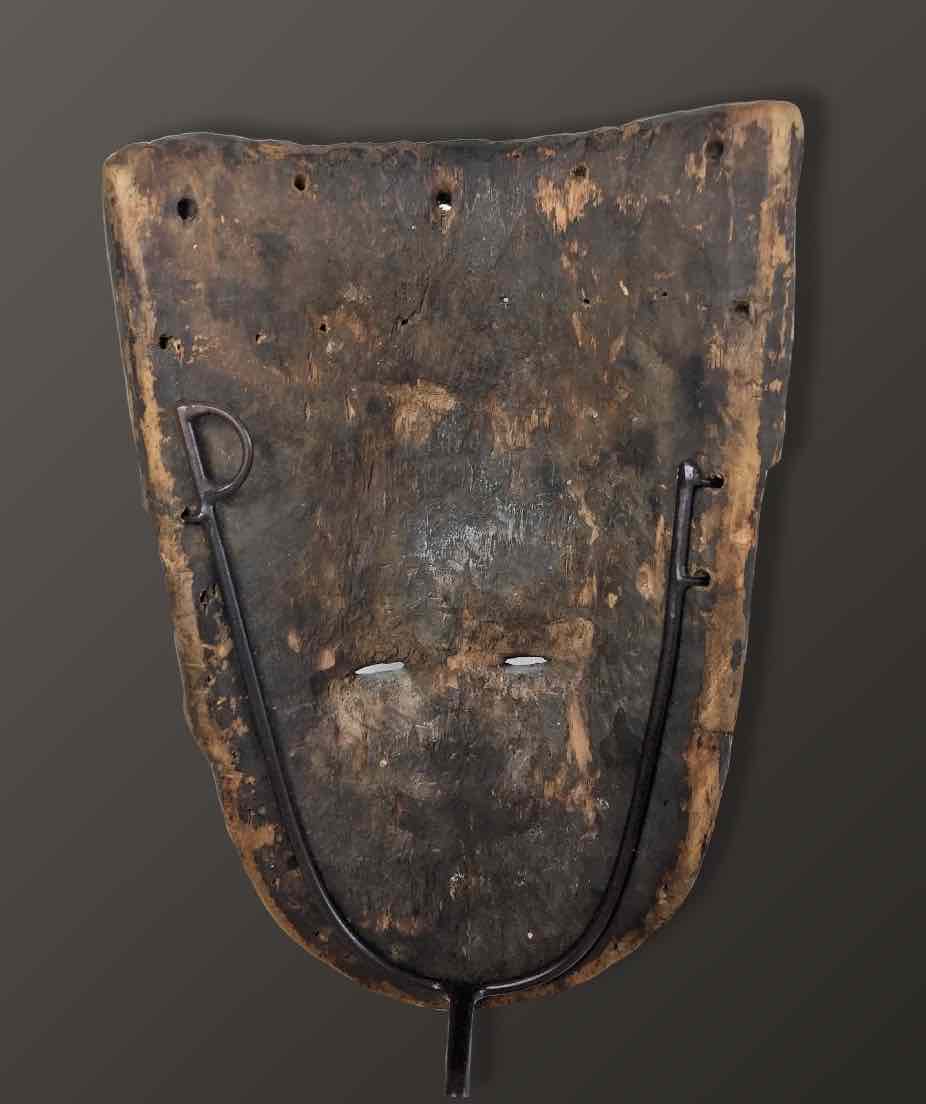
The copper plates, perforations/scarifications attest to proper ritual use and despite some visible surface abrasions, it has remained in a good overall state of preservation.
_____________________________________________________________
The Lele tribe, also known as Bashilele, inhabits the western part of the Kuba kingdom and lives primarily by hunting and farming. Lele sculptors created masks, worn during annual foundation festivals, that are almost flat and typically feature eyes outlined with several lines. The Lele use prestige objects influenced by the Kuba style, with the difference that the figures on the masks have very long braids thanks to a support above the forehead and regularly spaced holes that allow for the attachment of the distinctive headdress. These highly refined masks, often embellished with natural pigments, remain rare, highly distinctive of their culture, and very aesthetically pleasing.
Peter Loebarth began humanitarian missions in the DRC in the 1970s and subsequently worked regularly as a documentarian there. A central figure in Germany, particularly regarding Lobi art, of which he owned one of the world's largest collections, he nurtured a true passion for the African continent. Collected in situ by Loebarth in the DRC (formerly Zaire) in the 1970s, the mask was later passed on to his friend Dr. Wolfgang Nerlich.
Bibliography: Felix, Marc L., 100 Peoples of Zaire and their Sculpture, Brussels 1987, p. 75, ill. 10.
Period: Early 20th century
Dimensions: H: 41 cm – L: 29cm