Antoine Lavoisier (1743-1794)
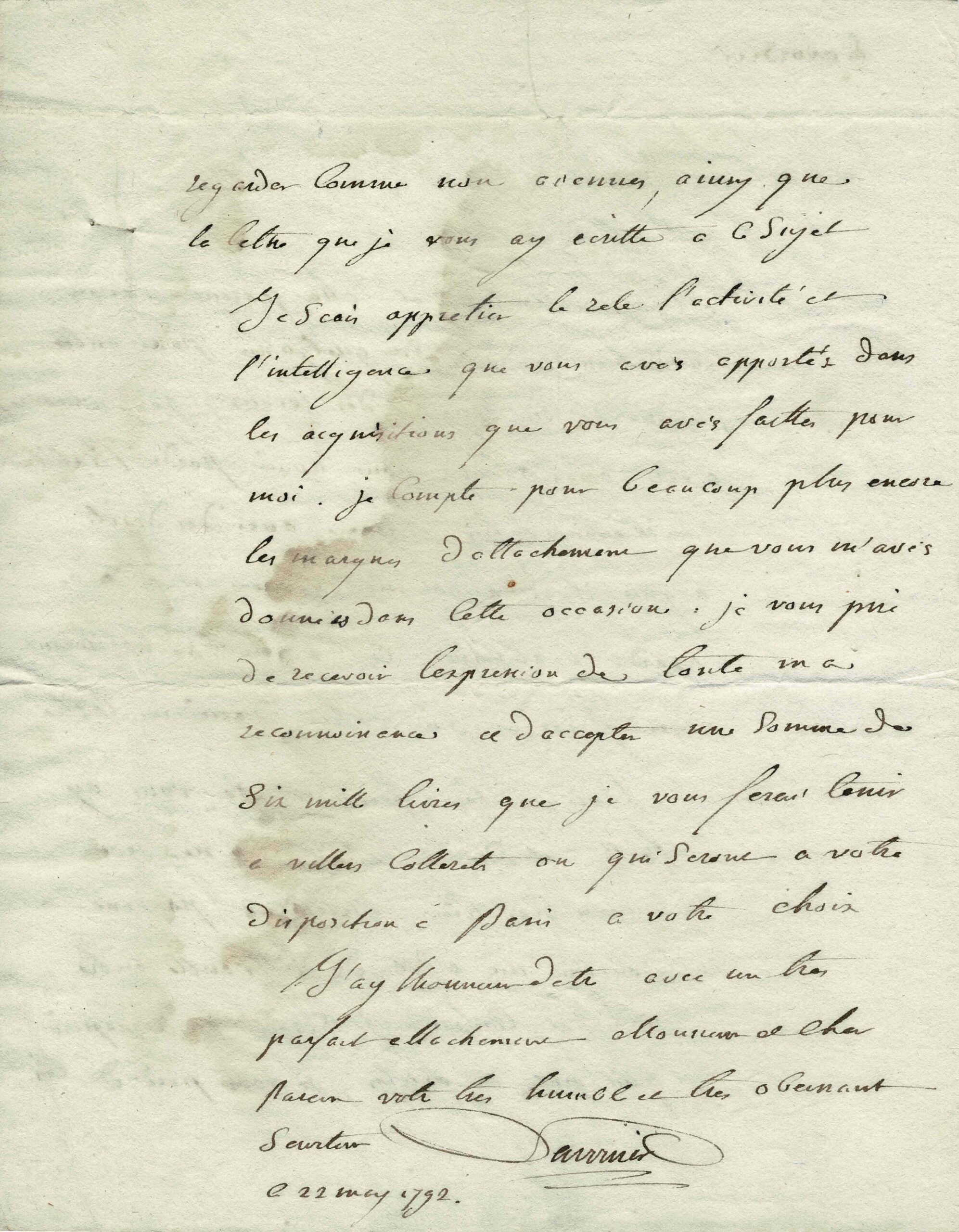
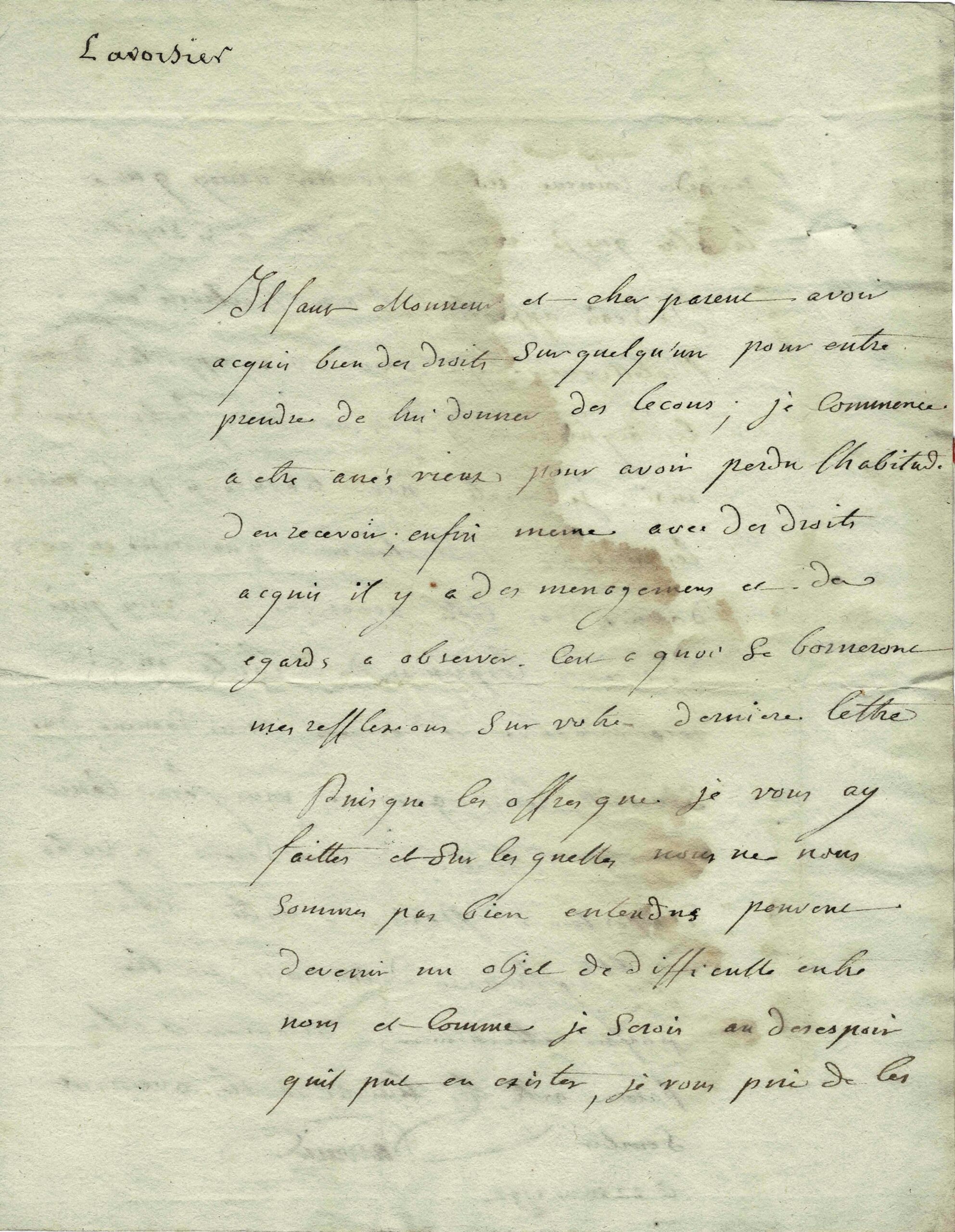
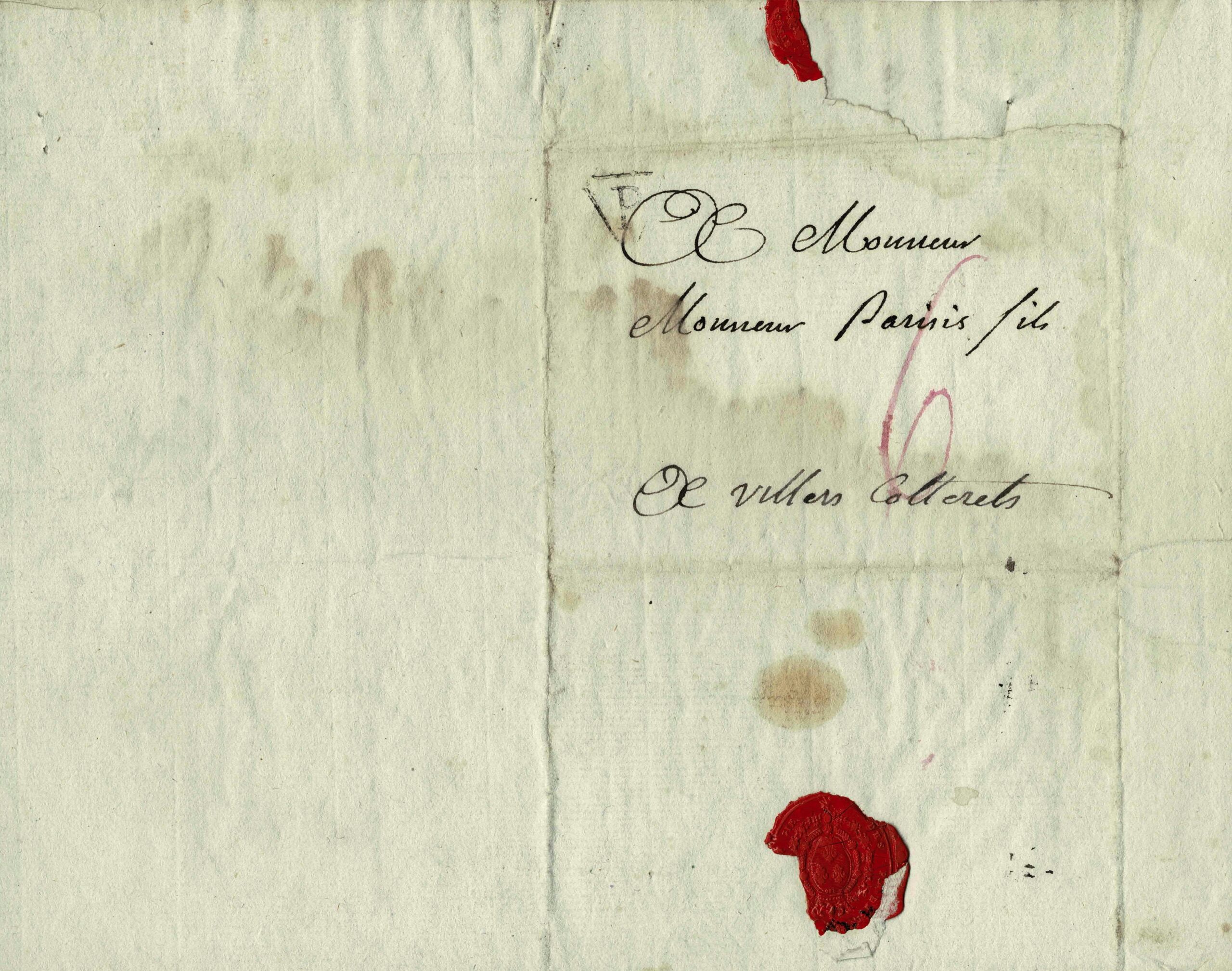
Autographed letter signed to his cousin Charles-Nicolas Parisis.
Two octavo pages. Water stains and wax seal on the 4th leaf .
No place, May 22, 1792.
A fine letter from the French chemist firmly extinguishing a point of discord with his cousin over his acquisitions as a tax farmer.
_________________________________
“ Sir and dear relative, one must have acquired considerable influence over someone to undertake to give them lessons ; I am beginning to be old enough to have lost the habit of receiving them; indeed, even with established rights, there are considerations and respects to be observed. This is the extent of my reflections on your last letter. Since the offers I made you, on which we did not quite agree, could become a source of difficulty between us, and as I would be utterly dismayed if this were to happen, I ask you to consider them null and void, as well as the letter I wrote to you on this subject. I know how to appreciate the zeal, energy, and intelligence you brought to the acquisitions you made for me. I value even more the marks of affection you showed me on this occasion.” Please accept my sincere gratitude and the sum of six thousand livres, which I will send to you at Villers-Cotterêts or which will be at your disposal in Paris, as you prefer. I have the honor to be, with the utmost devotion, Sir and dear relative, your most humble and obedient servant. Lavoisier .
_________________________________
In 1791-1792, after the Revolution, the National Assembly decided to sell nationalized properties to private individuals in order to replenish the state coffers. The sales were conducted at auction, with the possibility of payment in twelve annual installments. Lavoisier thus endeavored to expand his holdings and acquire new lands and farms. His cousin from Villers-Cotterêts, Charles-Nicolas Parisis – the recipient of this letter – was entrusted by Lavoisier with these purchases. In total, Lavoisier acquired more than a thousand hectares of farmland around his family's ancestral village.
Denounced to the revolutionary authorities as a traitor to the nation, accused of speculating against the interests of French citizens, he was imprisoned on November 28, 1793, in the Port Libre prison. Sentenced to death, he was guillotined on 19 Floréal, Year II (May 8, 1794), in the Place de la Révolution.
The day after Lavoisier's execution, the mathematician Louis de Lagrange wrote: "It took them only a moment to cut off that head, and perhaps a hundred years will not be enough to produce a similar one."
Lavoisier. Éric Jacques. Ed. Ellipses. 2019.